
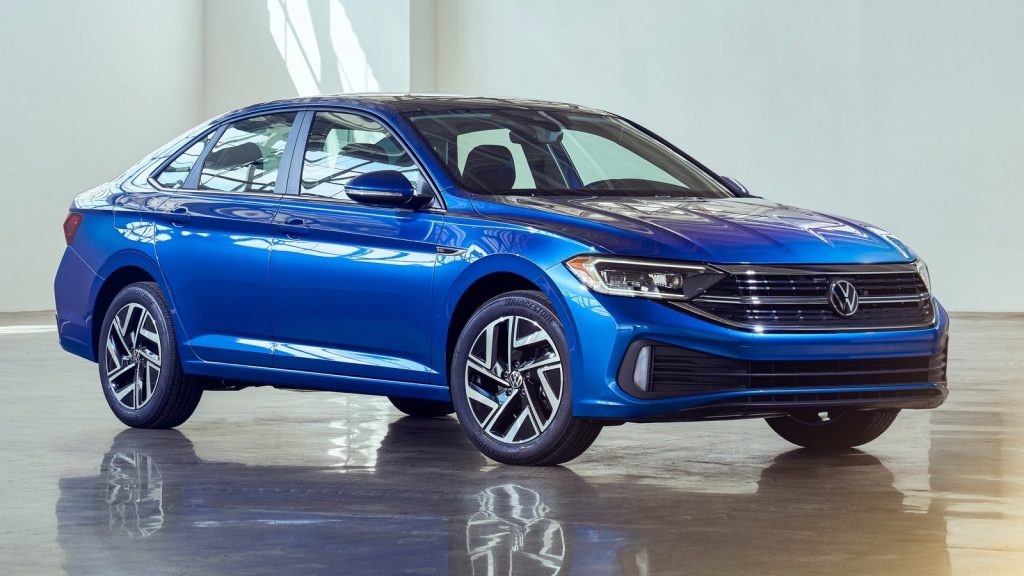


Someone inside Volkswagen’s American operations told Germany’s Handelsblatt that morale is now “worse than during the diesel scandal.” Let that sink in. During Dieselgate, executives faced criminal prosecution and the brand became a global punchline. But at least, the source noted, there was still solid revenue coming in.
Today, there isn’t even that.
The revelation comes buried in a lengthy Handelsblatt feature about Scout Motors and its CEO Scott Keogh, who previously ran VW Group of America. The piece is ostensibly about Scout’s trajectory — the fact that 87 percent of deposit holders chose the extended-range hybrid, that a potential IPO is now “an option on the table,” that South Carolina’s governor trained on a paint simulator and was told he was too slow. But the real story bleeds through the margins.
Multiple U.S.-based VW managers painted a picture of an organization drowning in brand complexity while simultaneously being told to cut costs. One described the loss of “the drive to move forward” that once characterized Wolfsburg. The cacophony of brands — Volkswagen, Audi, Porsche, Lamborghini, Bentley, Ducati — becomes particularly toxic when every one of them is being squeezed for savings at the same time.
VW’s American product pipeline tells the story in metal. The brand has a refreshed Atlas built domestically and a Tiguan assembled in Mexico. That’s essentially it for momentum.
Audi, which is supposed to be a profit engine in the U.S., doesn’t have much new to show either. Both brands are caught in the awkward aftermath of VW’s post-Dieselgate lunge toward electrification — a strategy that consumed enormous capital and engineering bandwidth without delivering the American market share to justify it.
Scout is the escape hatch. Keogh referenced U.S. investment funds focused on “the industrial renaissance” as potential partners, carefully not naming names. The company was deliberately structured as an independent entity, which gives Wolfsburg the option of bringing in outside money without diluting control of the core brands. VW’s leadership is reportedly all-in on Scout as the vehicle — literally and figuratively — for generating American profits to offset China’s deterioration.
And China is deteriorating. April car sales there dropped 21.5 percent year-over-year, with even new energy vehicles falling 6.8 percent. The extended slump through the first four months of 2025 represents an 18.5 percent contraction.
Auto-related spending as a share of Chinese retail hit a five-year low. For a company that built its global strategy around the Chinese market, this is not a blip. It’s a structural problem.
So VW finds itself squeezed on both flanks. China, once the profit engine that subsidized everything else, is sputtering. America, where the group desperately needs wins, has a thin product lineup, tariff exposure on Mexican-built vehicles, and a workforce that openly admits things feel worse than when the company was caught systematically cheating emissions tests.
Scout could work. The deposit numbers are encouraging, the factory in South Carolina is real, and Keogh is a competent operator. But Scout is also pre-revenue, unproven in the market, and years away from generating the kind of cash VW needs right now.
Pinning your American strategy on a startup that might IPO someday while your established brands bleed morale and market share is not a plan. It’s a prayer.
Volkswagen has survived existential crises before — the company was literally built from the rubble of a war. But survival and relevance are different things. The people inside VW America aren’t panicking because they think the company will cease to exist.
They’re demoralized because they can see the gap between what the group needs and what it’s actually capable of delivering, and nobody in Wolfsburg seems to have an answer that doesn’t involve Scout or cost cuts.
When your own employees look back fondly on the era of federal indictments because at least the money was good, something fundamental has broken.
Share this Story