
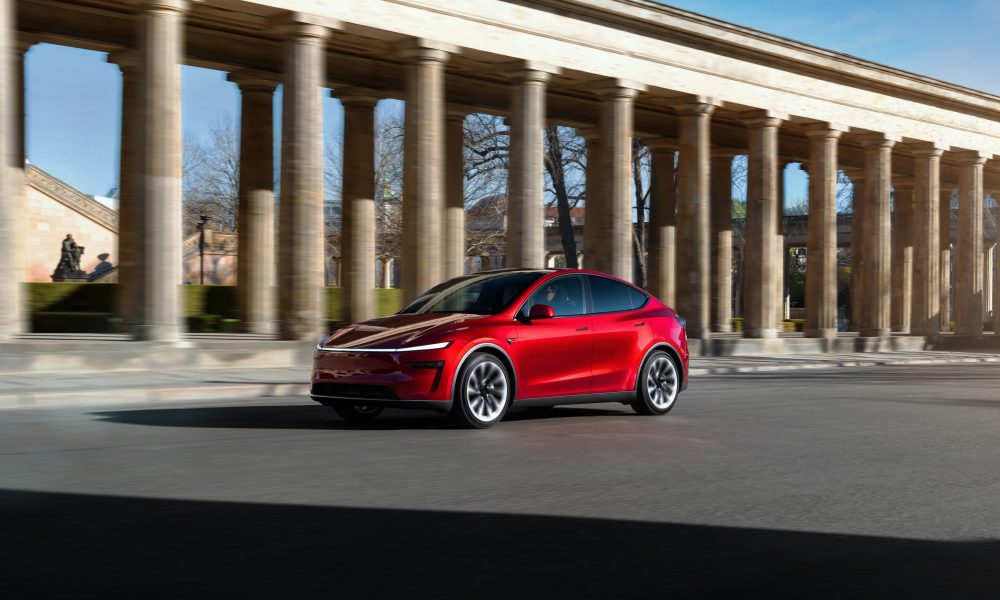


Ireland is in talks with Tesla about approving Full Self-Driving Supervised on its roads. The country’s Department of Transport confirmed on May 10 that Tesla is actively engaging with the National Standards Authority of Ireland to secure clearance. Officials acknowledged that a full rollout still depends on EU-level authorization.
On the surface, this looks like another incremental regulatory conversation. It’s not.
Ireland’s involvement is calculated. The country offers a proving ground that the flat, well-marked highways of the Netherlands simply don’t — narrow rural lanes hemmed in by hedgerows, unpredictable weather, and road infrastructure that would stress any vision-based driving system. If FSD can handle County Kerry, the argument for continent-wide approval gets considerably harder to dismiss.
The groundwork was laid in April when the Dutch vehicle authority RDW granted the first-ever EU type approval for FSD Supervised after 18 months of testing on public roads and closed tracks. Tesla is already deploying the system to select Dutch owners who complete mandatory safety training. The Netherlands has notified the European Commission and is pushing for bloc-wide recognition, volunteering its approval as the template other member states can follow.
Belgium is reportedly fast-tracking its own review in response. Now Ireland. The dominoes are lining up.
Tesla lists the Netherlands alongside the U.S., Canada, Australia, and South Korea on its regional FSD page. Europe had been the conspicuous holdout — a market of 450 million people with high vehicle density and strict automated-driving regulations that demanded exhaustive validation before a single line of code could operate on public roads.
That caution hasn’t vanished. Discussions continue at the EU’s Technical Committee on Motor Vehicles, with a possible vote later this year. Several Scandinavian countries have raised concerns about edge cases, particularly around speeding protocols and the depth of long-term safety data Tesla has presented.
FSD Supervised still requires the driver’s hands near the wheel and full attentiveness. Under EU rules, legal responsibility rests entirely with the human operator, not the software.
Tesla has indicated it wants broader EU deployment by summer 2026. That timeline is ambitious given the bureaucratic reality of 27 member states with different road conditions, liability frameworks, and political appetites for autonomous technology. But the Dutch precedent changes the math.
Once one country inside the EU grants type approval and early safety data supports the decision, the political cost of blocking access shifts from caution to obstruction.
The commercial stakes are enormous. Europe’s dense population and high vehicle ownership rates would feed Tesla’s neural networks with driving data from environments radically different from suburban Phoenix or the 405 freeway. That data is the raw material for refining the AI models that power FSD and, eventually, for building the case that unsupervised autonomy and robotaxi services belong on European streets.
Early Dutch results already point to safety improvements, though the sample size remains small and the deployment carefully controlled. Tesla needs thousands of vehicles logging millions of kilometers before regulators or the public will trust FSD beyond a supervised assist feature.
Ireland won’t make or break that effort on its own. But a successful validation on roads that punish sloppy engineering would send a signal that months of PowerPoint presentations to Brussels bureaucrats cannot. The hedgerows and rain-slicked boreens of rural Ireland are a harder test than any track facility, and Tesla appears to know it.
One national approval at a time, Europe is cracking open. The question is whether the pace of regulatory acceptance can match the pace of the technology — or whether Tesla’s summer 2026 ambition will collide with the EU’s institutional preference for moving slowly and carefully.
History suggests the latter. But the Dutch decision introduced a variable that didn’t exist six months ago: competitive pressure between member states to lead rather than follow.
That pressure is now Tesla’s most powerful lobbying tool on the continent.
Share this Story