
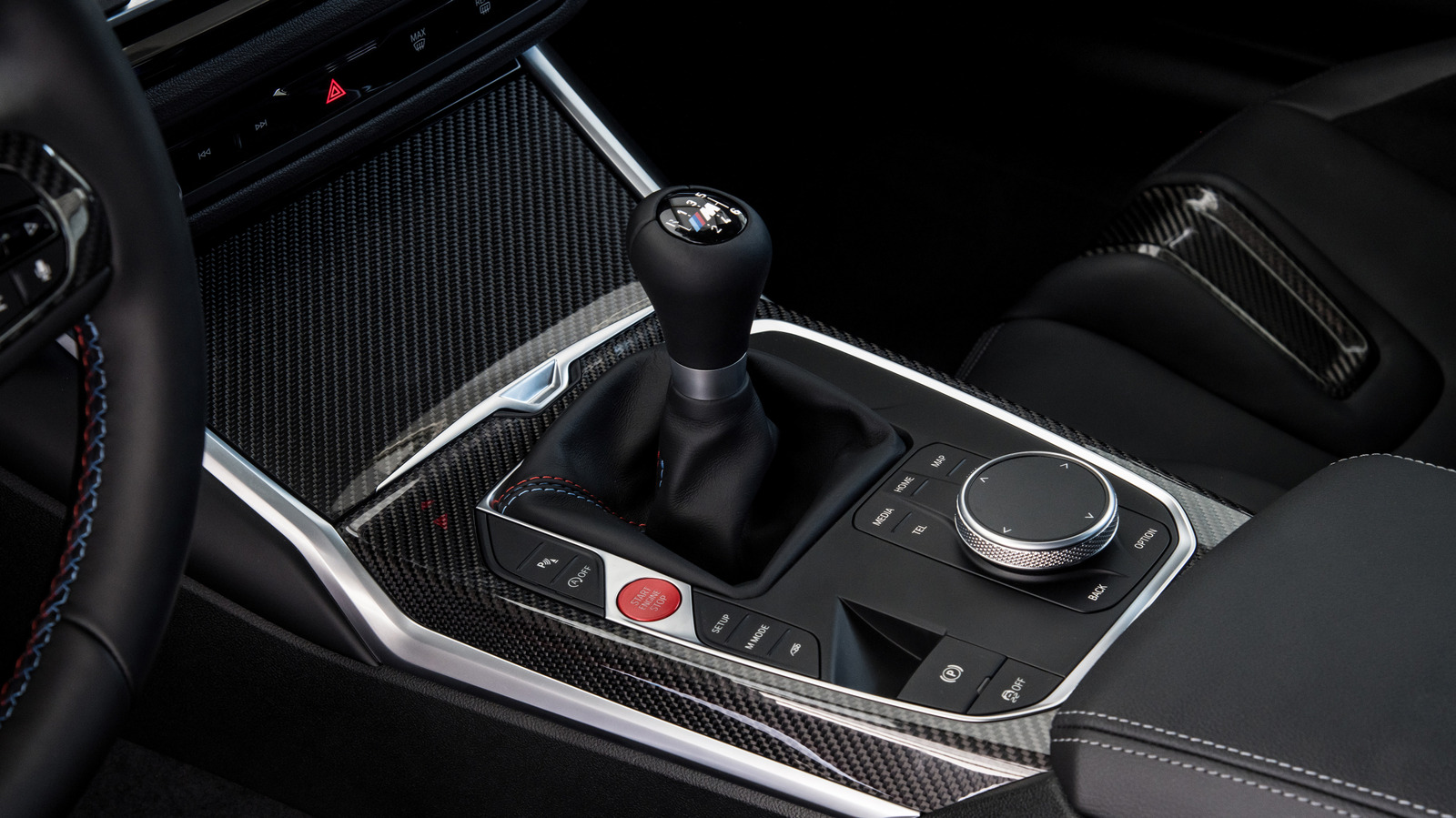


BMW M’s vice president of customer, brand, and sales, Sylvia Neubauer, told German trade publication Automobilwoche that engineers are “actively working on a solution” to keep the manual gearbox alive. No technical details. No timeline. Just a promise from a company whose own M division boss said barely two months earlier that preserving the stick shift into the next decade would be “quite difficult.
That whiplash tells you everything about the internal tug-of-war happening in Munich right now.
The engineering reality is brutal. BMW’s current six-speed manual tops out at 473 horsepower and 406 pound-feet of torque. The engines BMW keeps building want to make more than that.
The 2026 M2 CS, the sharpest version of BMW’s compact weapon, launched without a manual option because the car’s output exceeded what the gearbox could survive.
Even the standard M2 reveals the compromise. The automatic version makes 37 more pound-feet of torque than the manual. BMW deliberately detunes the stick-shift car to keep the transmission from grenading itself.
That’s not a bug. It’s becoming the entire strategy.
Building a new manual gearbox that can handle modern M-car output would cost serious money. The global market for three-pedal cars is a rounding error compared to the automatic and dual-clutch volumes that justify tooling investments. Suppliers are already balking at producing components for a shrinking customer base, so BMW appears headed toward institutionalizing what it’s already doing quietly: cap the power, keep the pedal.
The question is whether buyers will accept that bargain.
The American numbers suggest they might. Forty percent of U.S. M2 buyers chose the manual in 2025. Half of Z4 buyers did.
Among rear-drive M3 and M4 customers, the only ones who even get the option, take rates hit 50 and 33 percent. These are not enthusiast-forum fantasies. They are real purchase decisions backed by real money.
But the trendline deserves scrutiny. Those 2025 figures represent a dip from the prior year across BMW’s M lineup. The manual Z4, which debuted to euphoric demand, is settling into more modest territory.
Whether this is a natural plateau or the beginning of a decline will shape how aggressively BMW defends the third pedal going forward.
There is a cautionary tale sitting right inside BMW’s own family. When Mini axed the manual from its JCW hot hatch, sales cratered more than 30 percent. That kind of damage isn’t easily reversed with a software update or a marketing campaign. The customers who care about driving engagement care deeply, and they vote with their wallets in both directions.
So BMW finds itself performing engineering gymnastics to preserve something that doesn’t pencil out on a spreadsheet but clearly matters to the people writing checks. The solution, if it materializes, will almost certainly mean manual M cars make less power than their automatic counterparts. Permanently, and by design.
For a brand that spent decades selling “Ultimate Driving Machine” on posters and bumper stickers, this is an identity question dressed up as a powertrain decision. Neubauer’s public commitment, vague as it was, signals that someone in Munich grasps what happens when you abandon the customers who define your brand’s soul.
Whether those customers will tolerate a detuned engine for the privilege of rowing their own gears is the real bet BMW is placing. History says the faithful will pay for the experience. But asking them to accept less car to get more involvement is a transaction that gets harder to sell with every horsepower the automatic version gains.
The stick shift isn’t dead at BMW. It’s just going on a diet.
Share this Story