
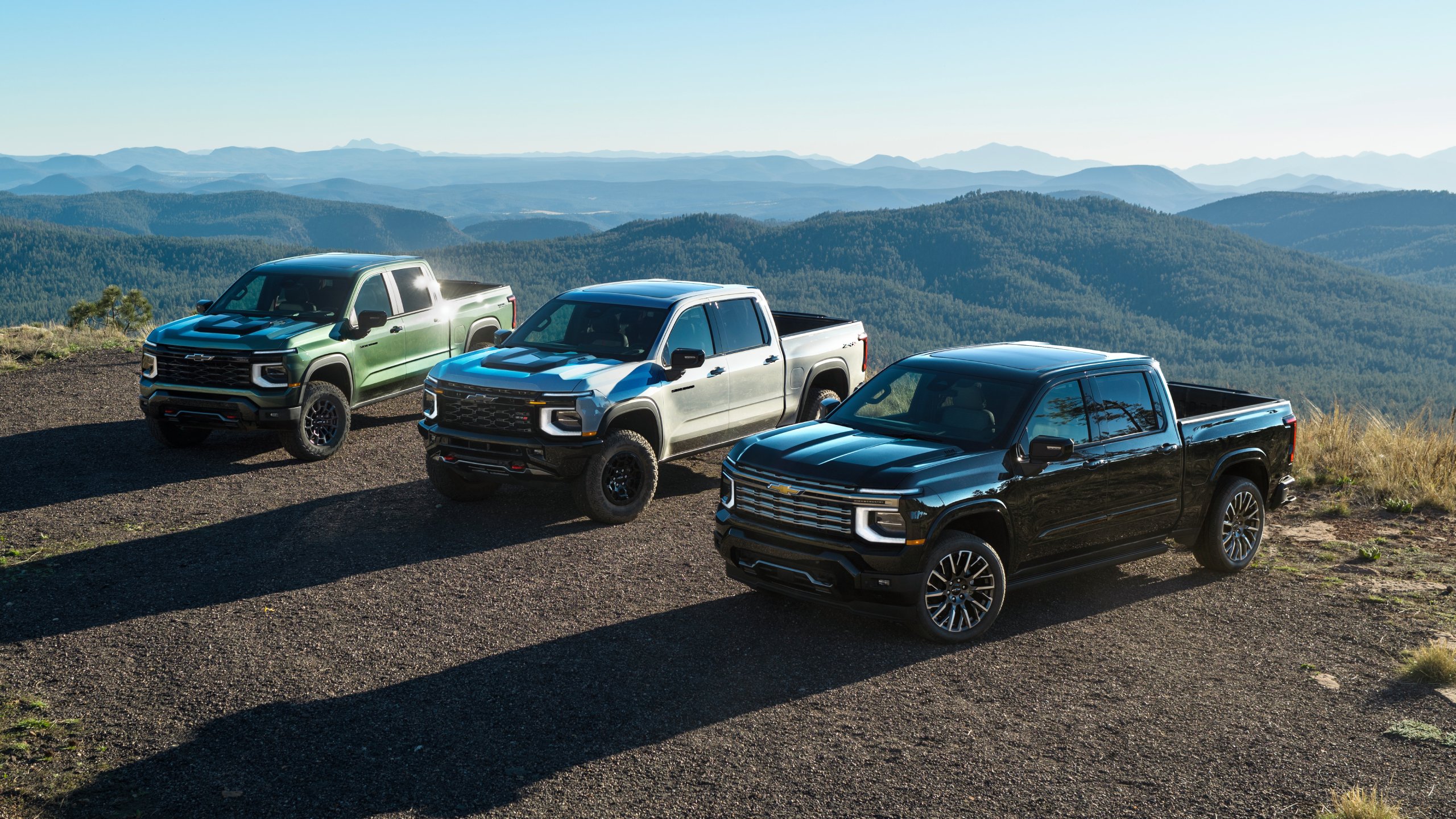


General Motors is stamping familiar numbers on a new generation of small-block V8s, and the nostalgia is no accident. The company just announced that 5.7-liter and 6.6-liter variants of its next-generation V8 engine family will power the 2027 Chevrolet Silverado half-ton, joining the 6.7-liter LS6 already slated for the 2027 Corvette Grand Sport.
For anyone keeping score in cubic inches, that’s a 350, a 400, and a 409. Three displacement figures pulled straight from Chevy’s greatest hits catalog.
The 5.7-liter replaces the aging 5.3-liter L83 in the Silverado lineup, while the 6.6-liter takes over for the 6.2-liter L87. Both share a common block architecture with the Corvette’s LS6, which makes 535 horsepower in naturally aspirated form. Chevy is claiming the 6.6 will be the most powerful naturally aspirated V8 in the half-ton truck segment, though it won’t actually put a horsepower number on it yet.
That coyness is telling. GM wants the headline now and the spec sheet later, a familiar strategy when you’re trying to control the narrative across multiple vehicle launches in the same model year.
These engines were greenlit back in 2023, when GM was still publicly all-in on electrification and the political winds hadn’t yet shifted on emissions regulations. The company was quietly hedging even then, investing in combustion development while making billion-dollar EV commitments. Now, with the current administration rolling back fuel economy targets, GM finds itself holding a very convenient hand.
Nobody at the Renaissance Center is going to apologize for good timing.
Production will expand beyond the Flint, Michigan, plant currently building the LS6, adding GM’s Tonawanda, New York, and St. Catharines, Ontario, facilities. That’s a significant commitment of manufacturing capacity to internal combustion at a moment when most legacy automakers are still publicly wrestling with how fast to pivot away from it.
The displacement figures themselves are pure marketing theater. The new 5.7 shares virtually nothing with the legendary 350 that powered everything from Camaros to C10s for decades. The 409 badge conjures Beach Boys lyrics, not the big-block bruiser it originally belonged to. GM knows this, and it also knows that truck buyers and Corvette enthusiasts respond to heritage cues the way dogs respond to dinner bells.
Silverado Chief Engineer Mark Dickens offered the usual reassurances about durability and real-world validation. From tough towing scenarios to the daily demands our customers put on their trucks, these next-generation V8s were engineered and proven to perform in the real world,” he said. Standard-issue truck-launch language, but the subtext is clear: these aren’t placeholder engines.
The more interesting question is what this means for GM’s turbocharged four-cylinder and EV truck strategies. The Silverado EV hasn’t exactly set the world on fire commercially. And if the new V8s deliver on efficiency gains, which modern combustion engineering strongly suggests they will, the business case for electrifying the bread-and-butter half-ton gets murkier, not clearer.
GM started this project when electrification was the future. It’s launching these engines into a market that increasingly treats combustion like the present. The company threaded a needle it didn’t even know it was threading.
More details on the 5.7 and 6.6 are expected closer to the 2027 Silverado’s on-sale date later this year. Until then, GM is content to let three familiar numbers do the talking.


Share this Story