
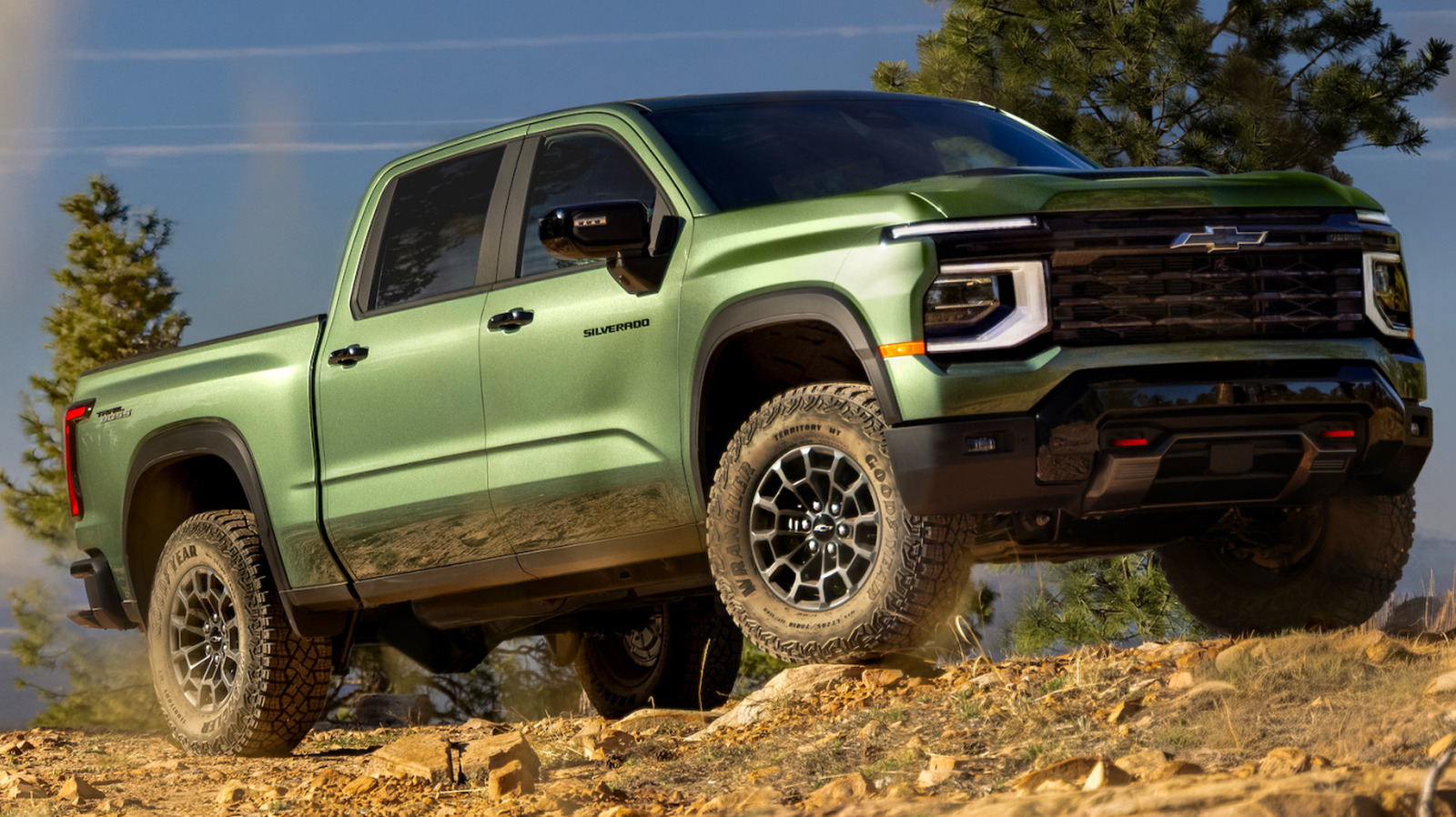


Nearly a decade. That’s how long Chevrolet let the Silverado — the second-best-selling vehicle in America — ride on the same architecture while Ford and Ram kept punching. The 2027 Silverado 1500 finally breaks cover with new V8 engines, a dramatically upgraded interior, and a conspicuous absence: the electric version.
The new truck gets two next-generation naturally aspirated V8s, a 5.7-liter and a 6.6-liter, replacing the familiar 5.3 and 6.2 that have soldiered on for years. Chevy claims they’re the most powerful naturally aspirated V8s in the class but won’t release horsepower or torque numbers yet. That tells you this reveal is more theater than spec sheet.
The 6.2-liter’s departure is quietly convenient. The outgoing engine is currently the subject of a class-action lawsuit and triggered a recall of nearly 600,000 trucks last year. Executive chief engineer Mark Dickens assured buyers the new engines have been through “extensive testing and validation.” They’d better have been.
The turbocharged 2.7-liter four-cylinder carries over as the base engine, now mated to a 10-speed automatic instead of the old 8-speed. The Duramax 3.0-liter turbo-diesel inline-six remains available. Hybridized powertrains are reportedly in development, but Chevy isn’t ready to talk about those yet.
Meanwhile, the Silverado EV — GM’s splashy battery-electric pickup — has had its production paused indefinitely starting in 2027. So the company’s full-size truck future is, for now, entirely combustion-powered. GM spent billions marketing an electric truck revolution, and the answer arriving in showrooms is a pair of big pushrod V8s.
Inside, the overhaul is dramatic. Even the stripped-down Work Truck gets a 12.2-inch digital gauge cluster and a 16.3-inch center screen, replacing cabin tech that had become genuinely embarrassing next to a current F-150 or Ram 1500. The ZR2 and High Country trims add an 11.5-inch passenger display, a head-up display, and a digital rearview mirror.
Physical controls for climate remain, which will matter to the working-truck crowd that actually buys these things by the hundreds of thousands.
The trim lineup expands to seven: Work Truck, Custom, Trail Boss, Custom Trail Boss, Silverado (replacing the old LT name), ZR2, and High Country. The naming convention is getting cluttered, but the spread covers everything from fleet duty to overlanding to luxury cruiser.
The ZR2 arrives with 35-inch mud-terrains, Multimatic DSSV dampers, front and rear e-locking differentials, and GM’s first use of forged carbon fiber trim. A Bison Edition adds AEV bumpers and skid plates protecting the front, transfer case, rear diff, and fuel tank. The High Country gets a panoramic sunroof — a first for Silverado — 22-inch wheels, real wood accents, and an available microfiber suede interior.
Exterior styling evolves rather than revolutionizes. The bones look new — different window glass, pillars, fenders, boxier flares — but the truck is unmistakably Silverado. Patent filings leaked last year already telegraphed the look.
Super Cruise hands-free driving is available, and Chevy is quick to note it’s the only Level 2 system that works while towing. A reconfigurable Multi-Flex center console arrives too, borrowing a concept Ford has offered in the F-150 for years. Better late than never.
Production will run at GM plants in Flint, Michigan, and Tonawanda, New York. Pricing and an on-sale date are being withheld until later this year.
After nine years, Chevy needed this truck to be a knockout. What it delivered is a thoroughly modern, V8-powered, screen-laden half-ton that looks competitive on paper — while quietly burying the electric ambitions that were supposed to define GM’s truck future. The Silverado’s next chapter is here. It runs on gasoline.

Share this Story