
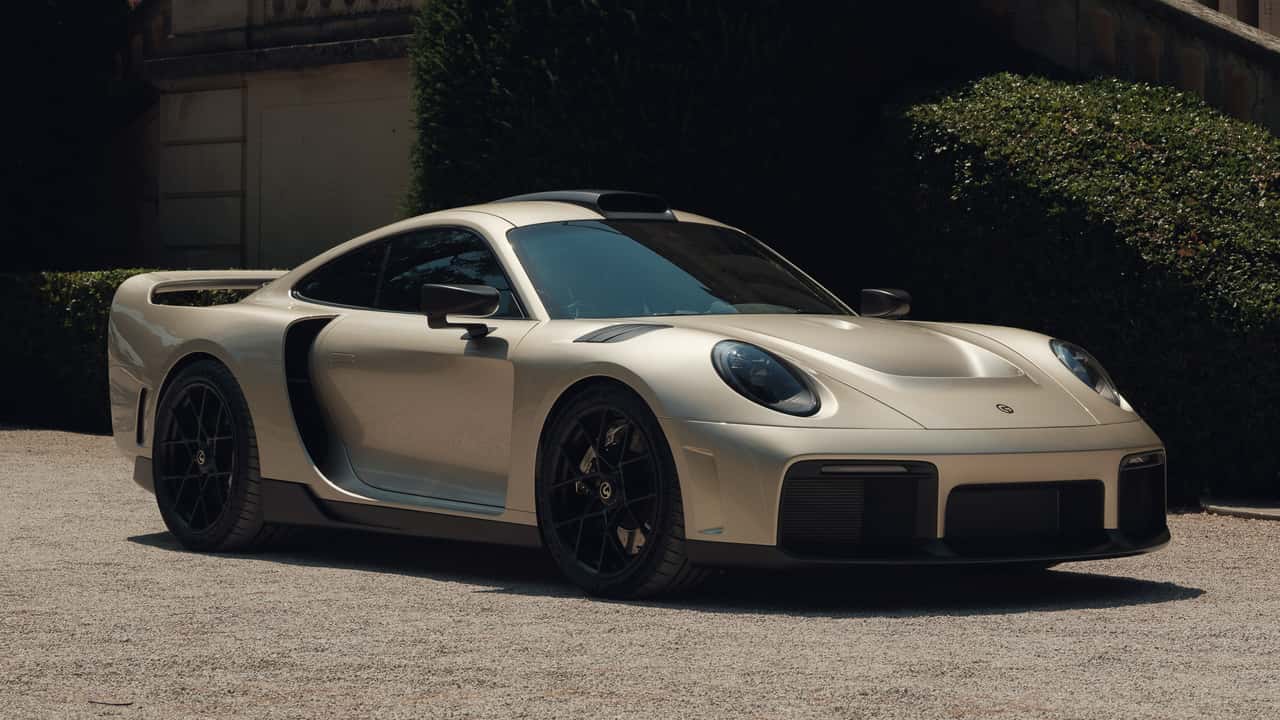


Strip a Porsche 992 Turbo down to its bones, replace roughly 1,500 components, hand the flat-six to Ruf for an 830-horsepower tune, wrap the whole thing in over 100 pieces of carbon fiber, and charge $840,000 before you even count taxes or the donor car. That is the Marsien GT from Marc Philipp Gemballa. It debuts at Pebble Beach on August 13 with a production cap of exactly 30 units.
The Marsien GT is a tarmac-bred evolution of the original Marsien, the desert-running, Safari-style 911 that put Marc Philipp Gemballa on the map as more than just his late father’s namesake. Where that car channeled Dakar fantasies, the GT flips the script entirely. Long-travel suspension and off-road pretensions give way to a KW double-wishbone front end, multi-link rear, and electronically controlled dampers that adjust compression and rebound independently in roughly two hundredths of a second.
The numbers are suitably absurd. The Ruf-massaged twin-turbo flat-six, fitted with revised variable-geometry turbos and fresh ECU calibration, delivers north of 830 horsepower and 687 lb-ft through all four wheels. A 2.4-second sprint to 60 mph and a 205-mph top speed put it in direct striking distance of cars costing twice as much.
For anyone who thinks 830 horses is insufficient, Gemballa says a 900-plus-horsepower second stage is already under development.
The carbon bodywork shaves about 165 pounds compared to a stock 992 Turbo S. Active front fender louvres vent high-pressure air from the wheel wells, while a raised active rear wing doubles as an air brake. A full carbon underbody cleans up airflow feeding a rear diffuser, and a roof scoop plus ram air intakes keep the engine breathing hard.
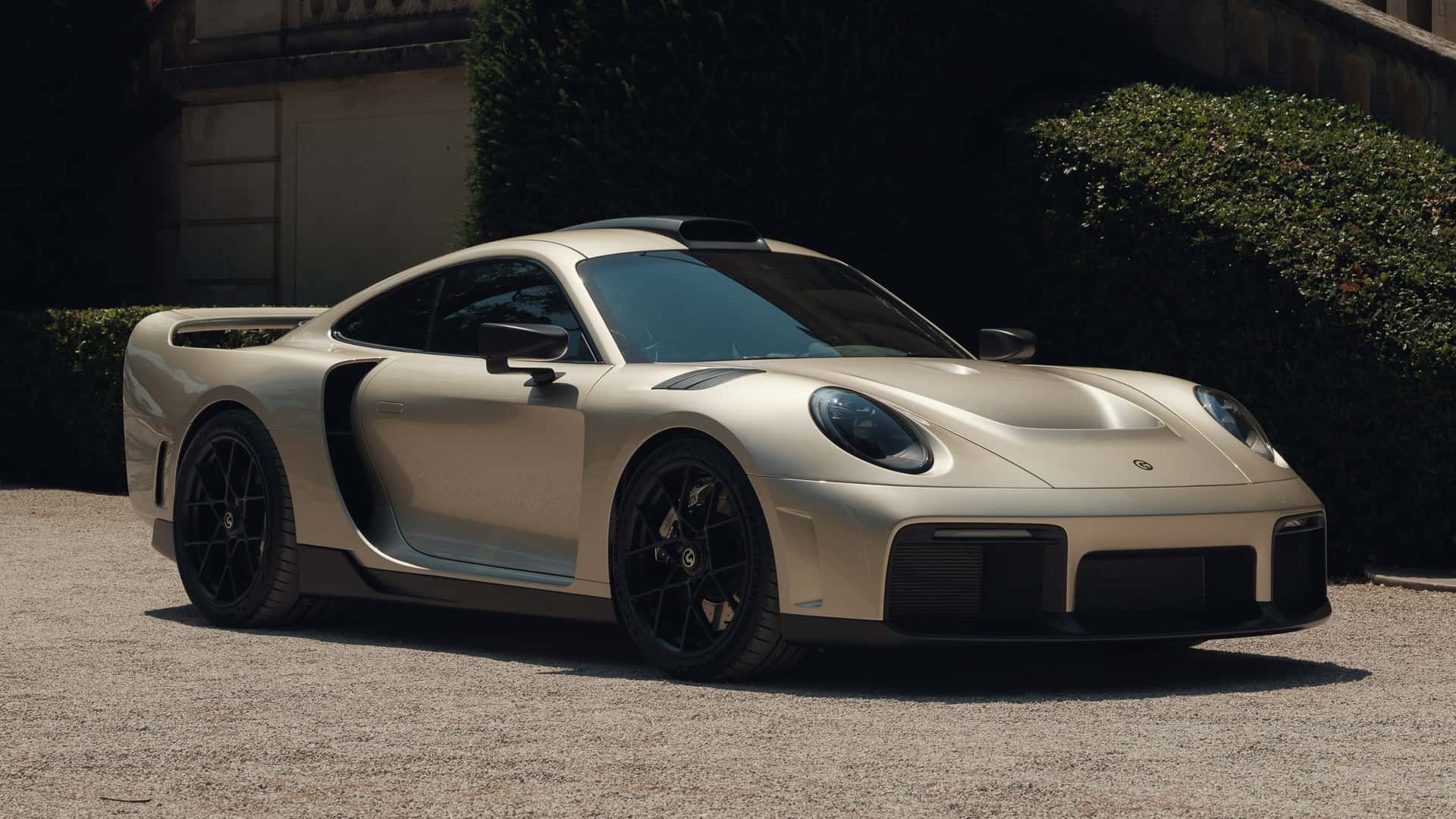
Akrapovič supplies a full titanium quad exhaust that reshapes both the car’s voice and its rear end aesthetics.
Inside, the cabin leans heavily on Alcantara and optional carbon fiber packages, with a raised center console housing an aluminum gear lever that nods to the Carrera GT. An optional clubsport roll bar can be finished in paint, leather, Alcantara, or bare carbon. Each car gets a numbered plaque on the console, the sort of detail that matters enormously at this price point and not at all to anyone outside the buyer’s circle.
The launch car wears a four-layer Anniversary Liquid Champagne Gold paint created to mark what would have been Uwe Gemballa’s 70th birthday, paired with champagne-toned stitching, belts, and instrument accents over dark gray Alcantara and carbon buckets. It is a deliberate, almost reverent callback to the elder Gemballa’s legacy. That legacy ended violently in South Africa in 2010 and left Marc Philipp to rebuild the family name from scratch.
Pricing starts at 770,000 euros, which converts to roughly $840,000, but that figure excludes the donor 911 Turbo or Turbo S, taxes, duties, and shipping. A realistic all-in cost for a North American buyer likely pushes past $1.1 million. That positions the Marsien GT among the most expensive 911-based builds on the market, competing not with Porsche’s own GT division but with the growing constellation of low-volume coachbuilders who have turned the 911 into a canvas for seven-figure expressions of taste.
The Ruf connection adds a layer of credibility that most aftermarket operations simply cannot match. Ruf has been a registered manufacturer since 1981 and collaborated with the original Uwe Gemballa operation decades ago. That history lends real engineering weight to a project that could otherwise be dismissed as another rich-buyer vanity exercise.
First customer deliveries are slated for late 2027, meaning anyone placing a deposit today is betting on a car they will not touch for at least two years. With 30 slots available and Pebble Beach as the stage, those slots probably will not last long. Whether the Marsien GT becomes a collectible or a curiosity depends entirely on the next few years of execution.


Share this Story