
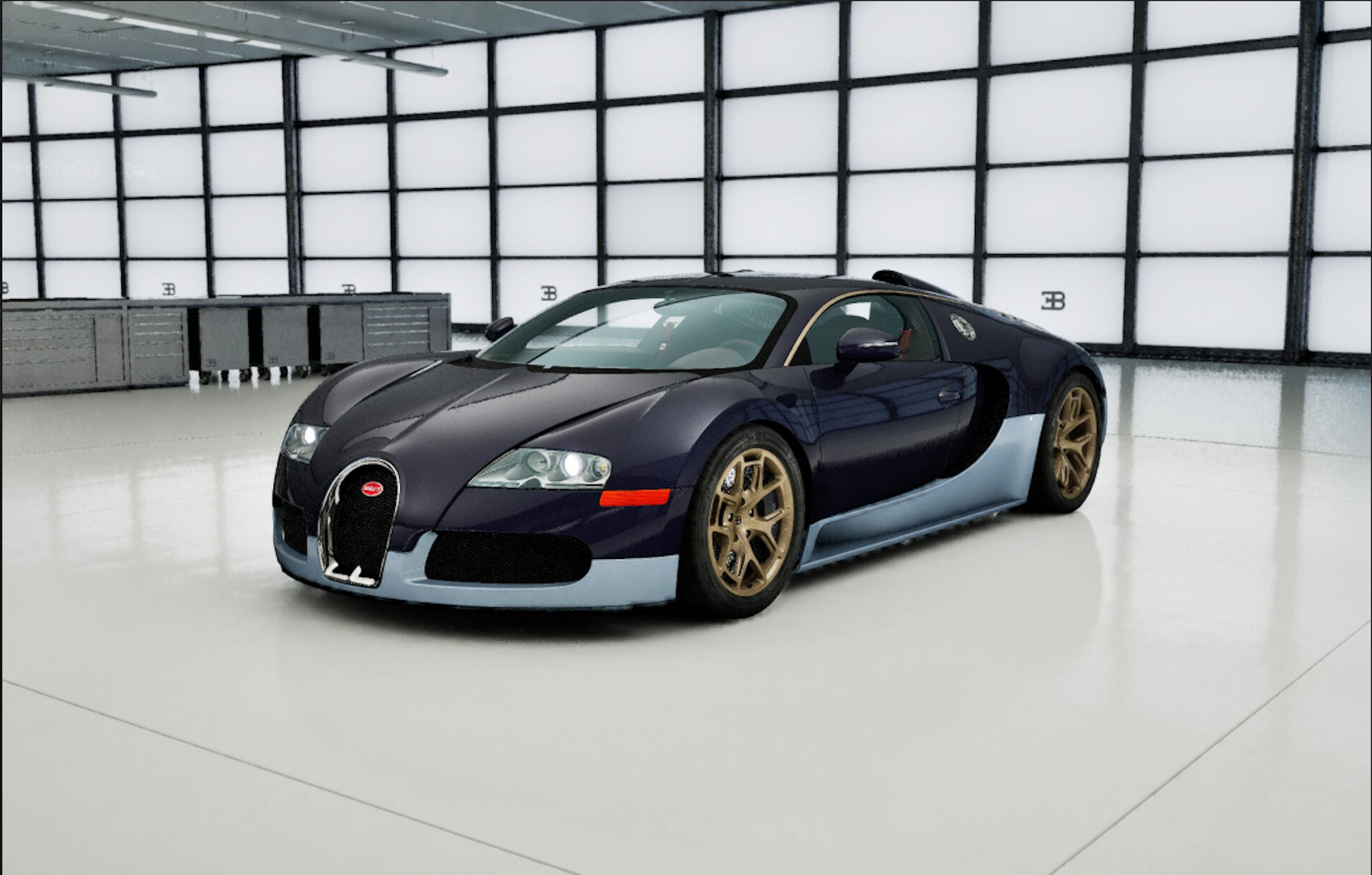


Only 450 Bugatti Veyrons were ever built. Fewer than 120 were sold in the United States. Used examples now average $2.1 million, if you can find one at all.
Starting this summer, owners of those cars can tear them apart and rebuild them to taste, thanks to a new configurator tool that treats a 20-year-old hypercar like a blank canvas.
The tool covers 18 different sections, each with up to a dozen sub-categories. Paint, carbon fiber, colored carbon fiber, secondary paint, wing color, underside of the wing color, grille metals, engine cover finish, interior leather, accent stitching, seat embossing, door panels, door sills, even the color of the emergency flasher button. Custom messages can be stamped on the wing, dash, and sills, with the only limits being trademarked or offensive text — and for the latter, Bugatti will quietly point you toward a pinstriper with fewer corporate obligations.
The logic is straightforward. When production numbers are this low, buyers often purchase on availability, not preference. You wanted white but the auction had red, your neighbor has the same spec, or maybe you just ordered a Tourbillon and want the old W-16 to coordinate.
These are not problems most people have, but they are real problems for people writing seven-figure checks.
Bugatti sales manager Sarah Tupi, who has guided more than 150 customers through bespoke builds, walked Car and Driver’s Elana Scherr through an early beta version. Together they specced a Super Sport in Blue Royal Carbon over Brise, a sky metallic blue, with cognac leather and lake blue interior accents, silver trim, and champagne gold wheels. Tupi declined to estimate pricing.
A solid repaint is relatively simple. Switching from solid paint to exposed carbon requires entirely new body panels, since painted composite panels aren’t pattern-matched for transparent finishes.
When asked how she handles a customer with questionable taste, Tupi was measured. “We try to be diplomatic. In the end, it’s their car. They’re paying for it.” If things get dicey, design director Frank Heyl might weigh in, but outright refusal is “very, very rare.”
The configurator will launch through Bugatti dealerships and customer portals this summer, slotting into a broader post-sale business model that luxury brands with tiny production runs increasingly depend on. Selling 450 cars is one revenue event. Reselling those same 450 cars a bespoke interior, a fresh livery, a personality transplant — that’s recurring revenue from a captive audience with deep pockets.
Scherr also drove a customer’s Super Sport along the coast in Newport Beach. The 1200-horsepower, quad-turbo W-16 still delivers what she called “a smooth, unbroken pull,” the kind of thrust that hints at bank-vault-penetrating force even at partial throttle. By modern standards, the ride struck her as almost plush, the cabin quiet, the famously expensive Michelin tires feeling like air springs compared to current supercars.
The seven-speed sequential’s shift pattern, once criticized, now seems almost quaint next to touchscreen gear selectors.
The Veyron still draws crowds like nothing else. Scherr reported that lane changes were complicated by gawkers camping in the blind spot. A shirtless man offered racing driver Jamie Morrow his phone number at a photo stop.
That gravitational pull is precisely why the configurator exists. The Veyron was the first production car to crack 1000 horsepower and 253 mph. Subsequent machines — many from Bugatti itself — have surpassed those numbers, but nobody can take “first” away from the Veyron, and that status only appreciates.
Bugatti is betting that owners want their irreplaceable cars to feel as personal as they are rare. It is, at its core, a service business disguised as a fantasy machine. And for the rest of us, scrolling through 35 thread colors for an imaginary cocoa-leather interior remains an excellent way to kill an hour.



Share this Story