


Tesla’s Robotaxi fleet now operates from 6 a.m. to 10 p.m., seven days a week, across every market where the service runs. The company also claims its unsupervised fleet is “a lot bigger” than before, though it offered no numbers to back that up.
The more interesting detail is what Tesla says is actually cutting wait times. It is not a new version of Full Self-Driving. It is upgraded intelligence in vehicle distribution and routing, the dispatch layer that decides which idle car responds to which rider.
That distinction matters more than it sounds. Tesla is saying the driving software is good enough. The bottleneck was logistics.
Getting the right car to the right corner at the right moment is a different problem than navigating an intersection. Tesla’s AI group apparently cracked a better version of it by using demand forecasting to pre-position vehicles near anticipated pickups instead of reacting after someone taps the app.
This is fleet management, not autonomy. It is the unsexy cousin of self-driving that determines whether a robotaxi service actually works as daily transportation or just as a tech demo with long wait times.
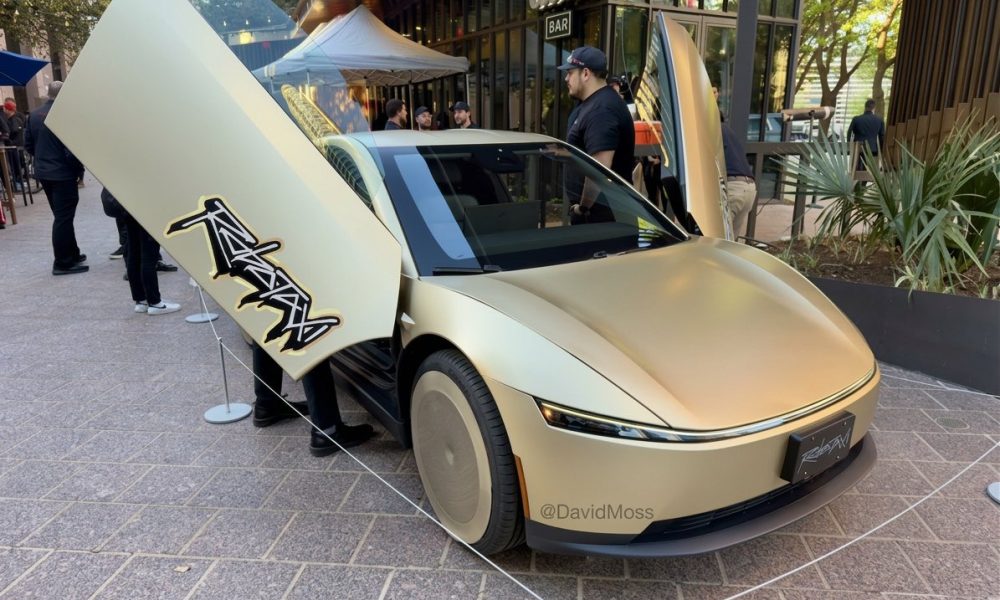
The timing is no accident. Tesla’s purpose-built Cybercab, the two-seat pod with no steering wheel or pedals, is scheduled to launch in Austin on September 3, barely a week away. Employees have already been riding in the vehicles on public and private roads for weeks.
Tesla expects to fold the Cybercab into its existing Robotaxi fleet within days of the event. Austin has been Tesla’s proving ground since the early rollout, previously running robotaxi service from 6 a.m. to 2 a.m. as of last September. That was before the service expanded into Dallas, Houston, Miami, Tampa, Orlando, and the Bay Area.
Whether Austin’s extended overnight hours still apply or whether the new 6 a.m. to 10 p.m. window is now uniform across every city was left unanswered.
Tesla has a pattern here. It expands geofences first, then hours, then fleet size, each step arriving with minimal advance notice. The dispatch upgrade fits that playbook perfectly: quiet, incremental, no fanfare until it is already live.
But folding Cybercab into the fleet introduces a variable Tesla has not dealt with before. Every robotaxi currently running is a modified production vehicle, a Model Y or Model 3 with cameras and compute. Cybercab is something else entirely, a vehicle designed from scratch with no manual controls.
Mixing two fundamentally different vehicle types in one dispatch system, each with different passenger capacities, ride characteristics, and presumably different operational parameters, is a fleet management challenge no company has tackled at commercial scale.
The smarter dispatch logic Tesla just deployed may have been built with exactly this complexity in mind. If the system can predict demand well enough to pre-position vehicles, it can also decide which type of vehicle to send. A two-seat Cybercab for a solo rider heading to the airport, a Model Y for a family of four.
That is the kind of optimization problem Tesla’s AI group lives for. Whether it actually works when Cybercab enters the mix next week is the question nobody at Tesla is answering yet.
The company framed the whole update as simply fewer riders waiting around for a car. Six months ago, the service barely existed outside Austin. Now it spans seven metro areas with expanding hours and a fleet Tesla will only describe as “a lot bigger.”
The September 3 event in Austin will test whether the infrastructure Tesla has quietly built can absorb something genuinely new, or whether the careful incremental approach hits its first real stress point.

Share this Story