
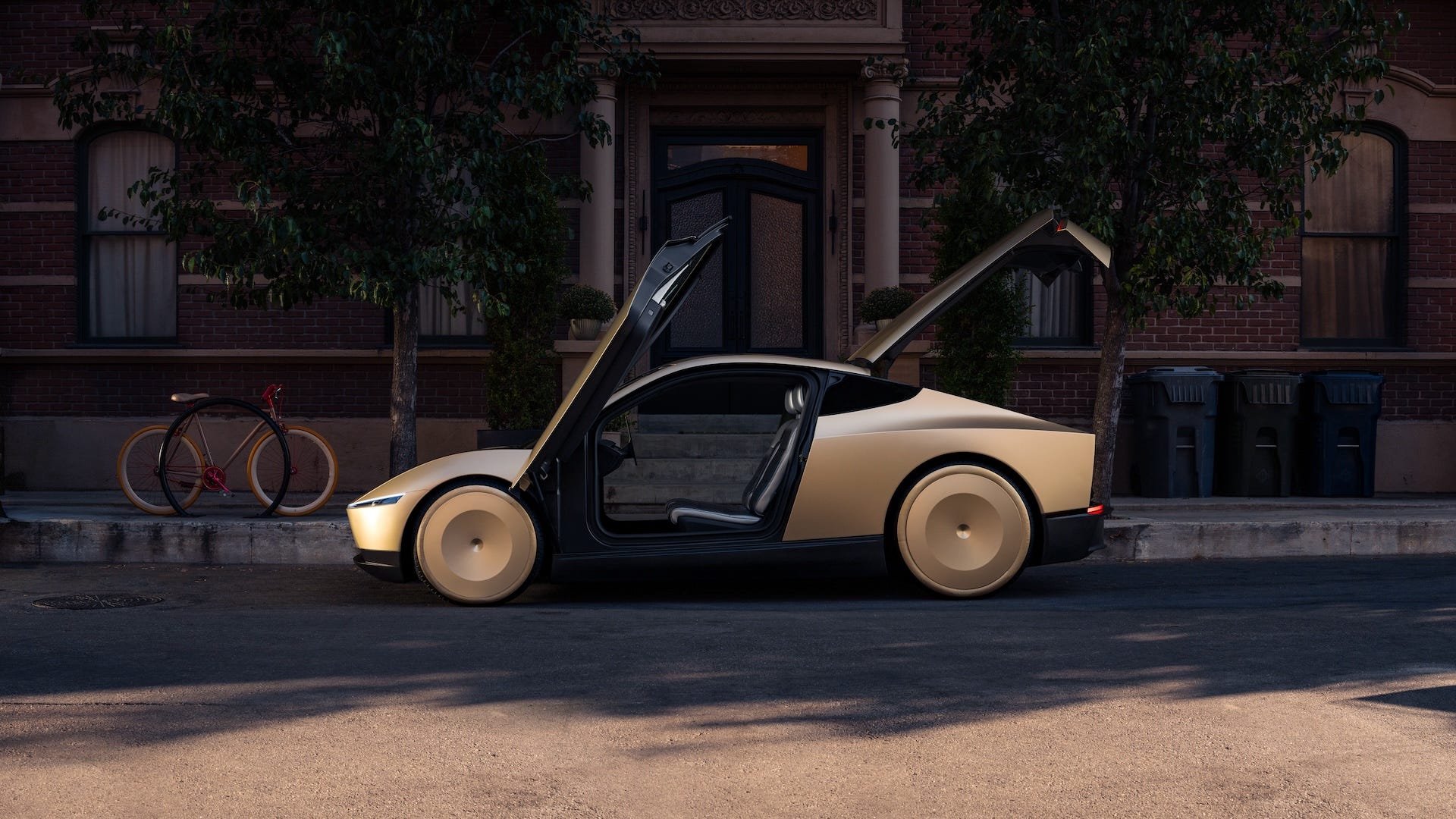


The EPA just did Tesla’s job for it. Documents submitted to the Environmental Protection Agency have quietly revealed the core specs of the Tesla Cybercab, the two-seat autonomous vehicle that Elon Musk has been promising in one form or another for the better part of a decade. The numbers paint a picture of a small, light, modestly powered electric coupe — and raise at least one confusing question about what’s actually driving the wheels.
The Cybercab tips the scales at 3113 pounds. A single electric motor rated at 219 horsepower sits up front, powering the front wheels. The battery pack is compact, roughly 50 kWh, yielding a lab-tested range just shy of 280 miles on the EPA combined cycle.
None of those figures are official EPA ratings yet, but they come straight from Tesla’s own filings.
Here’s where it gets odd. The documents list the drive system as front-wheel drive but note the “drive mode while tested” was all-wheel drive. The regenerative braking source is identified as the front wheels only.
That contradiction suggests either a clerical error in the paperwork or something Tesla isn’t fully disclosing about the drivetrain. Given the single-motor setup and front-wheel regen, the smart money says it’s a typo.
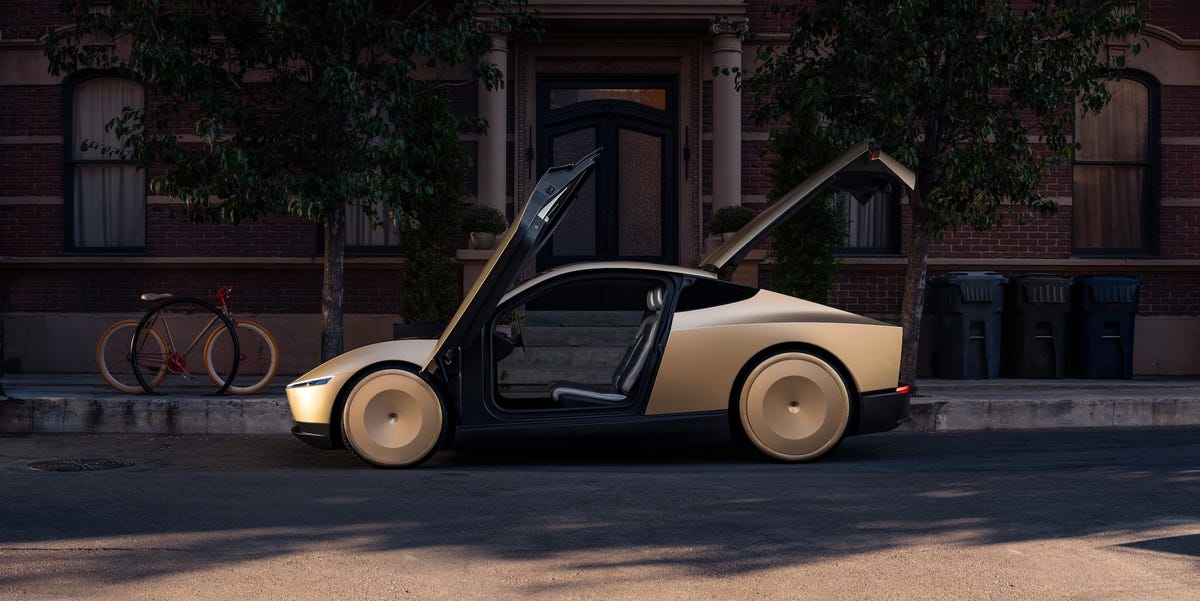
The specs themselves tell a story Tesla’s marketing hasn’t been eager to spell out. This is not a performance vehicle. It’s not a luxury pod. It’s a purpose-built appliance — lightweight, efficient, and just powerful enough to move two people around an urban grid without burning through its battery in half a day.
At roughly 50 kWh, the pack is smaller than what you’d find in a base Model 3. The range target of 280 miles is respectable for a vehicle this size, but it also signals that Tesla is optimizing for cost, not capability.
That matters because the Cybercab is supposed to arrive without a steering wheel or pedals. No human controls. Full autonomy or nothing. Tesla currently runs a small fleet of driverless Model Y robotaxis in parts of Texas, but the leap from supervised operations in a geofenced zone to selling a pedalless vehicle to the general public is enormous.
The regulatory, legal, and technical hurdles haven’t been cleared. They haven’t even been fully defined.
Musk has been forecasting full self-driving capability since 2016. Every timeline has slipped. Every promise has come with an asterisk. Tesla’s supervised Full Self-Driving system has improved significantly, but “supervised” is doing a lot of heavy lifting in that sentence.
Removing the steering wheel means removing the fallback. There is no Plan B when the software gets confused by a construction zone or an unmarked intersection.
The Cybercab is expected to be priced under $30,000. At that weight and power level, it would undercut virtually every EV on the American market while offering a driving experience that — if Tesla does include manual controls — could actually be genuinely fun. A 3113-pound car with 219 horses and front-wheel drive has the bones of something entertaining, not just utilitarian.
But that’s the tension at the heart of this vehicle. Tesla wants it to be a robot. The specs suggest it could be a perfectly decent little car.
Whether regulators, insurers, and actual humans are ready to sit in a machine with no steering wheel and trust the software completely is a question these EPA documents can’t answer. The horsepower and curb weight are settled. Everything else about the Cybercab remains, as it has for years, an open promise.
Share this Story