
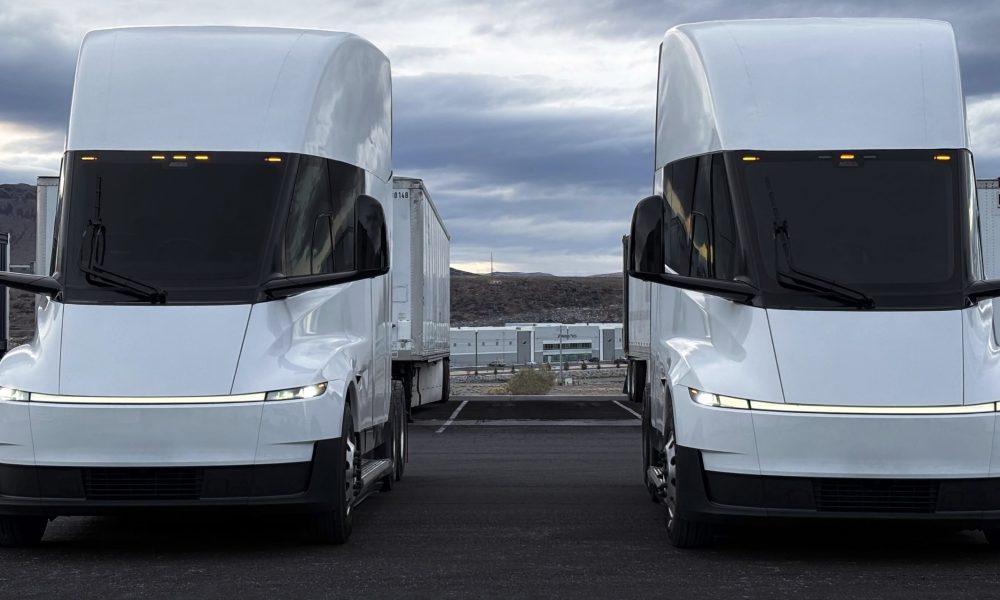


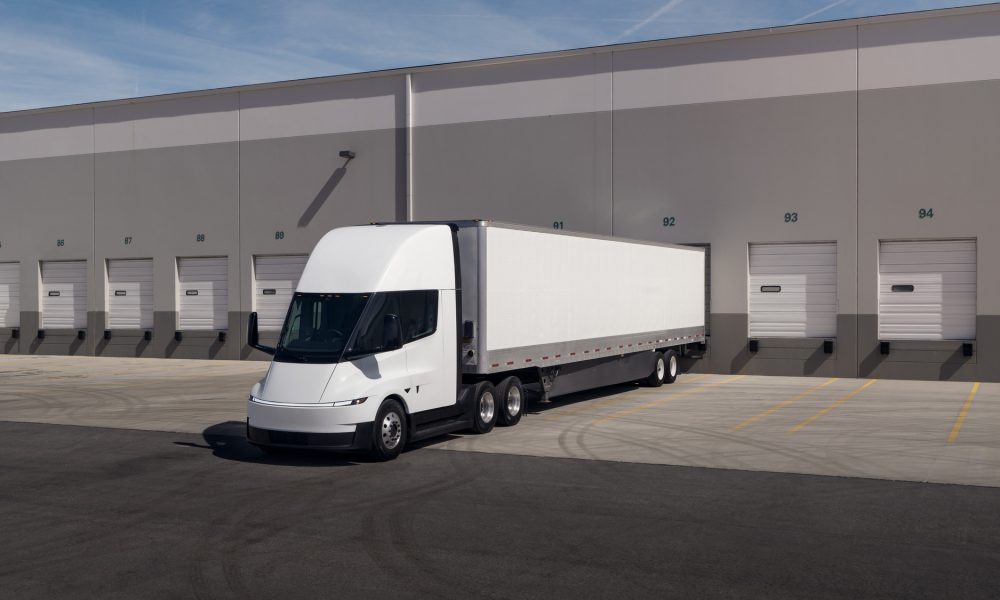
Einride, the Swedish transport company that placed the largest Tesla Semi order on record, now says it expects to take delivery of all 500 trucks before the end of 2027. That is a sharper timeline than the two-year window the company initially outlined when the deal was announced.
CEO Roozbeh Charli went further in a recent interview, saying Einride anticipates having 75 Semi units in its fleet before the end of 2026. If that holds, it would mean Tesla is delivering trucks at a pace that suggests the Sparks, Nevada factory is producing real volume, not just prototype trickles.
The timing matters because Tesla plans to officially launch the Semi on September 24, roughly five months after production began ramping at the dedicated Nevada plant. For years, the Semi existed in a kind of automotive purgatory. Announced in 2017, teased repeatedly, and tested in small numbers with PepsiCo and Frito-Lay on regional routes, it never quite crossed the line from promising concept to shipping product.
Now the order book is filling before the launch party even happens.
Charli framed the Tesla deal as part of a broader logistics play. Einride already works with Amazon, deploying its Saga AI platform to help fleet operators handle budgeting and route forecasting. The 500 Semis are meant to feed that system with real hardware.
Tesla is also a relationship we’ve had for a while, and as the Tesla Semi deliveries are firming up, we decided to do a larger commitment,” Charli said.
That phrase, “firming up,” does a lot of quiet work. It implies there was a period when deliveries were not firm, when commitments from Tesla were soft enough that a 500-unit order would have been premature. Something changed.
What changed, most likely, is that the Nevada factory started producing trucks at a rate that gave Einride enough confidence to compress its delivery expectations by roughly eight months. Going from “over the next two years” to “within 16 months” is not a rounding error. It is a bet that Tesla’s manufacturing line is real and running.
Drivers who have tested the Semi on commercial routes with PepsiCo have reportedly praised its safety features and ease of use. That kind of feedback from actual long-haul operators carries more weight than any spec sheet. Trucking is a business where downtime costs money by the hour, and drivers who hate a truck will make sure everyone knows it.
The Semi launch lands in a busy stretch for Tesla. A week before that September 24 date, the company plans to debut Cybercab rides for the public in Austin on September 3. The Robotaxi fleet just expanded its hours to 6 a.m. to 10 p.m. across all operating markets, and Tesla says upgraded dispatch intelligence is cutting wait times.
Tesla is simultaneously trying to prove it can run an autonomous ride-hailing network, deliver a purpose-built robotaxi with no steering wheel, and ship Class 8 electric trucks at scale. Any one of those would be a full-time job for most automakers.
Einride is betting the truck piece is solved, or close enough to solved to stake 500 units on it. If those 75 trucks show up before January, that bet starts looking prescient. If they don’t, the compressed timeline becomes just another Tesla promise that aged poorly.
Share this Story