
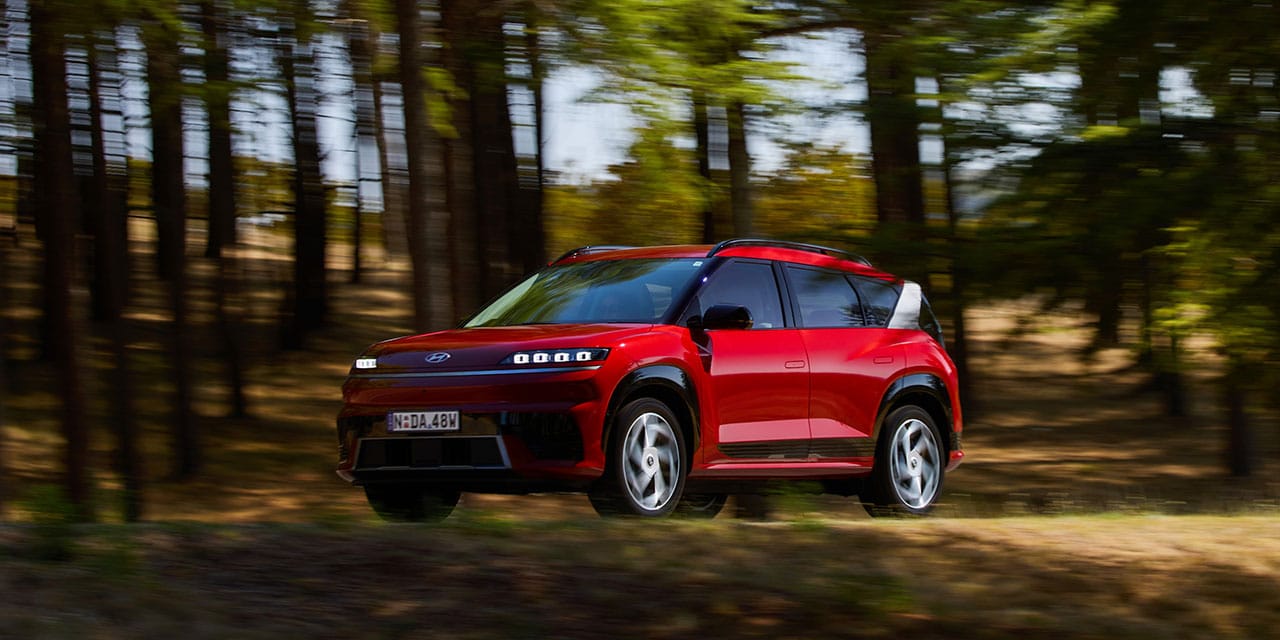


Hyundai’s all-new ELEXIO electric midsize SUV just pulled a maximum five-star rating from ANCAP, the Australasian New Car Assessment Program, ahead of its Australian market launch. The result, announced February 26, covers all ELEXIO variants built from October 2025 onward and sold in Australia starting this month.
That’s the headline. The deeper story is what Hyundai packed into this thing to get there.
ANCAP doesn’t run its own crash lab. It tests under protocols aligned with Euro NCAP, which remains one of the most demanding safety evaluation programs on the planet. The 2023-2025 criteria are particularly unforgiving, expanding scrutiny beyond occupant protection into vulnerable road user detection and active safety system performance.
Passing is one thing. Maxing it out is another.
The ELEXIO’s skeleton tells you where Hyundai’s engineers spent their time. A 720-degree armored body structure built with 77.5 percent high-strength steel gives the midsize SUV a crash cage that performed strongly in both frontal and side-impact scenarios. Nine airbags come standard on every variant, not just the loaded ones, including a front center airbag designed to prevent occupants from colliding with each other and extended side curtain bags.
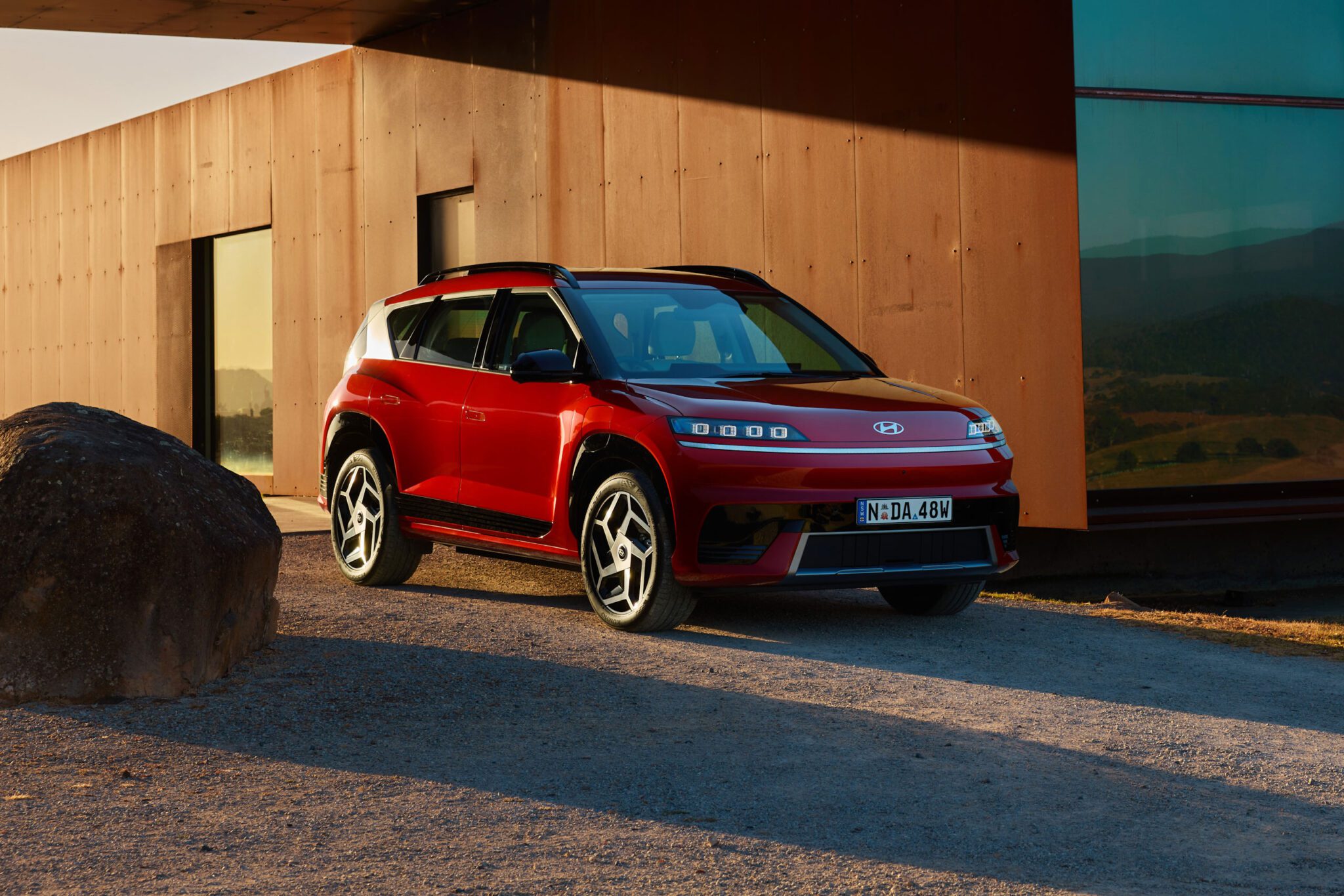
Every ELEXIO rolls off the line with Hyundai’s full SmartSense suite. Forward Collision-Avoidance Assist 2.0 can spot vehicles, pedestrians, cyclists, and powered two-wheelers, intervening with braking force in tricky situations like junction crossings and reversing. Blind-Spot Collision-Avoidance Assist monitors rear flanks and will hit the brakes during a lane change if the driver doesn’t react to warnings.
None of this is optional. None of it costs extra.
Hyundai also threw in what it calls Family Brake Mode, a tuned suspension and braking calibration aimed at smoother stops and better stability for passengers in the back. It’s a small detail that signals who Hyundai thinks is buying this vehicle: families with kids, car seats, and zero tolerance for compromise on safety.
The ANCAP results bore that out. Child occupant protection earned a “Good” rating for both six- and ten-year-old dummies, with ISOFix and top tether anchorages across all rear seating positions. Vulnerable road user protection was equally strong, with the ELEXIO detecting and responding to pedestrians, cyclists, and motorcyclists even in complex turning scenarios.
The safety assist category, where many vehicles stumble on the nuances of autonomous emergency braking, lane support, and speed assistance, saw the ELEXIO perform strongly across all critical test conditions.
This result doesn’t exist in a vacuum. Hyundai’s IONIQ 9 recently secured its own top safety honors, and the PALISADE just took Canadian Utility Vehicle of the Year. There’s a pattern forming. Hyundai is stacking safety credentials across its lineup with a consistency that used to belong exclusively to Volvo.
The ELEXIO enters the Australian market at a moment when electric SUV competition is fierce and buyers are treating safety ratings as non-negotiable purchase criteria. A five-star ANCAP score is table stakes for serious contenders. But the way Hyundai achieved it, with standard equipment across every trim and no safety features locked behind higher price points, puts pressure on rivals still gatekeeping their best tech behind premium packages.
Hyundai didn’t just pass the test. It built a vehicle where the answer to “does my version have that safety feature?” is always yes.

Share this Story