
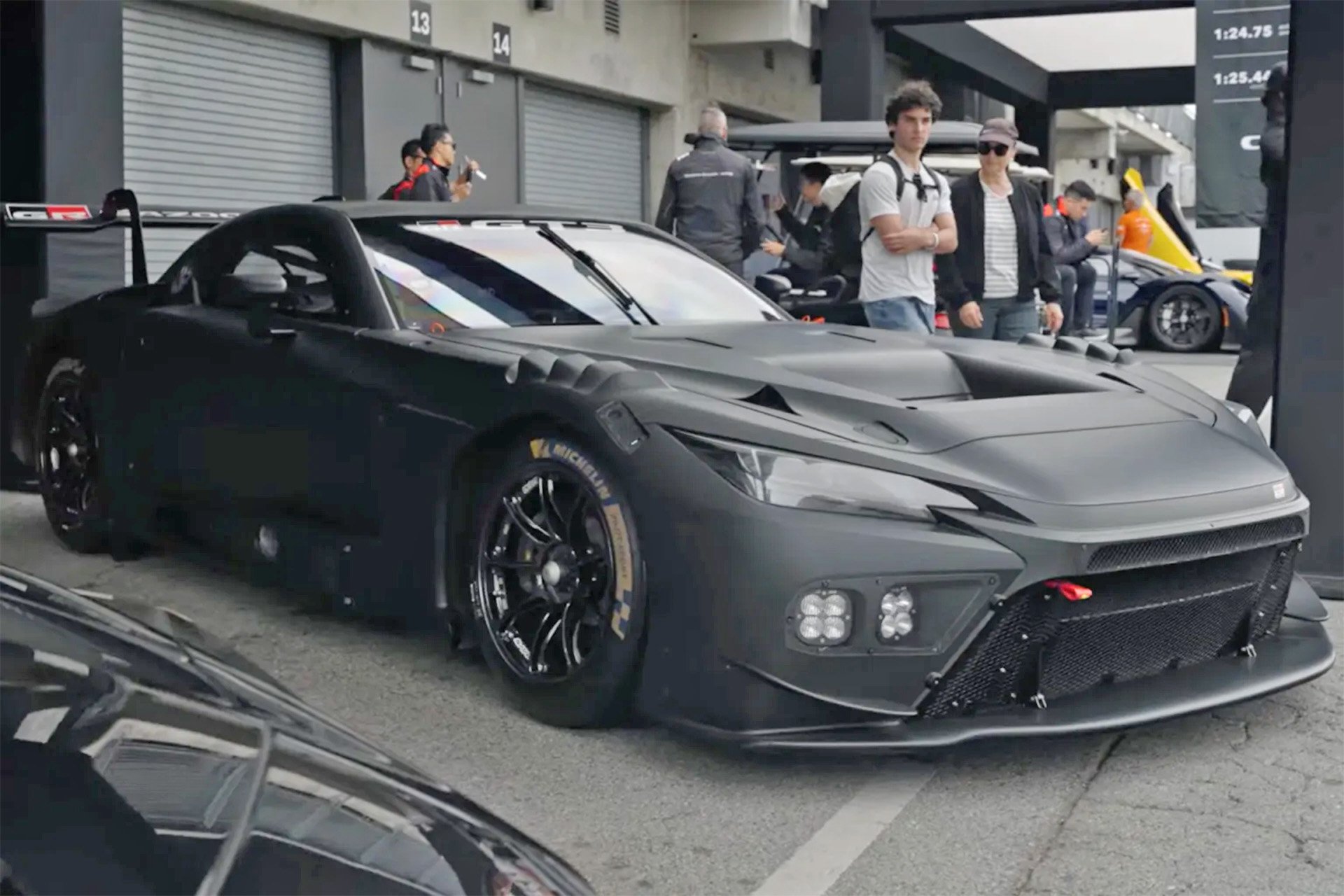


For decades, automakers have taken production cars and turned them into race cars. Toyota just did the opposite. The GR GT was designed as a competition machine from the start, and the road car was reverse-engineered from it.
“This entire vehicle was designed to be a race car first,” Toyota Senior Vice President Andrew Gilleland said in a video for IMSA’s YouTube channel. “So you look at the road car, you see all the aero bits and pieces. Those aren’t for show.”
That’s not marketing copy. The numbers back it up. Toyota claims the GR GT3 race car shares over 80% of its components with the GR GT road car.
Compare that to the Lexus RC F GT3, Toyota’s current IMSA entry, which shares just 25% of its parts with the street version. The gap between those two figures tells you everything about how differently this program was conceived.
The road car packs a new 4.0-liter twin-turbo V8 paired with a hybrid system, targeting 641 horsepower and 627 pound-feet of torque. The race car drops the hybrid bits but keeps the V8, with its turbos mounted in a hot-V configuration and the engine pushed deep into the chassis. For Toyota, the company that made its fortune selling Camrys and Corollas, this is uncharted territory.
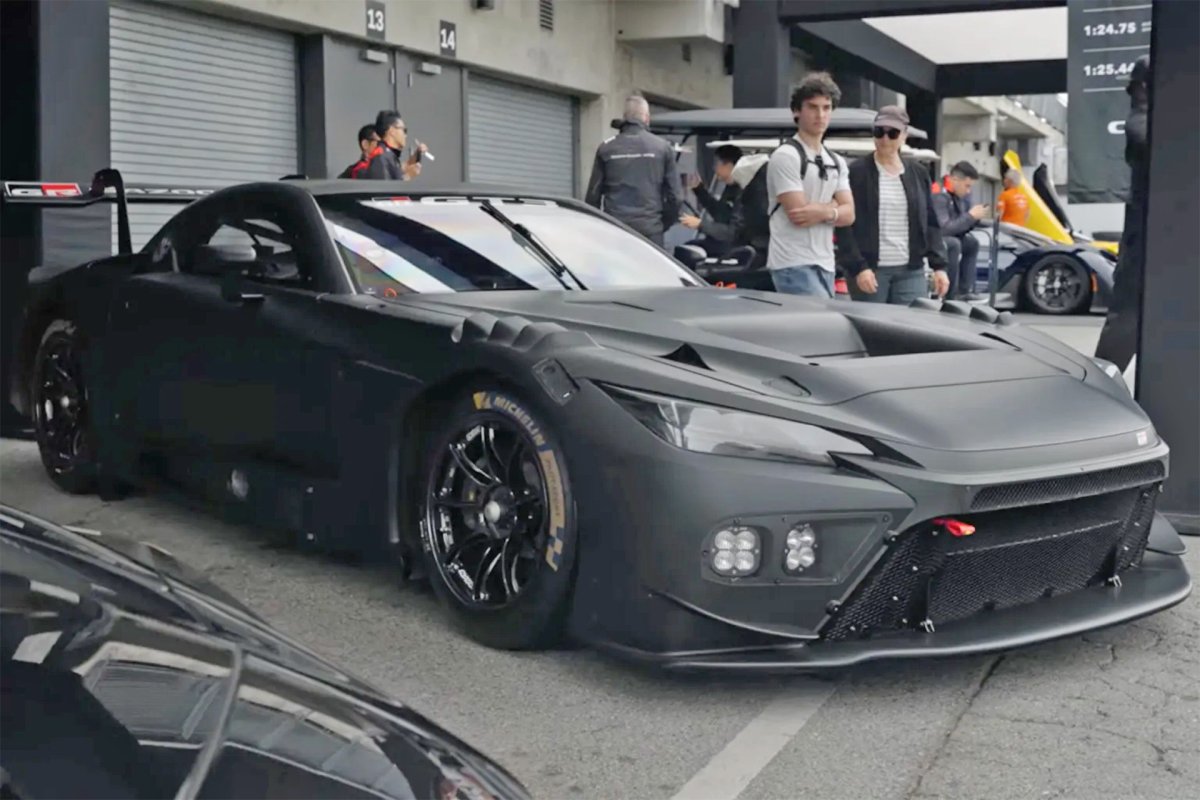
The aero surfaces on the road car mirror the race car’s design almost exactly. Bigger rear wing, larger cooling vents, and front-fender outlets distinguish the competition version, but the fundamental shapes are shared. Toyota showed both versions side by side at Fuji Speedway last year, and the family resemblance was unmistakable.
The last time someone tried this approach with any real seriousness was Ford with the GT program. That effort was laser-focused on one goal: winning the GT class at Le Mans in 2016 to mark the 50th anniversary of the GT40’s triumph over Ferrari. Ford got the win, built a limited run of road cars, and moved on.
Toyota is pitching the GR GT as something more sustained, though the road car will still be deliberately scarce. The brand has real credibility to protect here. Toyota was a fixture in IMSA during the series’ golden era, running both production-based and prototype entries.
More recently, the Lexus RC F GT3 swept the 2023 GTD Pro driver, team, and manufacturer championships with Vasser Sullivan Racing. The GR GT3 isn’t arriving to establish Toyota in sports car racing. It’s arriving to escalate the effort.
The competition it faces is fierce. The GT3 class has become one of the most stacked categories in global motorsport, with factory-backed entries from Porsche, Ferrari, BMW, Lamborghini, Aston Martin, and Mercedes-AMG. Every one of those manufacturers has years of development baked into their current cars.
Toyota is betting that starting from a blank sheet and letting performance dictate the road car’s design will close that gap faster than the traditional approach ever could. The GR GT3 hasn’t turned a competitive lap in anger yet. When it does, we’ll find out whether the philosophy holds up or whether it’s just a more expensive way to learn the same lessons everyone else already has.
Share this Story