
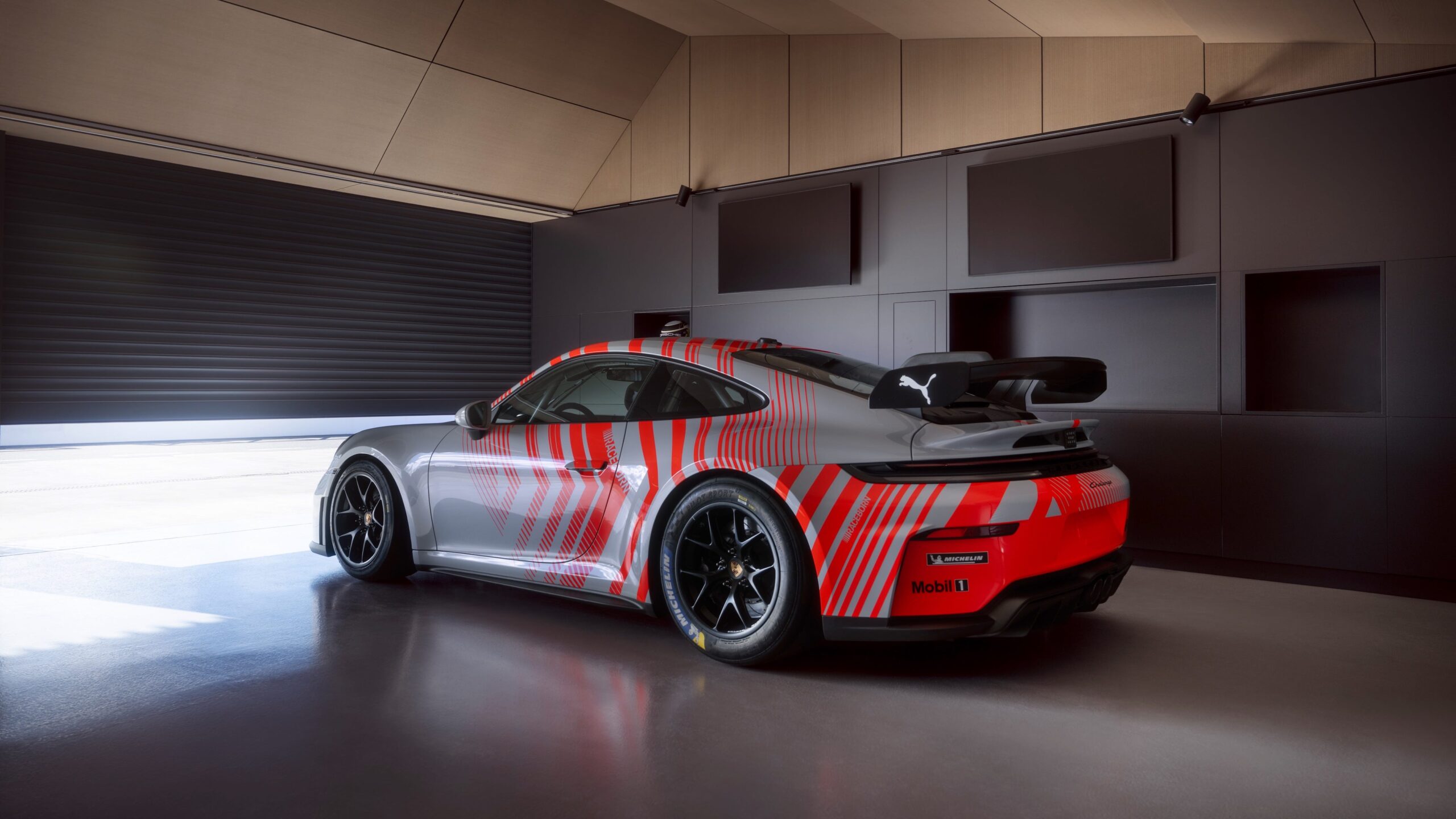


The 718 Cayman’s death created a problem Porsche doesn’t like to talk about. When the mid-engine sports car disappeared, it didn’t just leave a gap in the showroom. It killed the brand’s entry point into factory-backed racing, the Cayman GT4 Clubsport, and left aspiring Porsche racers with nowhere affordable to go.
Porsche’s solution is the 911 Challenge, a stripped-and-caged GT3 priced at $275,000 including delivery. That number lands in uncomfortable territory for the brand’s narrative, because in today’s dealer markup hellscape, a street-legal GT3 with a window sticker around $200,000 routinely trades for north of $275,000. The race car may actually be the cheaper 911 GT3.
Under the skin, the Challenge keeps what matters from the road car. The 4.0-liter naturally aspirated flat-six, the one that screams to 9000 rpm like nothing else in production, makes 508 horsepower here. That’s six more than the street GT3, courtesy of a freer-flowing exhaust that still runs a catalytic converter and muffler.
The seven-speed PDK handles shifting duties. No manual option, which makes sense given the car’s purpose but will still sting the purists who treat the GT3’s stick shift like a religious artifact.
Everything else has been reworked for competition. Airbags, gone. Sound deadening, gone. In their place sit an FIA-spec roll cage, a fire suppression system, an adjustable racing bucket, and a 29-gallon fuel cell replacing the stock tank.
An integrated air-jack system means pit stops don’t require a scissor jack and a prayer. The windshield gets a single wiper because one is all you need when you’re not pretending this is a commuter.
Porsche kept the air conditioning, though, which tells you something about the clientele. These buyers can afford cool suits. They just don’t want to bother.
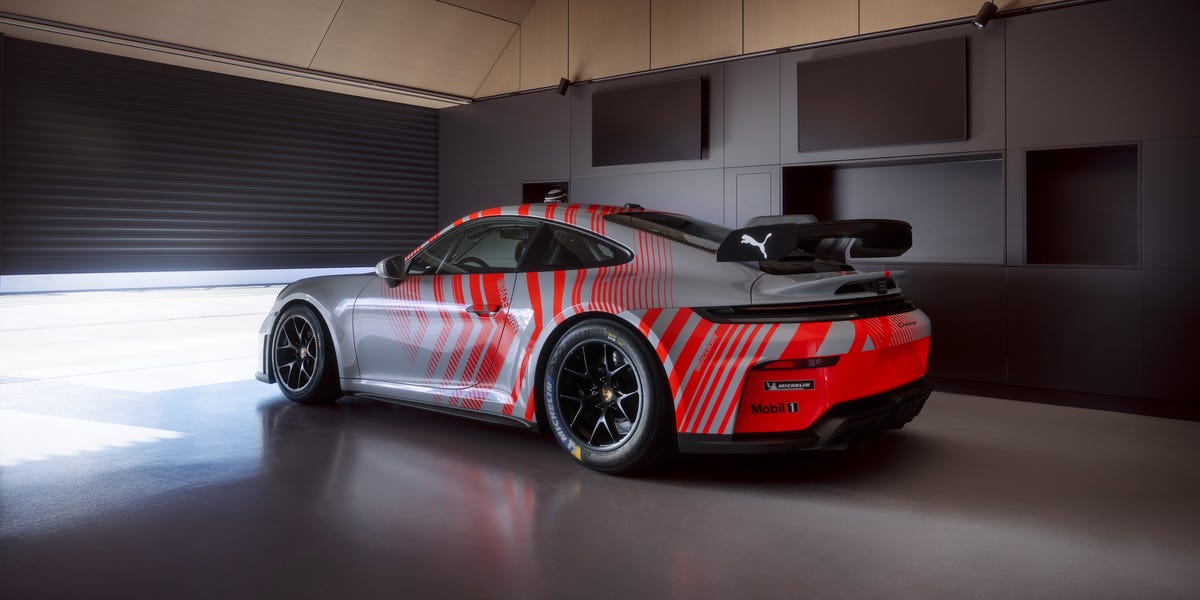
The wheels are 18-inch units with a conventional five-bolt pattern instead of the centerlocks found on higher-tier Porsche Cup cars. That’s a deliberate cost-saving move aimed at keeping spare wheels and crew equipment within reach of privateer budgets. Relatively speaking.
The 911 Challenge will be eligible for Porsche’s new Sprint Trophy races and various one-make series, filling the competitive slot the Cayman Clubsport once occupied. Porsche says sales begin “at a later stage in 2027,” which is corporate for “we’ll tell you when we’re ready.
Here’s the tension Porsche won’t address directly. Calling a $275,000 race car “entry-level” only works if you accept that the entire ladder has shifted upward. The Cayman GT4 Clubsport cost around $175,000 when it was last offered, so that’s a $100,000 jump to the next rung.
The car you’re climbing into is heavier and rear-engined, a fundamentally different teaching tool for developing drivers. The old Clubsport was forgiving. A mid-engine car with modest power teaches racecraft without punishing mistakes too severely.
A 508-hp rear-engine car on slicks is a different animal entirely, one that rewards experience and bites the inexperienced hard.
Porsche clearly believes its customer base won’t flinch at the price or the physics. Given that GT3 allocations routinely attract six-figure markups with buyers lining up regardless, they’re probably right. The 911 Challenge is less a race car for beginners and more a race car for wealthy enthusiasts who already know what they’re doing but were previously stuck tracking street cars with roll bars bolted in.
Whether a new generation of Porsche racers can actually develop through this car the way they did through the Cayman remains an open question Porsche seems uninterested in answering.
Share this Story