
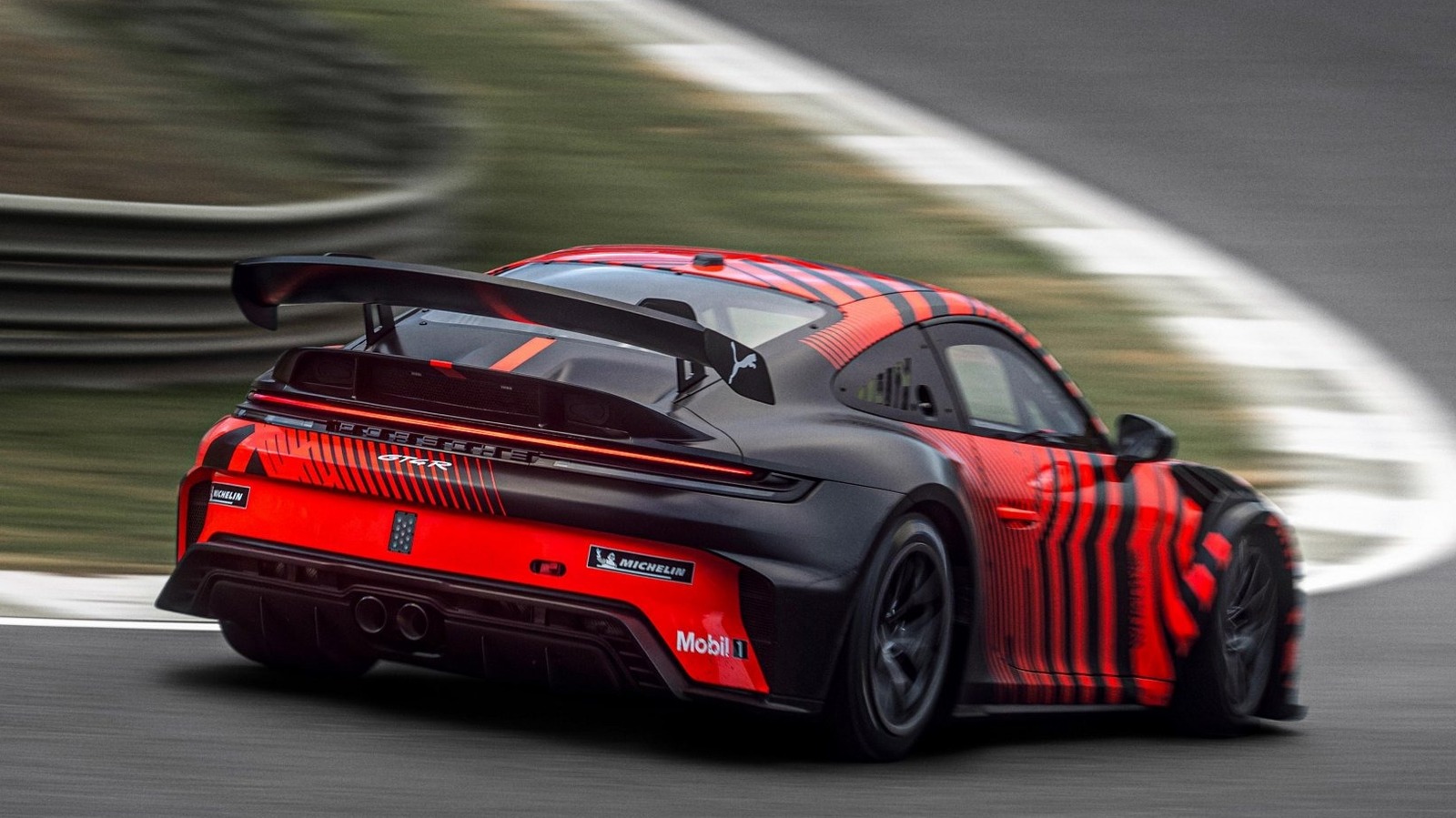


For the first time in its history, Porsche has built a GT4-class race car out of the 911. The new 911 GT4 R replaces the 718 Cayman GT4 RS Clubsport, effectively ending the mid-engine car’s reign in customer racing and handing its job to the rear-engine icon. The naming alone should give you a headache.
The GT4 R is mechanically rooted in the 911 Cup car, which itself descends from the 911 GT3 street car. So Porsche took a road car, made it into a one-make racer, then re-skinned and re-classed that racer to fill a slot previously occupied by a completely different model. If that sounds like an exercise in corporate origami, that’s because it is.
Under the engine cover — mounted way out back, as 911s do — sits the Cup car’s 4.0-liter naturally aspirated flat-six, producing 520 horsepower and 346 lb-ft of torque. The redline sits at 8,750 rpm, which is the kind of number that justifies showing up to a race even if you couldn’t care less who wins. Actual power output on track will be trimmed by Balance of Performance regulations, but the mechanical bones are serious.
The drivetrain runs through a sequential six-speed dog-engagement gearbox with a four-plate sintered metal racing clutch feeding a mechanical limited-slip differential. No paddle-shifted dual-clutch niceties here. This is a proper race car.
Compared to the Cayman Clubsport it replaces, the GT4 R runs wider tracks but narrower wheels — down an inch from the 911 Cup — to meet GT4 class specs. The Cup’s centerlock hubs are gone, swapped for a conventional five-bolt pattern. Dual-adjustable dampers and three selectable spring rates give customer teams room to tune, while forged control arms and top mounts aim for the kind of rigidity a gentleman racer probably won’t fully exploit but will certainly appreciate on the invoice.
The rear wing offers 11 positions. The bodywork leans on natural-fiber-reinforced plastic and epoxy resin to keep mass in check, and Porsche claims a curb weight of roughly 3,340 pounds. Inside the single-seat cockpit, a 10.3-inch color display handles telemetry, settings, and the usual digital housekeeping modern race cars demand.
Price: $375,500, delivery included. That’s customer racing money, not hypercar money, but it’s not pocket change either. Porsche is targeting IMSA Michelin Pilot Challenge and SRO Pirelli GT4 America for the car’s competitive debut in 2027.
The real story here isn’t the spec sheet. It’s the strategic consolidation. The 718 Cayman is gone from Porsche’s road car lineup, replaced by the electric Macan and a forthcoming next-generation model that may or may not retain a combustion engine.
Pulling the Cayman out of GT4 racing too means the mid-engine platform has been fully vacated from Porsche’s competitive ecosystem. The 911 now covers everything from club racing to Le Mans.
Whether a rear-engine 911 chassis is the ideal platform for a class historically dominated by mid-engine cars is a question Balance of Performance will paper over. That’s how modern GT racing works — the rulebook equalizes everything until the hardware differences barely matter. But symbolically, this move says plenty.
The Cayman was Porsche’s cheaper, lighter, arguably better-balanced sports car. It was also the one Porsche never fully let off the leash. Now it doesn’t have to worry about that anymore.
Share this Story