
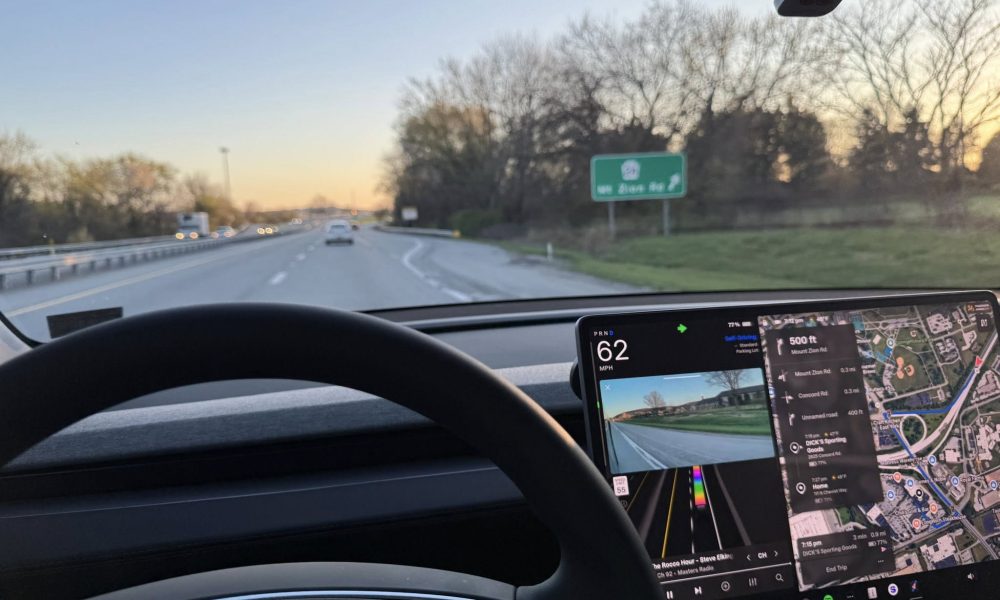


David Moss hit 20,000 consecutive miles on Tesla’s Full Self-Driving system this week without touching the wheel, the brake, or the cancel button. Not across multiple trips. One single, unbroken streak.
The Tacoma, Washington resident, who sells LiDAR equipment for a living, has spent eight months turning his Model 3 into a rolling endurance test for FSD. He first grabbed attention in December 2025 after logging 10,000 miles on FSD v14.2, then drove from the Tesla Diner in Los Angeles to Myrtle Beach, South Carolina, covering 2,732 miles in under three days with zero disengagements. Tesla later featured that trip as an official customer story.
His first streak reached 12,961 miles across 30 states before winter killed it. Snow and single-digit temperatures in rural Wisconsin forced him to grab the wheel. He started over from zero.
The second streak has been relentless. In late May, Moss drove 3,760 miles across Canada with two companions, Horseshoe Bay to Halifax, no interventions. Tesla AI VP Ashok Elluswamy publicly congratulated him on X. In June, he pushed south toward the Mexican border and crossed 10,000 miles on Tesla’s new in-car streak counter, the first driver to trigger the confetti animation Tesla added in software version 14.3.4.
Now he’s doubled that number. Twenty thousand miles means a single car navigated highways, city grids, construction zones, and Supercharger stalls without its driver ever stepping in.
The verification matters here more than the headline number. Every mile runs through the FSD Database, a community tracker built by Omar Qazi, known as @WholeMars on X, that pulls telemetry directly from the vehicle and logs disengagements to a tenth of a mile. This is not a YouTube thumbnail claim. The data trail exists.
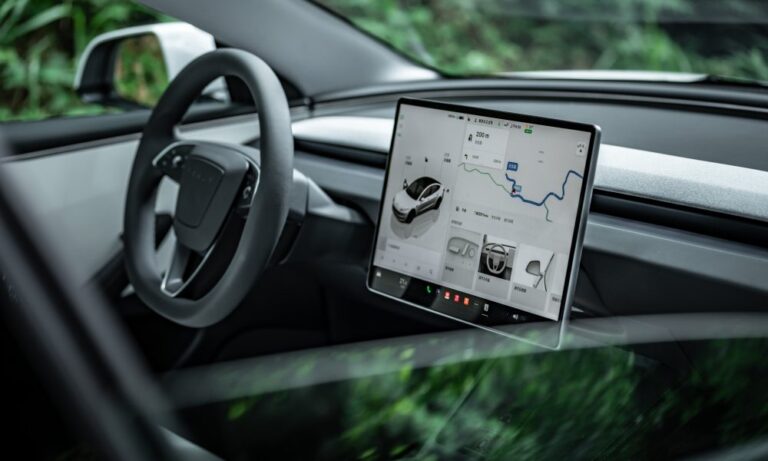
The streak counter itself is new. FSD v14.2 introduced a Self Driving Stats panel, and v14.3.4 added the live counter in June. It resets instantly if the driver brakes, jerks the wheel, or cancels navigation. The system is binary. Either the car did it or it didn’t.
Tesla rolled additional context around FSD this same week. The company’s 2026 Summer Update, which started hitting some vehicles on July 26, includes new Traction Control Modes for the Model 3 and Model Y. Three settings, Auto, Slippery Surface, and Stuck Assist, give drivers and FSD better tools for rain, ice, snow, mud, and sand.
These modes were previously limited to Model S, Model X, and Cybertruck. The timing is no coincidence. Moss’s first streak died in a Wisconsin winter, and Tesla clearly wants the software to handle those edge cases next time.
Moss has said publicly that the goal is not record-setting for its own sake but demonstrating what the software already does, mile by verified mile. That framing is deliberate. Tesla is under pressure to prove FSD delivers real-world results, not just demo-route perfection.
The company’s stock dropped roughly 19 percent the same week after a Q2 earnings report that beat on revenue but missed badly on profit. A single owner running up 20,000 autonomous miles does not prove fleet-wide readiness. Sample size matters, and Moss is one driver on routes he increasingly knows well.
But the verification infrastructure around his runs, the telemetry logging, the public tracking, the software-enforced streak counter, represents something Tesla lacked for years: receipts.
Moss is still driving. The streak counter has not reset. And Tesla’s summer software update is still rolling out to the broader fleet, with the new traction modes riding along. The next Wisconsin winter will be the real test.
Share this Story