
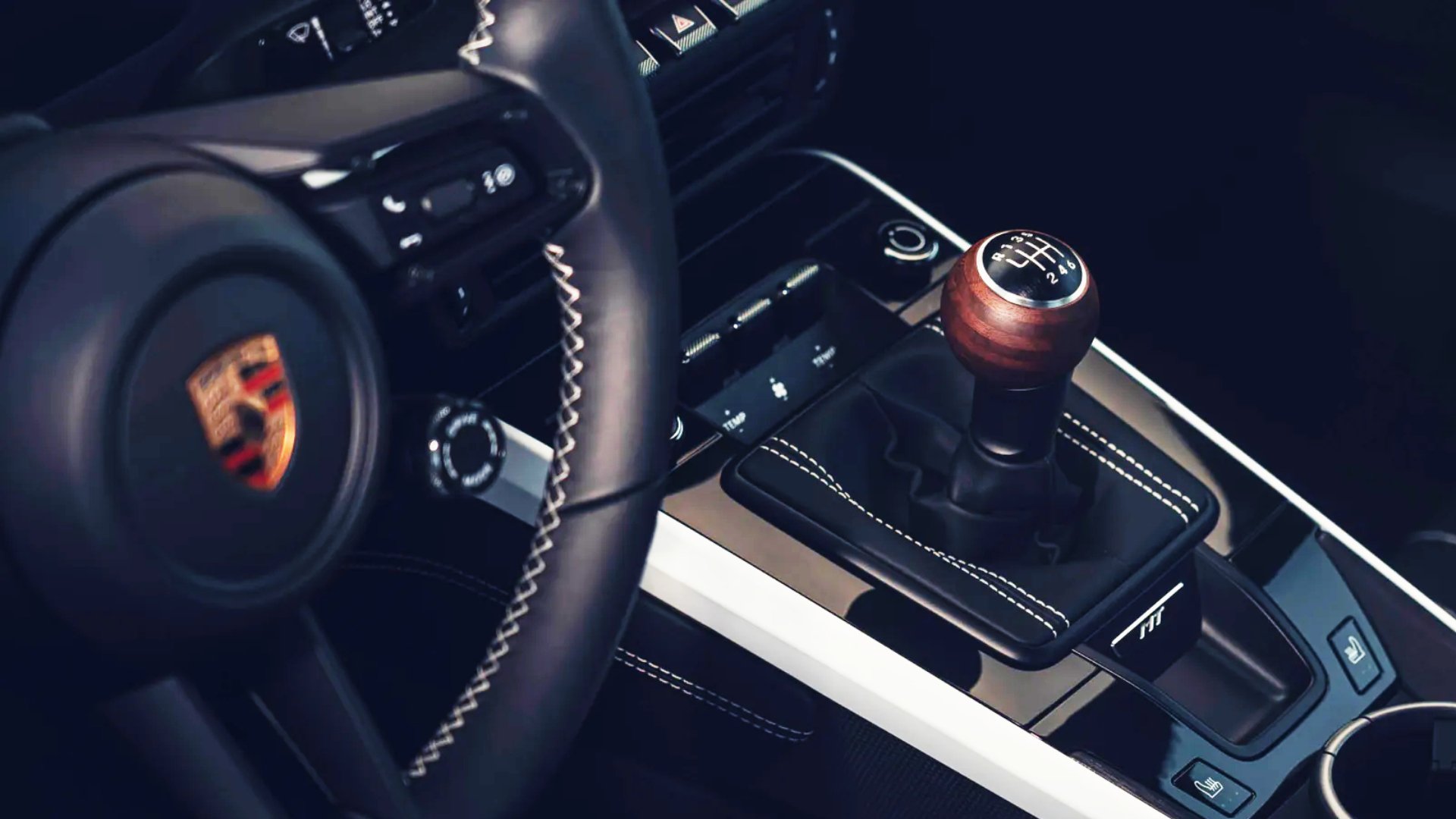


The manual transmission in a Porsche 911 Carrera S used to be free. Now it costs $8,550. And the company’s CEO says there’s more coming.
PCNA chief Timo Resch laid out the rationale during a Q&A session at Monterey Car Week, framing the upcharge not as a penalty for enthusiasts but as a value-packed bundle. The manual package on the 992.2 Carrera S includes a titanium exhaust, rear-axle steering, and centerlock wheels, items Resch says a typical manual buyer would likely option anyway.
“You have to look at the entire package of things that you get,” Resch told journalists. “The centerlock wheels, you don’t even get them on the Carrera S.”
Fair enough. But there’s a difference between choosing options and being forced to buy them just to get a third pedal.
The real story isn’t the bundle pricing. It’s the admission that the manual almost didn’t happen at all. When Porsche mapped out the 992.2 generation, no manual variant was planned.
The stick shift made the cut only after Porsche monitored online chatter from customers who demanded it. Resch credits the U.S. market, Porsche’s largest, for raising enough noise to change the engineering brief.
“At the beginning phase of the 992 generation, it was not planned,” Resch said. He praised Porsche’s willingness to listen, though he acknowledged the process isn’t exactly nimble. Homologating a new transmission package, testing it, and approving it takes well over a year.
So the manual survived, barely, on a wave of internet enthusiasm and market pressure. And Porsche responded by wrapping it in a mandatory options bundle that pushes the Carrera S coupe to $167,100 before you touch the configurator.
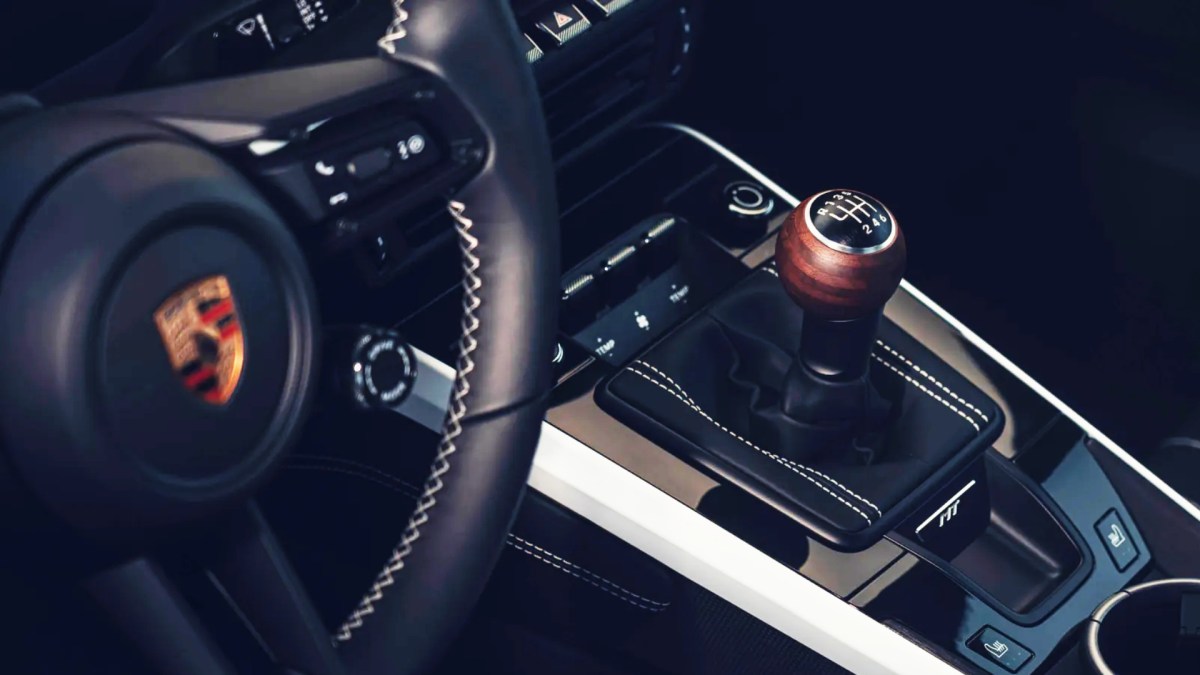
Resch’s most telling comment was also his most cryptic. “I think we have not seen the very end of this development,” he said. “I think there are a lot of interesting changes in the world of manual transmissions.”
That sentence can be read in two directions. It could mean more manual-equipped models. It could also mean more creative packaging and pricing strategies designed to extract maximum margin from the shrinking pool of buyers who still insist on rowing their own gears.
The economics here are straightforward. Manual take rates across the industry are tiny. Engineering and certifying a manual variant costs real money. If Porsche is going to keep offering one, somebody has to pay for it.
And that somebody is the enthusiast who spent years begging for exactly this.
There’s a certain irony in the dynamic. Porsche listened to its most passionate customers, gave them what they asked for, then handed them a bill that makes the gesture feel transactional. The titanium exhaust and rear-axle steering are genuinely desirable hardware, but bundling them as the cost of entry to a manual gearbox turns a philosophical choice into a financial one.
Resch called the Carrera S manual package “the most authentic one.” Authentic is a loaded word at Porsche, where it tends to appear right before a price increase. The question now is what those “interesting changes” look like in practice, and whether Porsche’s definition of listening to the customer continues to include charging a premium for the privilege.
Share this Story