
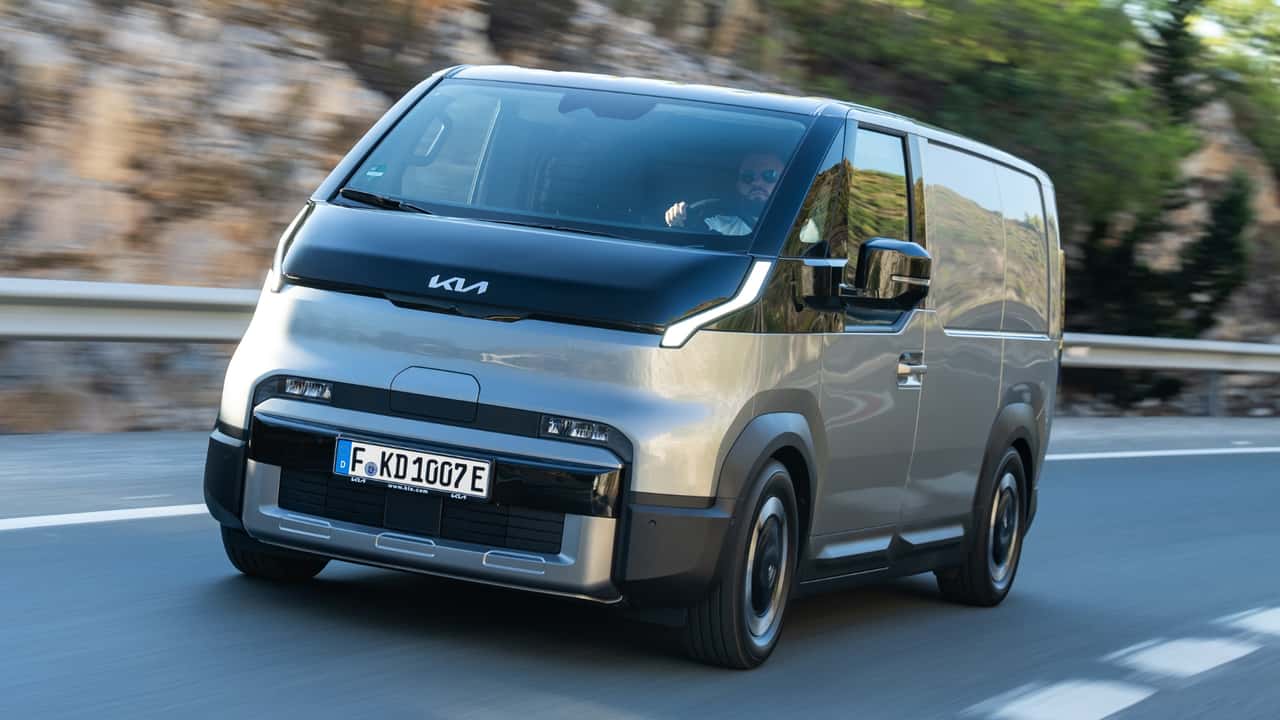


Kia isn’t tiptoeing back into the commercial vehicle market. It’s kicking the door open with a ground-up electric platform, a dedicated dealer network, and plans for more than 40 product variants by the end of the decade. The ambition is either visionary or reckless, depending on how quickly European fleets actually electrify.
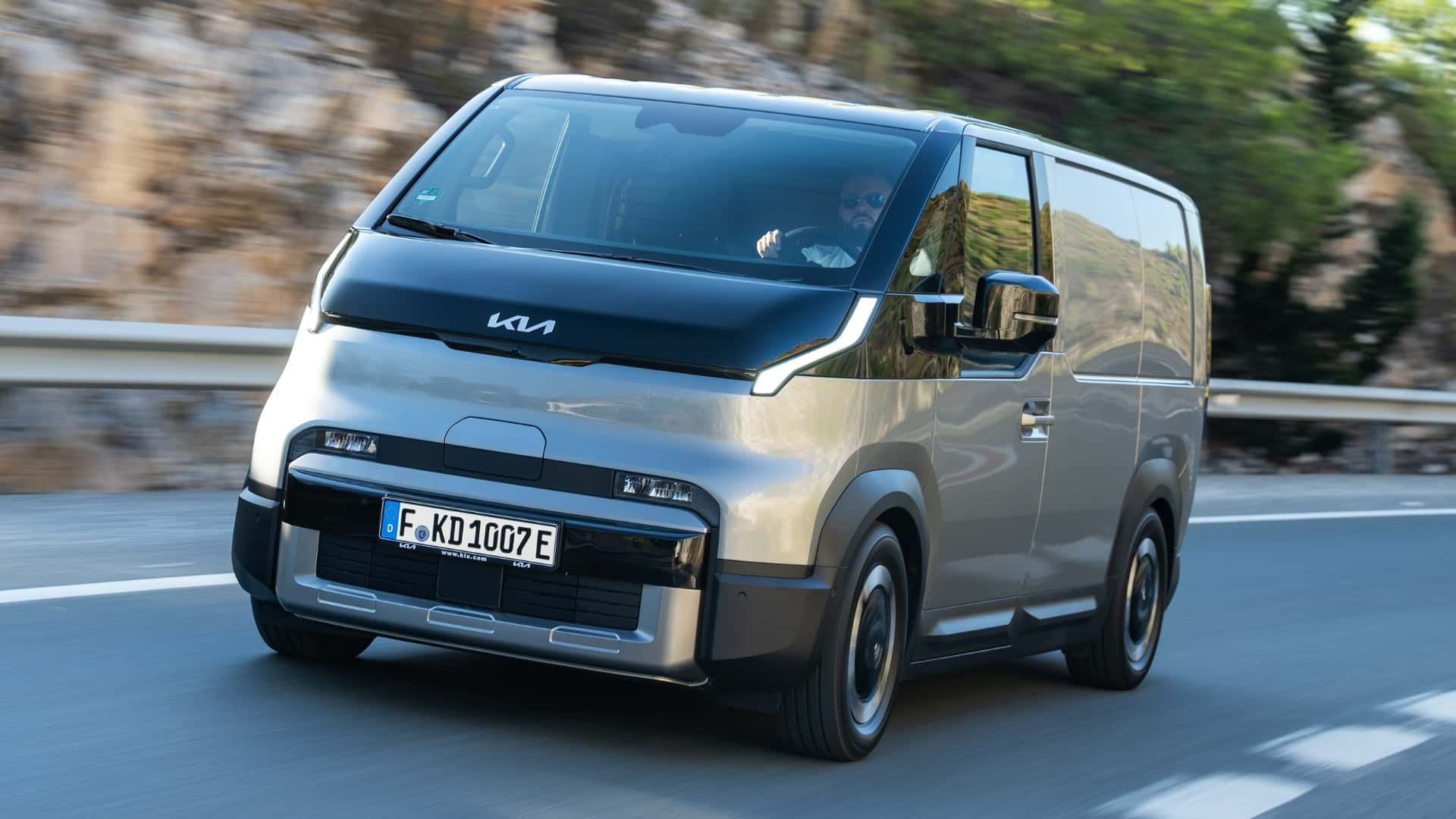
The PV5 is the opening salvo — a modular electric van engineered from scratch without a single concession to internal combustion. That distinction matters more than it sounds. Most electric vans on sale today are conversions of diesel-era architectures, which means compromised cargo space, awkward battery placement, and packaging that fights itself.
Kia’s approach yields a turning radius of just 18 feet, a figure that would embarrass most compact cars, let alone panel vans threading through Milan or London.
Alfonso Tallarico, Kia’s Director of Ownership Experience covering aftersales and PBV operations, frames it as a “paradigm shift.” That phrase gets thrown around cheaply in this industry, but the underlying structure supports it. The PV5 platform was designed to scale across three model sizes — PV5, PV7, and PV9 — with the larger two arriving in 2027 and 2029 respectively.
The modularity runs deep. Different lengths, different configurations, different use cases — from last-mile urban delivery to passenger transport — all built off the same steel architecture. Kia’s parent company, Hyundai Motor Group, has committed to more than 40 variants globally, with additional configurations developed regionally.
But hardware is only half the play. Kia is betting heavily on a digital ecosystem designed to keep commercial vehicles on the road and out of the shop. Over-the-air software updates, remote diagnostics, and AI-assisted troubleshooting from a central technical hub are all baked into the program.
The promise is predictive maintenance — catching failures before they strand a delivery driver or idle a plumber’s only van.
Fleet management gets its own tier. Small operators can track vehicles through the Kia app. Larger fleets get a dedicated B2B portal and, notably, a multi-brand fleet management platform.
That last detail is quietly significant. Kia is offering to be the dashboard for competitors’ vehicles too, which is either supreme confidence or a shrewd way to make the platform sticky enough that fleet managers never leave.
The dealer network is being restructured in parallel. Kia has handpicked retailers with existing business-customer experience and is pushing them toward extended service hours, self-check-in kiosks accessible outside normal business hours, and faster diagnostic turnarounds. A passenger-car dealership that closes at six and reopens Monday morning is useless to a courier company.
The competitive landscape is crowded and getting more so. Stellantis dominates European commercial vans with its shared platform underpinning Fiat, Peugeot, Citroën, and Opel branded vehicles. Ford and Volkswagen have their own joint-venture electric van programs. Kia has essentially zero market share in European commercial vehicles.
That blank slate is simultaneously its greatest vulnerability and its sharpest weapon. There are no legacy dealer expectations to manage, no diesel-era customers to migrate, no existing service contracts to honor. Kia can build the network it wants rather than retrofit the one it has.
Whether fleet buyers will trust a brand synonymous with the Sportage and Ceed to keep their businesses moving is the billion-dollar question. Kia’s answer is to overengineer the ecosystem — the connectivity, the service infrastructure, the platform flexibility — so thoroughly that the nameplate on the hood becomes secondary to the total cost of ownership underneath it.
Forty variants is a bold number. Delivering even half of them on time, on spec, and with a support network that actually works for commercial operators would represent one of the most aggressive market entries the European van segment has ever seen.
Share this Story