


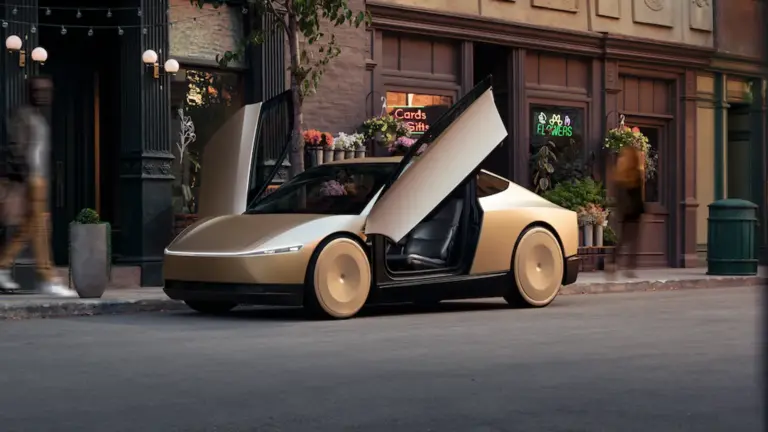
Cybercabs are rolling off the line at Gigafactory Texas with Starlink antennas bolted to the rear hatch as standard equipment. Not retrofits, not test mules, but volume production units. Drone footage captured Tuesday by Austin spotter Joe Tegtmeyer showed rows of gold robotaxis in the outbound lot carrying the satellite module alongside Model Y Long Wheelbase units.
The hardware made its first confirmed appearance on a single Cybercab back on August 10. Before that, Tesla and SpaceX had only shown a cutaway diagram. Now, barely a month later, the antenna is baked into the production run.
Tesla’s own people can’t quite agree on why it’s there.
Ashok Elluswamy, Tesla’s VP of AI software, said in July that the Starlink connection isn’t required for the car to drive itself. He framed it as a tool for navigation, customer service, and fleet monitoring. Elon Musk took a different tack on the Q2 earnings call, warning about “Bermuda Triangles of lack of cellular connectivity” and claiming Starlink will eventually reach every Tesla built.
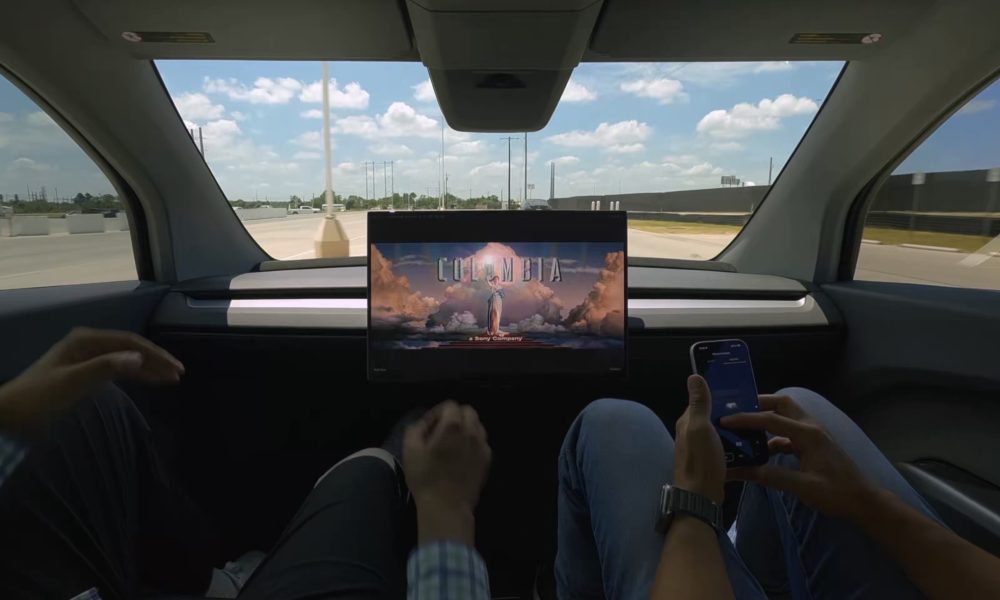
He also pitched the antenna as an entertainment play, promising riders 4K video streaming and gaming during trips. Those are two very different justifications for the same piece of hardware.
The entertainment pitch sounds good on a call. But the connectivity pitch has a geography problem. Tesla’s unsupervised robotaxi service, which opened to public riders in Austin on September 3, currently operates inside tight metro geofences in Texas and Florida.
Cybercabs have been spotted in Houston and near Miami International Airport. These are dense urban markets where LTE and 5G coverage is already thick. The rural dead zones Musk describes are nowhere near the operating boundaries.
That means the Starlink module is shipping at scale into vehicles that don’t need it yet, for a use case that doesn’t exist yet.
The Miami staging lot tells its own story about how quickly Tesla is pushing hardware into new cities. Dozens of gold Cybercabs were parked near the airport when an Amazon Prime Air 767 overran the runway on Sunday, killing five people and stopping just meters from the fleet. Miami-Dade Fire Rescue confirmed the plane struck multiple vehicles but hasn’t said whether any Cybercabs were hit.
Tesla hasn’t commented. Musk replied to one post about it with a single word: “Weird.”
Those Miami Cybercabs hadn’t entered commercial service. Tesla’s existing robotaxi operation there still runs on modified Model Y vehicles. So the company is pre-positioning its next-generation hardware in markets it hasn’t activated, fitted with satellite equipment designed for coverage gaps it hasn’t encountered.
Meanwhile, NHTSA has opened an audit into how Tesla certified the Cybercab as compliant with federal safety standards, specifically its lack of a steering wheel and pedals. That inquiry predates the Miami crash and focuses on the vehicle itself, not its parking arrangements.
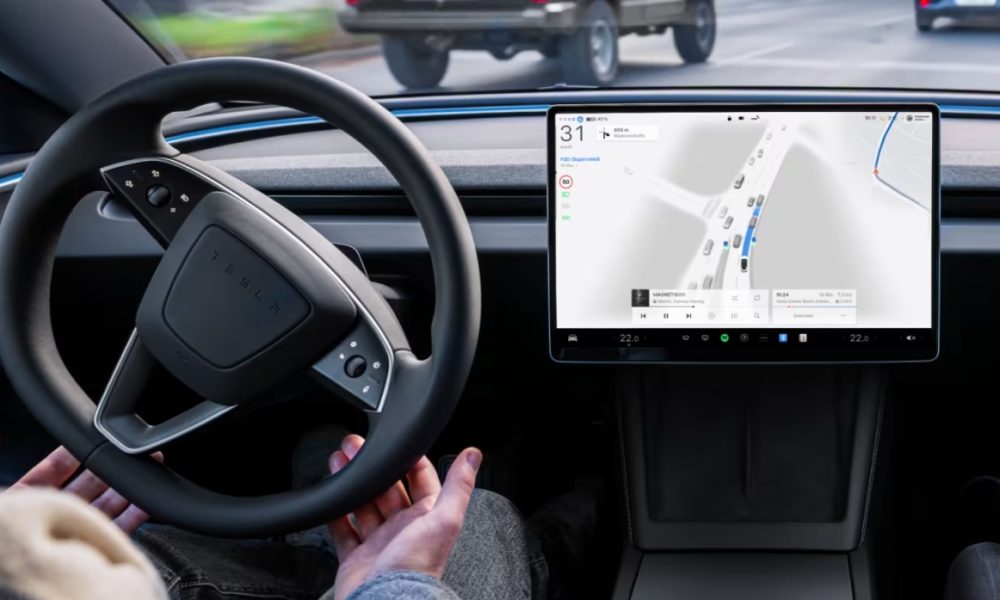
The Starlink integration fits a pattern. Tesla’s 2026 Summer Update just turned Grok into a full vehicle controller, handling climate, headlights, mirrors, phone calls, and music through natural speech. The company is layering capability onto its fleet faster than riders can consume it.
Satellite broadband for a robotaxi stuck in a cell dead zone is a legitimate engineering hedge. Satellite broadband for 4K gaming in a cab crawling through downtown Austin is a feature looking for a customer.
The antenna is on every Cybercab now. The question is whether the business case catches up before the hardware becomes just another line item on the bill of materials that nobody asked for.
Production is ramping. The geofences are still small. And Tesla is building for a map that doesn’t match the one its cars are currently driving.
Share this Story