
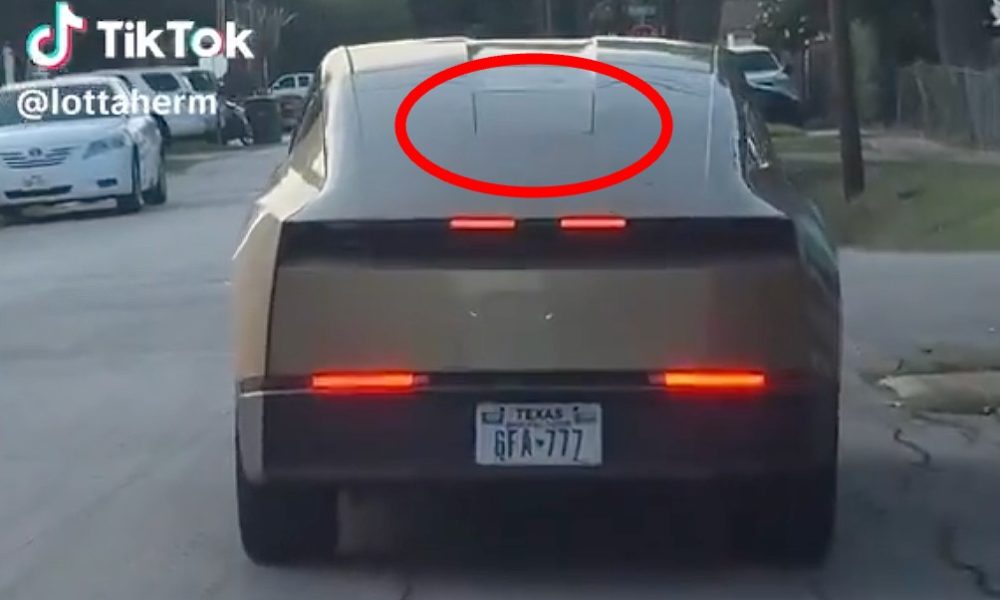


A gold Tesla Cybercab with a Starlink satellite antenna bolted to its roof was spotted rolling through Houston last week. It marks the first time anyone has seen the integrated hardware on a public road. The vehicle showed up in a TikTok video just days after Tesla revealed the first Starlink-equipped unit at Gigafactory Texas.
Tesla has been running Cybercabs on public roads across at least seven states for months now. Texas, California, Nevada, Florida, Georgia, and New York have all seen the two-seater prototypes logging miles. But none of those earlier sightings included the SpaceX connectivity hardware that Tesla clearly views as central to the Cybercab’s commercial future.
Elon Musk framed the Starlink addition as an entertainment play, pitching live TV, movies, and video games for passengers riding in a vehicle with no steering wheel. That is the consumer-facing sell. The operational rationale runs deeper.
Tesla’s head of AI, Ashok Elluswamy, said the real advantage is persistent connectivity between the company and its fleet. In a vehicle designed to operate without a human behind the wheel, losing a data connection is not an inconvenience. It is a potential safety failure. Starlink gives the Cybercab a backup communication layer that does not depend on cell towers, which matters when the vehicle is handling breakdowns, accidents, or emergencies on its own.
No paying customers have ridden in a Cybercab yet. Tesla employees are the only ones testing the vehicles internally, and public rides are not expected before the end of 2026. Production is underway at the Austin gigafactory, but the gap between building cars and running a commercial robotaxi service remains wide.
The Starlink integration also signals where Tesla’s broader vehicle lineup is headed. The Cybercab is the testbed because it was designed from scratch for full autonomy, but Tesla has made clear that SpaceX internet hardware will eventually spread across its entire fleet. The pitch is “nearly nondisruptible” internet access, a phrase that sounds like marketing until you consider how much of Tesla’s future business model depends on over-the-air updates, real-time fleet management, and subscription revenue from connected services.
SpaceX’s relationship with Tesla keeps tightening in ways that blur the line between two supposedly independent companies. SpaceX is simultaneously building out Starshield for classified Pentagon missions, expanding Starlink Mobile to compete with wireless carriers, and now embedding its hardware into Tesla’s most ambitious vehicle program. The synergy is real, but so is the concentration of critical infrastructure under one corporate ecosystem.
Houston is a fitting location for this first sighting. Tesla’s robotaxi program is already active there, and the city’s sprawling geography and patchy cellular coverage in outer suburbs make satellite connectivity more than a luxury feature. It is a practical necessity for a vehicle that cannot pull over and ask its driver to troubleshoot a dropped connection.
The timeline pressure is building. Tesla unveiled the Cybercab nearly two years ago, in October 2024, and promised a commercial launch that has slipped repeatedly. Adding Starlink hardware mid-testing suggests the company is still iterating on fundamental vehicle architecture even as it ramps production. Whether that reflects engineering discipline or schedule anxiety depends entirely on what the next few months look like.
Tesla recently secured its Nevada robotaxi permit, though it came with restrictions. Other states are watching. The Cybercab with a Starlink dish on its roof is no longer a concept render or a factory photo op. It is driving on public streets, surrounded by real traffic, carrying the weight of promises Tesla has not yet delivered on.
Share this Story