
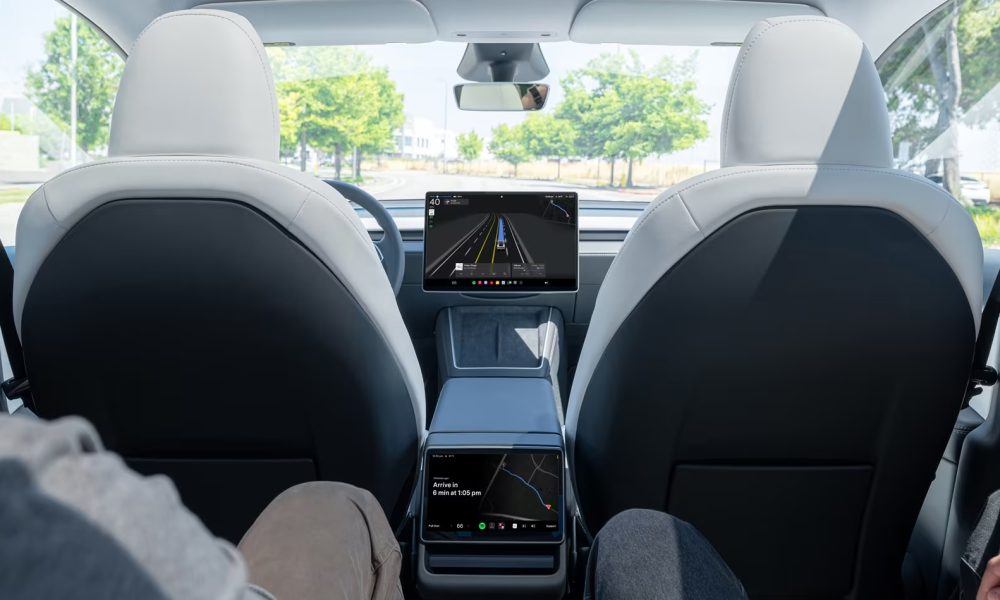


Tesla’s unsupervised Robotaxi fleet has logged more than 380,000 miles across six cities in two states without a single notable incident. That number, dropped by VP of AI Ashok Elluswamy during Wednesday’s Q2 earnings call, is the kind of stat that sounds like a knockout punch for the skeptics. Look closer at the full picture from that same call, and the shine fades fast.
Short sellers pocketed $4.12 billion in a single day on Thursday. Tesla shares cratered as much as 15 percent, marking one of the stock’s worst sessions in three years. The trigger was not the Robotaxi program. It was earnings per share of $0.33 against analyst expectations of $0.53, a gap wide enough to send even believers running for the exits.
Record revenue could not save the quarter. Tesla delivered one of its strongest vehicle sales periods ever, but the company told investors it plans to pour money into AI and its Optimus humanoid robot project. Wall Street heard “spending” and hit sell.
So here sits Tesla in a familiar split-screen moment. On one side, Elluswamy is taking direct shots at competitors who rely on LiDAR, radar, and HD maps. Historically, the so-called experts have always claimed that you need LiDARs, radars, HD maps, and the entire kitchen sink to drive safely,” he said. “Here we show that such is not true.”
On the other side, the company’s stock is bleeding and prominent short sellers like Michael Burry are openly celebrating. Burry revealed three weeks ago he had opened a fresh short position at $416.22. By Thursday’s close, shares sat at $309.92.
The 380,000 miles are real, and in a vacuum, they tell an encouraging story about vision-only autonomy. But context matters. Waymo, the obvious comparison, surpassed 100,000 paid rides per week over a year ago and operates a commercial service across multiple metro areas.
Tesla’s Robotaxi is still in a controlled, cautious rollout. Elluswamy himself acknowledged the company is not ready to unleash unsupervised rides at scale.
That word keeps doing a lot of work at Tesla. The company wants to spend freely on AI and robots. It does not want to scale the one autonomous product that could justify those investments in the near term. Investors noticed the contradiction.
S3 Partners reported that roughly 3 percent of Tesla’s outstanding shares are sold short, and those positions have generated an estimated $8.92 billion in paper gains this year as the stock has dropped 30 percent in 2026. Tesla has burned shorts before, sometimes spectacularly. But this time around, the bears have data on their side: a miss on earnings, rising capital expenditures with uncertain returns, and an autonomous driving program that remains geographically limited despite years of promises.
The Supercharger business, meanwhile, quietly offered a different kind of proof point. Tesla’s Diner location in Los Angeles delivered 21.2 GWh of energy in its first year, topping every other Supercharger site globally. It is the kind of tangible, revenue-generating success that investors used to reward. Now it barely registers against the noise of AI spending plans and robot ambitions.
Tesla’s challenge has never been technical talent. Elluswamy and his team have built something that works in controlled conditions. The challenge is convincing a market that just watched $4 billion evaporate in a day that the path from 380,000 cautious miles to a profitable global robotaxi network is shorter than it looks.
Burry’s short position is still open.
Share this Story