
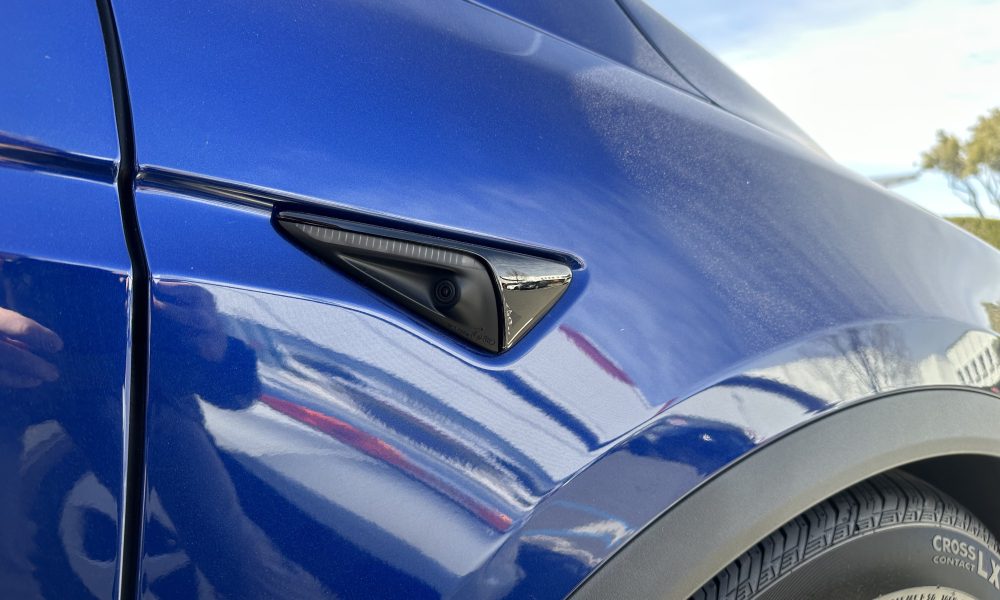


A 150-mile stress test on the Pennsylvania Turnpike revealed what anyone paying attention already suspected about Tesla’s Full Self-Driving: it’s becoming genuinely competent on highways and still embarrassingly lost in parking lots.
Teslarati reporter Joey Klender drove his Model Y running FSD Supervised v14.3.3 from eastern Pennsylvania to the Flight 93 National Memorial near Shanksville, roughly 300 miles round trip, and documented the entire journey. The highway performance was sharp. FSD read lane-ending arrows painted on the road and aborted a pass rather than cutting it too close.
It recognized a tractor-trailer drifting into its lane and shifted toward the shoulder to create space. It obeyed tunnel signage prohibiting lane changes. It glided through toll plazas at appropriate speed.
These are not trivial achievements. Two years ago, any one of those scenarios might have triggered an intervention. The system’s ability to process road markings, signage, and the unpredictable behavior of 18-wheelers in real time marks a measurable leap.
Then the car tried to park.
At a Supercharger, FSD botched a reverse maneuver badly enough that Klender had to take over and manually slot into a different stall. At the destination itself, the car circled the parking lot four times, its navigation rerouting in confused loops, before Klender grabbed the wheel. Other owners confirmed they’ve seen the same behavior.
This is the gap that separates a very good highway driver-assist system from anything resembling autonomy. Highways are structured environments with lane markings, consistent traffic flow, and predictable geometry. Parking lots are chaos.
Pedestrians cut across at random. Spaces are tight. The system that reads tunnel warnings at 65 mph cannot figure out how to stop circling a half-empty lot.
Klender noted something else worth sitting with: this was the first time he’d made the emotionally draining trip to the Flight 93 Memorial and not felt completely wiped out upon arriving home. That’s the real product Tesla is selling — not a robotaxi, not full autonomy, but reduced cognitive load on long highway drives. It’s a meaningful thing, and underselling it in pursuit of grander claims does Tesla no favors.
Meanwhile, Tesla pushed another quality-of-life update this week. Software version 2026.20 introduces a web-based dashcam viewer at dashcam.tesla.com. Clips stored on your car’s drive get encrypted with a key tied to your owner account, then become accessible through any browser.
It’s a cleaner interface than scrubbing through footage on the phone app, and it lets owners download clips to a laptop or external drive instead of clogging up their phone storage. Only a small percentage of the fleet has received 2026.20 so far.
Across the Atlantic, Tesla’s European registration numbers in May told a recovery story. France posted a 655 percent year-over-year surge to 5,446 vehicles. Denmark jumped 136 percent, with the Model Y becoming the country’s top-selling vehicle overall.
Portugal climbed nearly 350 percent. Even Norway, already saturated with EVs, saw a 29 percent gain and Tesla commanding 21.5 percent market share.
These numbers follow a brutal 2025 that saw European sales drop roughly 28 percent amid production transitions, rising competition from BYD, and political backlash. The refreshed Model Y and supportive government incentives are clearly pulling buyers back in. Whether the momentum holds through summer will determine if 2025 was a blip or the beginning of a longer competitive squeeze.
The through line across all three stories is a company that executes well on the big, structured problems — highway driving, fleet software updates, product refreshes for major markets — and still stumbles on the small, messy ones. Parking lots. Phone app navigation. The last fifty feet.
Those last fifty feet are where autonomy actually lives. Until Tesla solves them, FSD remains what it has always been: an exceptionally good supervised system with an aspirational name.
Share this Story