
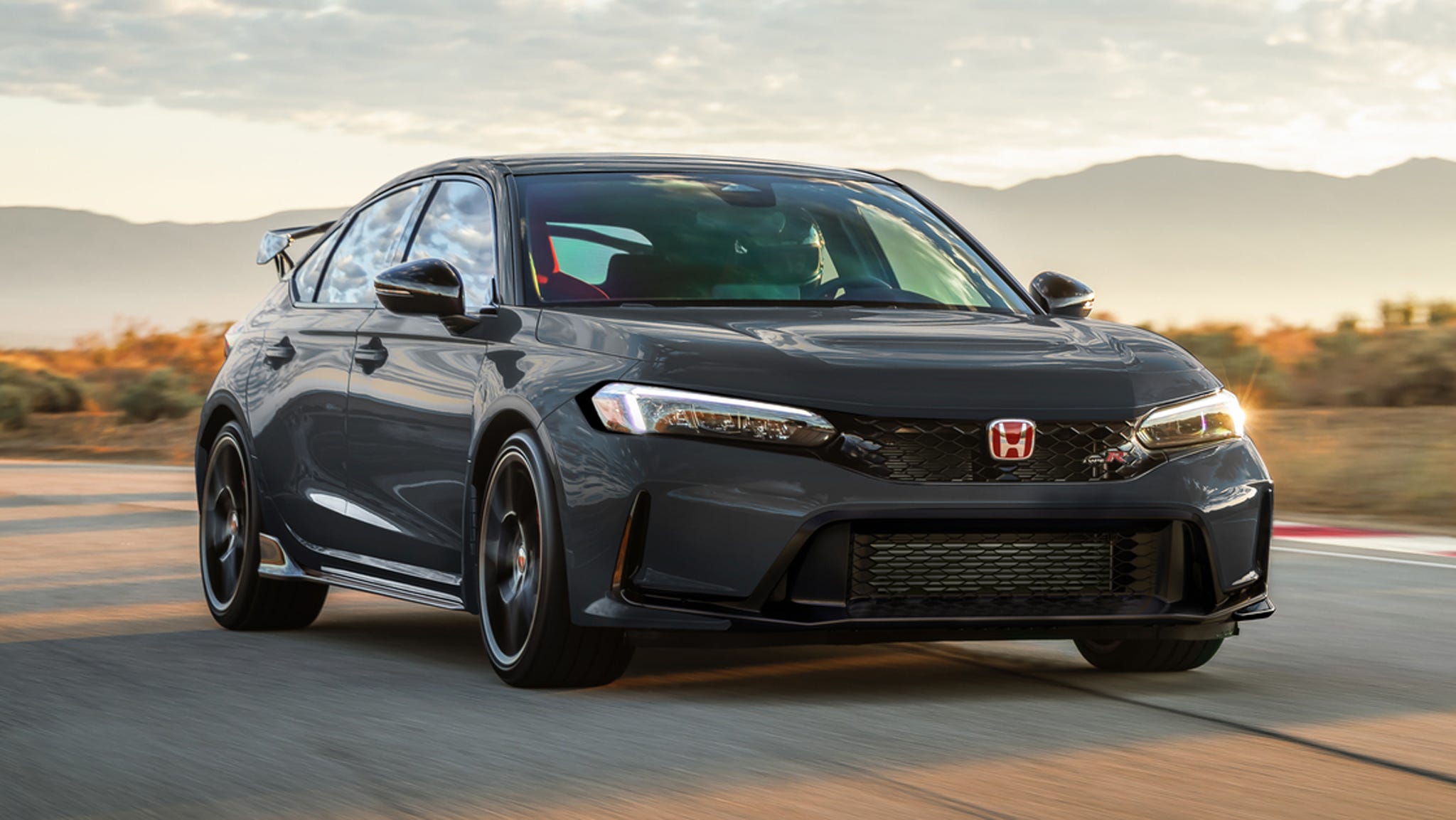


Honda finally put heated seats in the Civic Type R. It took until 2027. That tells you everything about where this car’s priorities have always been, and why the mid-cycle refresh stays focused on refinement rather than headline-grabbing power bumps.
The K20C turbocharged four-cylinder carries over untouched at 315 hp and 310 lb-ft. The six-speed manual remains the only transmission. Honda didn’t chase a bigger number on the spec sheet, which in this era of endless one-upmanship deserves a moment of quiet appreciation.
What did change is almost entirely about making the car work better on road and track. Honda retuned the suspension damping, claiming improved road-following performance and reduced impact harshness. Strip away the PR language and that reads like a slight softening of the ride, something no engineer at Honda will say out loud but every Type R owner who has lived with the car’s punishing firmness will welcome.
The brake pedal gets a new spring in its linkage to cut free play. The rev-match system now blips the throttle faster on downshifts. These are small, surgical changes that speak to a development team paying attention to the people who actually drive this car hard.
The front fascia has been revised, though you would need a magnifying glass and a reference photo to spot the differences. Honda says the changes improve engine cooling and reduce aerodynamic lift. Function over flash, the Type R’s entire personality distilled into a bumper tweak.
Inside, the updates are more visible. The instrument panel and upper door panels swap black plastic for Ultrasuede. Brightwork throughout the cabin shifts to a darker gray tone, and chrome accents on the air vents and climate controls are gone.
USB ports move to USB-C. The infotainment software gains Google functionality. An auto-dimming mirror arrives, a new perforated pattern dresses up the seats, and there’s a dual-tone horn, because apparently someone at Honda cared about how the thing sounds when you honk it.
A new color called Meteorite Gray Metallic joins the palette, and there is a redesigned engine cover meant to evoke older Honda powerplants. Nostalgia bait, sure, but for the crowd that grew up lusting after VTEC-equipped Hondas, it will land.
Safety and driver-assist systems also get unspecified improvements. That’s a necessary checkbox in a market where even the most driver-focused cars need to keep up with regulatory and insurance realities.
None of this is dramatic. None of it is meant to be. The 2027 Type R is still a front-wheel-drive, manual-only, turbocharged four-cylinder hot hatch in a world where its competitors are bolting on all-wheel drive, automatic transmissions, and hybrid systems to chase lap times and quarterly sales targets.
Honda’s restraint here is the story. The Type R has always been an exercise in discipline, squeezing maximum performance from a platform shared with the most ordinary sedan in America. The 2027 updates suggest Honda still believes the formula works without reinvention.
Whether that philosophy survives the next generation, when electrification pressures and emissions regulations tighten further, is the question Honda has not yet answered.
Share this Story