
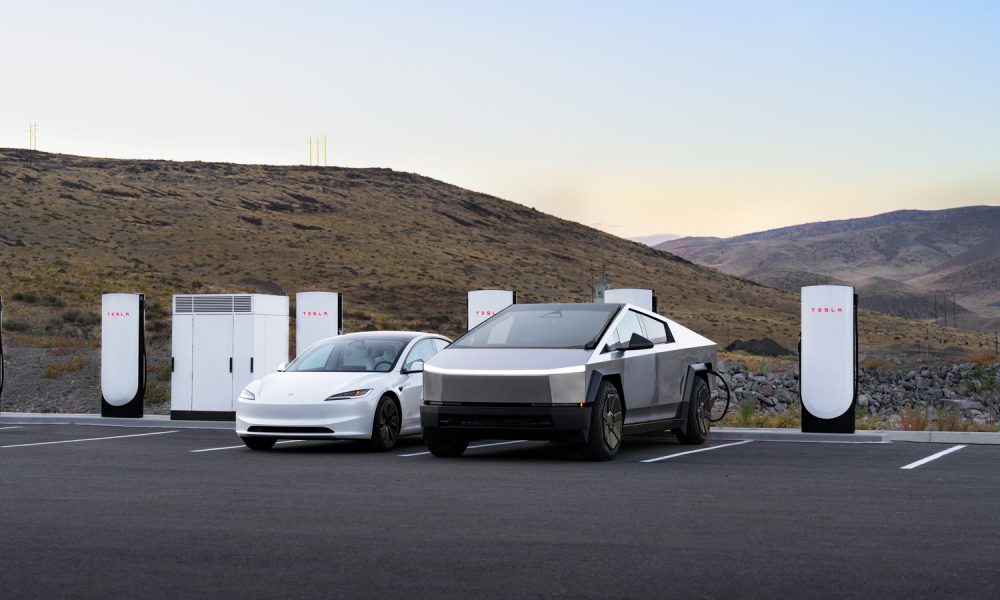


Tesla reports second-quarter 2026 earnings after the bell today, and the questions shareholders have queued up tell you more about the company’s current standing than any analyst estimate ever could.
Wall Street expects earnings per share of $0.53 on revenue of roughly $26.4 billion. That would represent a meaningful jump from the $0.39 EPS and $22.19 billion Tesla posted in Q2 2025. It would also top last quarter’s $0.41 EPS on $22.4 billion in revenue.
The numbers, on paper, look like progress. But the investor questions waiting on Tesla’s Say platform paint a far less comfortable picture.
The top-voted retail question is a direct shot: Tesla has missed its own short-term robotaxi guidance three quarters running, from promising 50 percent U.S. coverage by the end of 2025 to pledging seven new cities in the first half of 2026. Shareholders want to know what keeps tripping Tesla up on targets it set for itself.
The second and fifth most popular questions hammer the same nerve. Why has robotaxi vehicle growth stalled? When will Cybercab actually start carrying paying customers?
These aren’t bear-case provocations from short sellers. These are Tesla’s own retail faithful, the people who vote with their brokerage accounts, demanding accountability on timelines that have slipped repeatedly.
Institutional investors, meanwhile, are focused on capital allocation and competitive moats. The top institutional question asks about the division of labor between Tesla and SpaceX on the Terafab project, and specifically wants clarity on how much capital Tesla will have to contribute. That question carries extra weight now that SpaceX is publicly traded and Elon Musk’s empire of interlocking companies faces new scrutiny from public market investors on both sides.
Another institutional question zeroes in on Optimus. Tesla’s humanoid robot program lacks the billions of real-world miles that gave its autonomous driving software a data advantage. Asking how Tesla plans to close that gap is a polite way of questioning whether Optimus is genuinely on track or still running on conference-stage demos and ambition.
The backdrop to tonight’s call is a Musk ecosystem under unusual strain. SpaceX stock has dropped roughly 30 percent from its post-IPO peak. Starship Flight 13 was scrubbed last week after four Raptor engines failed to ignite, a technical hiccup that now plays out in front of public shareholders instead of behind closed doors.
Musk responded to SpaceX’s short sellers with his usual bravado, warning their survival probability is “very low.” But the pattern of big promises meeting stubborn engineering realities is impossible to ignore.
Last quarter offers a cautionary template. Tesla beat analyst expectations on both EPS and revenue, and the stock still dropped more than 3 percent the next trading day. Beating the number wasn’t enough; investors wanted conviction on the roadmap, and they didn’t get it.
Tonight’s call will likely follow Tesla’s usual format: a shareholder deck at 4 p.m. Eastern, then remarks and Q&A starting around 5:30. The financials may show growth and the margins may hold. But the real test is whether Musk and his team can answer the questions their own shareholders are shouting into the void.
Those questions are about robotaxi delays, Cybercab timelines, Optimus data deficits, and capital commitments that keep growing across an empire stretching from Boca Chica to Mars. The numbers are the easy part. The credibility gap is where the real earnings call happens.

Share this Story