
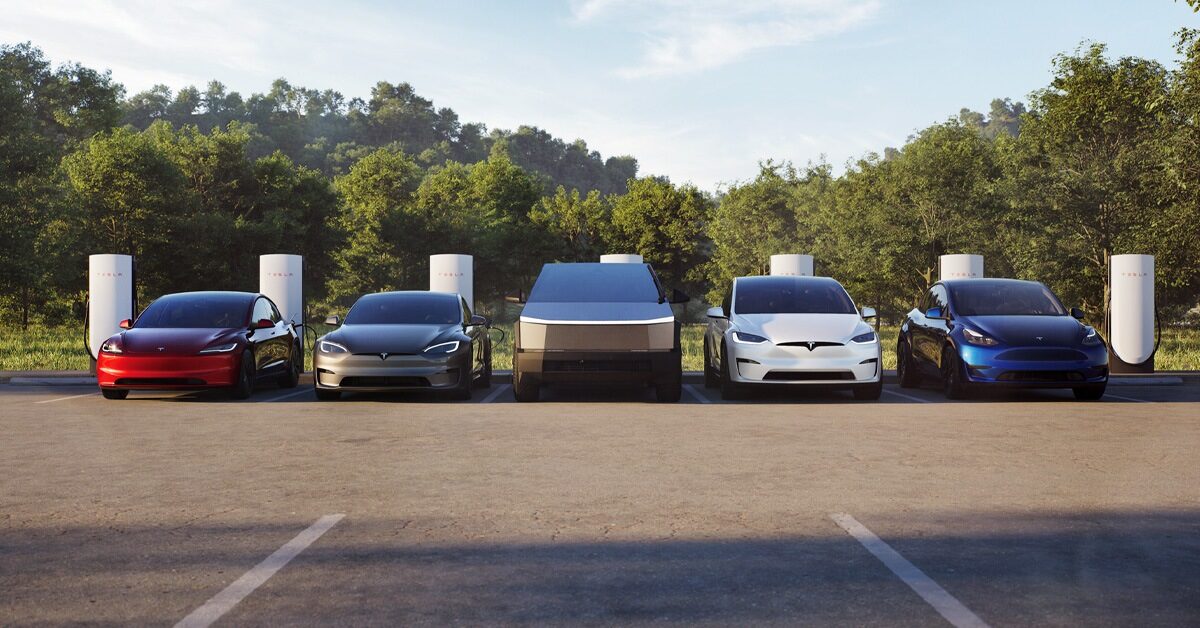


Twenty-three sell-side analysts walk into a spreadsheet and somehow agree that Tesla will burn through nearly $10 billion in cash this year while earning just $4.5 billion in net income. That tension, buried in Tesla’s own company-compiled consensus estimates released Thursday, tells you everything about where this company stands heading into its Q2 2026 earnings report.
The headline numbers look respectable enough on the surface. Analysts expect $27.6 billion in total Q2 revenue, with a median estimate slightly higher at $28 billion. Full-year revenue should land around $105 billion. But peel one layer back and the picture gets uncomfortable.
Free cash flow for 2026 is projected at negative $9.9 billion. That’s not a typo. Tesla is expected to spend $25.3 billion in capital expenditures this year against just $15.5 billion in operating cash flow.
The company that once prided itself on capital discipline is now hemorrhaging money on buildouts — robotaxi infrastructure, new production lines, energy storage expansion — faster than it can generate it.
The cash pile tells the story in motion. Analysts expect Tesla to start Q2 sitting on roughly $41 billion in cash and marketable securities. By year-end, that number drops to $33.4 billion.
A $7.6 billion drawdown in six months. Tesla can afford it. For now.
Gross margin sits at 19.5% for Q2, barely moving from recent quarters, while operating margin holds at a fragile 5.3%. For a company trading at the multiples Tesla commands, these are numbers that would get any other automaker’s CEO dragged before the board. GAAP earnings per share land at a median $0.34 for the quarter, or $1.22 for the full year.
Non-GAAP bumps that to $0.55 and $2.05, respectively, but only after backing out $3.1 billion in stock-based compensation.
The delivery estimates reveal the structural challenge. Analysts expect 1.73 million total deliveries for 2026, with Model 3 and Model Y accounting for 1.67 million of them. That leaves roughly 55,000 units for everything else — Cybertruck, Semi, whatever else qualifies as “Other Models.
The standard deviation on that “Other” number is enormous at nearly 47,000 units, meaning analysts are essentially guessing. Nobody knows what Cybertruck volume actually looks like, and they’re admitting it with that spread.
Energy storage remains the bright spot, with analysts projecting 55.3 GWh deployed and full-year revenue of $15.5 billion for the energy generation and storage segment. That division is quietly becoming Tesla’s most reliable growth engine, even as automotive revenue — expected at $74.3 billion for the year — still dwarfs it by a factor of five.
The services segment, often overlooked, now commands $15.4 billion in projected annual revenue. Supercharging, insurance, parts, service labor — the unglamorous business of actually keeping Teslas on the road is nearly as large as the energy business.
What stands out across all 23 analyst models is the remarkably tight clustering on revenue and margins, paired with wild disagreement on cash flow and non-core vehicle deliveries. Wall Street has figured out the Model 3/Y machine. It has no idea what comes next, or what it costs to get there.
Tesla is spending like a company reinventing itself while earning like a company that already has. The $7.6 billion cash burn projected for the back half of 2026 is a bet that robotaxis, next-gen platforms, and energy megapacks eventually justify the outlay.
History says Elon Musk’s big bets tend to pay off on a long enough timeline. History also says the timeline is never the one he promises.

Share this Story