


Six years between major battery upgrades is an eternity in China’s EV market. BYD finally broke that silence on Thursday, unveiling a second-generation Blade Battery that charges from 20% to 97% in under 12 minutes, even at minus 20 degrees Celsius. Chairman Wang Chuanfu delivered the news from Shenzhen with the urgency of a company that can no longer coast on its reputation.
And urgency is the right word. BYD, the automaker that dethroned Tesla in global BEV sales, has been losing ground where it matters most: at home. Domestic sales began sliding in the second half of 2025, and the bleeding accelerated into early 2026.
In January, Geely overtook BYD in China. Volkswagen, a brand many had written off in the Chinese market, reclaimed the top-selling position entirely. The expiration of China’s purchase tax exemption on EVs and plug-in hybrids handed legacy automakers an unexpected lifeline, and suddenly BYD’s price advantages looked thinner and its technological edge duller.
Wang himself has reportedly acknowledged BYD’s “diminishing technological leadership,” a stunningly candid admission from the head of the world’s largest EV maker. Last year’s attempts to turn the tide — advanced driver-assistance features on sub-$10,000 models, a five-minute super-charging pitch, the Han L sedan and Tang L SUV — produced underwhelming results. The Han L and Tang L combined for just 49,000 units through January, a rounding error against BYD’s 3.76 million total sales over the same stretch.
The new Blade Battery is meant to change the calculus. Higher energy density pushes premium models like the Denza Z9GT and Yangwang U7 past 1,000 km of range. The standard version delivers 777 km, and BYD says the cells exceed China’s newest national safety standards, a pointed claim in a market rattled by battery fire headlines.
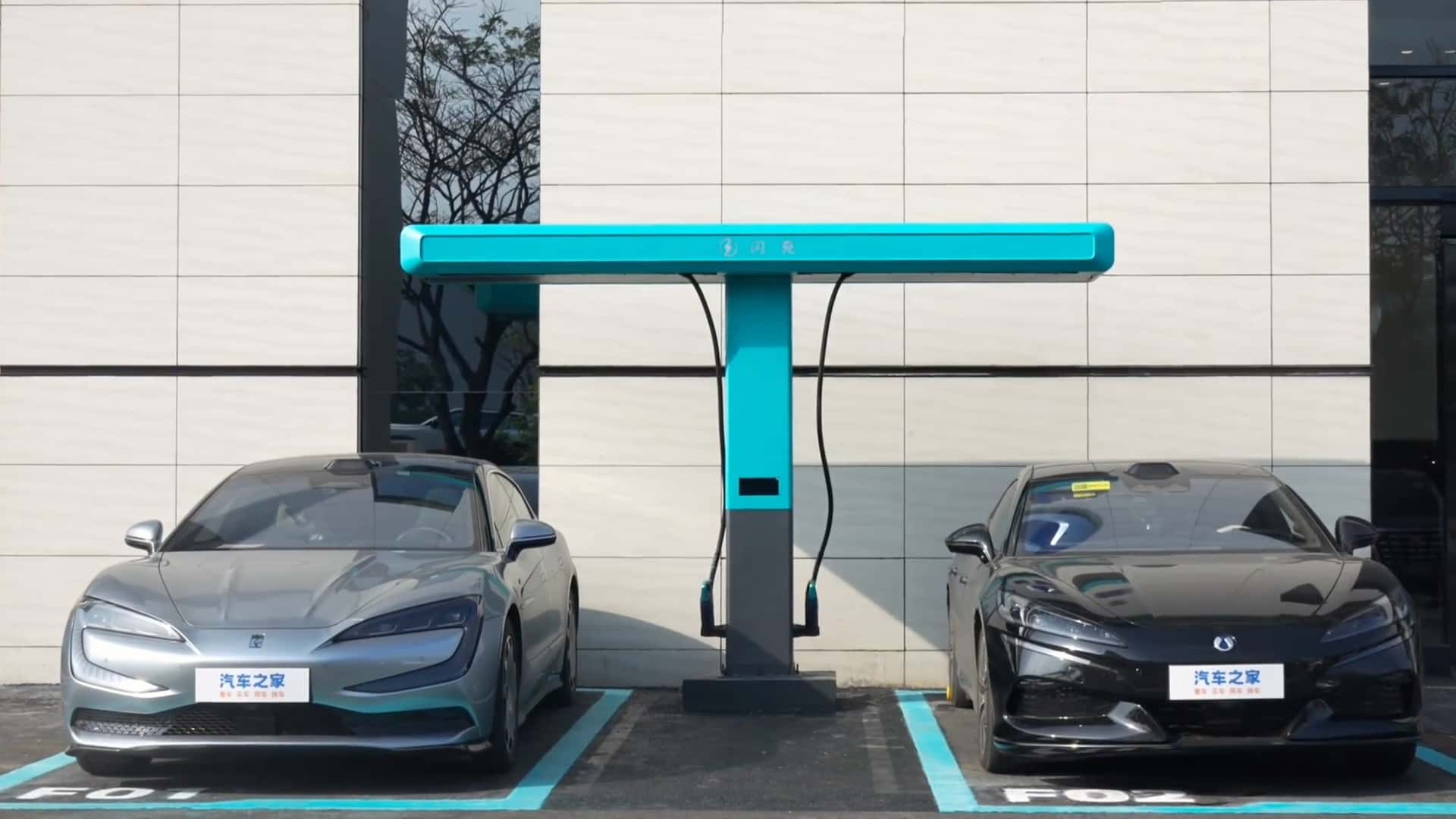
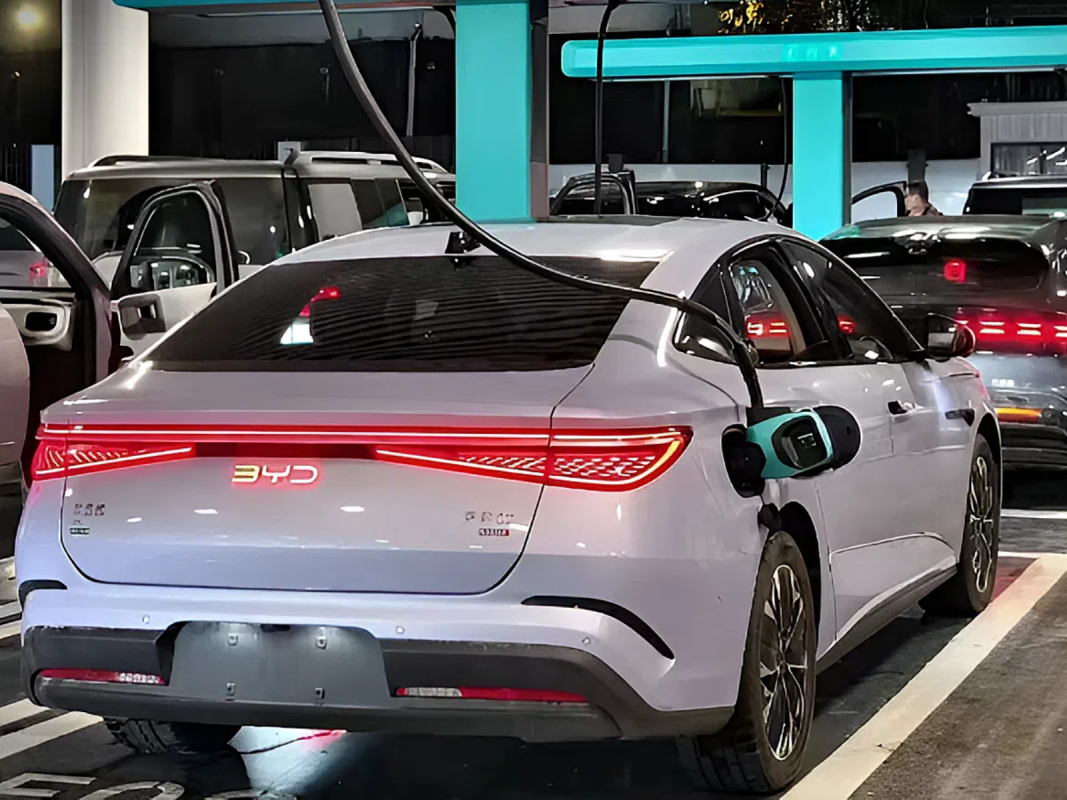
But hardware means nothing without infrastructure, and here BYD is swinging hard. The company plans to scale its “Flash Charging” network from roughly 4,000 stations today to 20,000 by year’s end, including 2,000 on highways. That aligns neatly with Beijing’s initiative to double the nation’s charging facilities within three years.
Even more striking is what’s been spotted in Shenzhen: prototype charging stations capable of delivering 1,500 kW. That’s triple the peak output of Tesla’s V4 Supercharger, which itself only hits 500 kW on the Cybertruck. BYD’s stations use liquid-cooled, overhead-mounted plugs on gantry structures, a gas station layout where you pull up rather than back in.
The architecture runs at 1,000 volts. No official deployment timeline exists yet, but the message is clear: BYD wants charging to feel as fast as pumping fuel.
The competitive context makes this rollout fascinating. Beijing is simultaneously pushing automakers away from the bruising price wars that cratered margins and spooked investors last year. BYD has already pivoted, joining Tesla in offering seven-year low-interest financing rather than slashing sticker prices. The battery upgrade and charging blitz represent a different kind of value proposition, one built on capability rather than discounts.
Whether it works depends on execution speed. China’s EV market doesn’t reward companies that announce big and deliver slowly. Nio has battery-swap stations completing nearly 150,000 swaps in a single day, Geely is surging, and Volkswagen is resurgent.
The window for BYD to reassert dominance is open, but it’s not wide. Wang built BYD into a juggernaut on battery technology. He’s now betting the company’s domestic future on that same foundation, six years later than some competitors would have liked, and at a moment when the Chinese consumer has more compelling alternatives than ever before.
Share this Story