
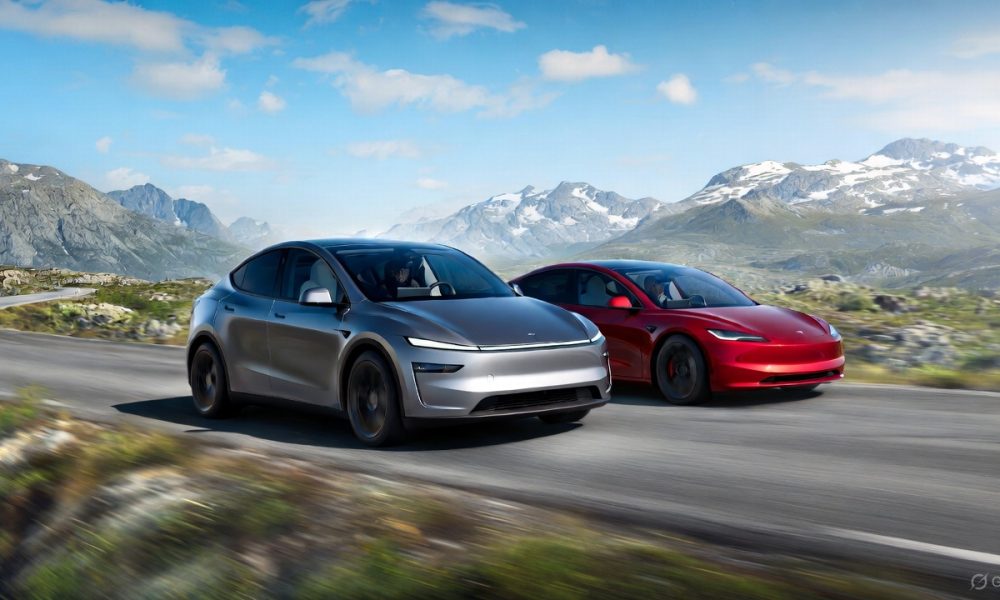


In Norway during the first quarter of 2026, battery-electric vehicles captured 97.9 percent of all new car registrations. Out of 27,175 vehicles sold, fewer than 80 were powered by petrol or conventional hybrids. The internal combustion engine didn’t lose the war in Norway. It’s been buried.
Tesla’s Model Y moved 5,406 units in the quarter, outselling the next five best-selling non-Tesla models combined. The refreshed Model 3 took second place with 2,010 units. Toyota’s bZ4X managed third at 1,400. Nobody else was close.
These numbers landed after a messy start to 2026. VAT changes pulled forward a wave of purchases into late 2025, creating an artificial trough in early January and February. March rebounded hard, suggesting the underlying demand curve hasn’t softened—it’s just noisy.
Norway has been engineering this outcome for decades. No VAT on EVs. Reduced tolls. Free ferry crossings. A dense public charging network. Gasoline prices north of $8 a gallon.
The country didn’t wait for the market to figure things out. It shoved consumers toward electricity with both hands, then built the infrastructure to catch them.
The result is a country where plug-in hybrids—once the polite middle ground—have collapsed to 0.7 percent share. Diesel is a museum piece. Even Chinese challengers like BYD, XPeng, and Zeekr, which are gaining traction across Europe, haven’t cracked Tesla’s grip here.
That grip extends well beyond Scandinavia. S&P Global Mobility just handed Tesla its fourth consecutive “Overall Loyalty to Make” award, based on analysis of 13.6 million U.S. retail registrations. Tesla also took “Highest Conquest Percentage” for the sixth straight year, meaning it keeps stealing buyers from other brands at a rate nobody else can touch.
Retention among Asian households hit 63.6 percent. Among Hispanic households, 61.9 percent. These aren’t niche numbers.
The Supercharger network—65,000 units globally and still growing—remains the stickiest part of the equation. Owners build routines around it. Switching brands means abandoning a charging ecosystem that still outperforms everything else in speed, reliability, and coverage.
Over-the-air software updates compound the lock-in. The car you bought two years ago isn’t the car sitting in your driveway today. Competitors selling static vehicles are fighting with one hand tied behind their backs.
Meanwhile, Tesla’s robotaxi operation in Austin just began unsupervised evening service for the first time, matching the nighttime capability already running in Dallas and Houston. Nighttime driving—with its headlight glare, reduced contrast, and exposure variability—is a meaningful test for Tesla’s vision-only approach. Passing it opens the door to near-24-hour operations and regulatory approvals in new markets.
Tesla has confirmed robotaxi expansion to seven cities in the first half of 2026, including Phoenix, Miami, Orlando, Tampa, and Las Vegas. A Cybercab rolled through Miami Beach last week in a glass display case during the F1 Grand Prix, towed by a Cybertruck. Subtle it was not.
Elon Musk has projected robotaxi coverage across a quarter to half of the United States by year’s end, with Cybercab production eventually targeting one unit every ten seconds. The $30,000 price tag and $0.20-per-mile operating cost he’s promised remain unproven at scale.
Norway’s near-total electrification didn’t happen overnight, and Tesla’s dominance there didn’t happen by accident. When a market removes every barrier to EV adoption, consumers don’t agonize. They buy the brand with the best network, the best software, and the deepest hold on their daily lives. Every automaker scrambling to catch up in Norway is getting a preview of what’s coming everywhere else.
Share this Story