
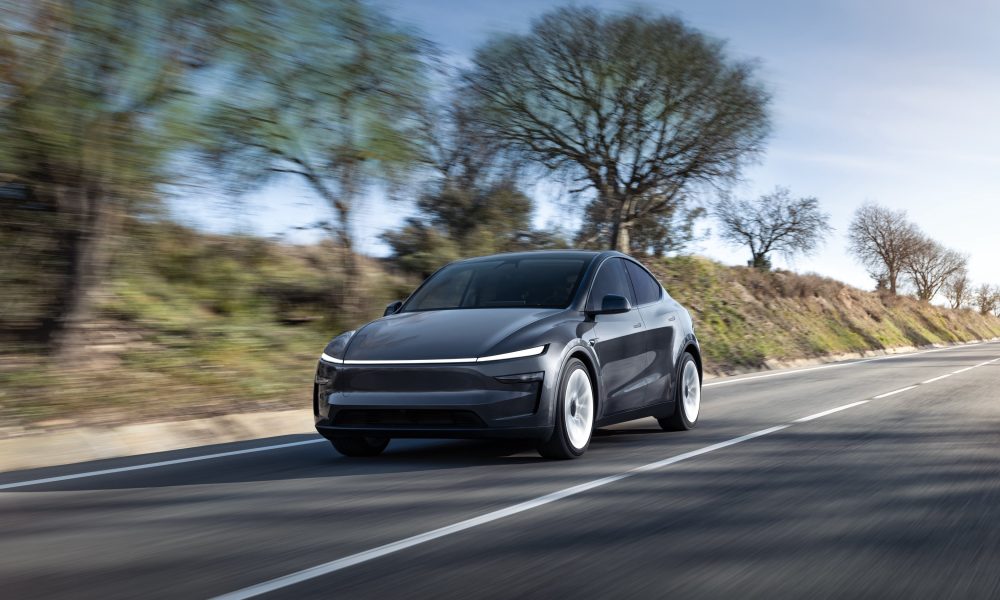


Tesla started selling its Vehicle-to-Load Outlet Adapter on Friday for $80, promising Model Y owners they could finally use their car as a portable power source for laptops, grills, and string lights. By Saturday, the complaints were already rolling in.
Owners of 2026 Model Y vehicles, some delivered barely months ago, discovered their cars lack the hardware to use the adapter. The incompatibility message on Tesla’s shop page is blunt: “This product is not compatible with your 2026 Model Y.”
The culprit is the Power Conversion System. Tesla quietly transitioned to a new two-piece PCS unit in recent Model Y production runs, and only vehicles with that updated hardware can support V2L. Cars built with the older 48-amp, single-phase PCS, including units delivered as recently as this year, are locked out.
The fix exists, technically. Tesla offers the upgraded PCS parts for $1,750 before labor. For context, that is more than twenty times the cost of the adapter itself.
At that price, most owners would be better served buying a standalone portable power station and skipping the surgery entirely.
Tesla positioned the V2L Outlet Adapter as an expansion of capability beyond the Performance trim and Cybertruck, where the feature had already been available. The adapter plugs into Tesla’s Mobile Connector housing, delivers 120 volts at 20 amps, and maxes out at 2.4 kilowatts. Handy for tailgating. Handy for camping. Useless if your car rolled off the line with last season’s internals.
The frustration cuts deeper than a missing feature. Tesla does not publicly disclose which PCS version ships in a given production window. Buyers who configured a Model Y this year had no way of knowing whether their vehicle would support V2L when accessories eventually arrived.
There is no build sheet checkbox, no option code to look up. You find out when Tesla’s website tells you no.
This is a pattern Tesla owners have grown familiar with. Hardware changes ripple through the production line without announcement, and features arrive later that only work on the newest builds. The company launched V2L adapters in China last year, bundling them free for early buyers of the refreshed Model Y.
U.S. owners waited over a year and now get to pay $80 for the privilege, assuming their car qualifies.
The V2L adapter only works with the Juniper-generation Model Y, so first-generation owners were already excluded. Even within the Juniper lineup, only the Premium trim is supported. And within that already narrow pool, a chunk of owners still get rejected because Tesla swapped a component mid-cycle without telling anyone.
Some owners on forums reported ordering the adapter despite the incompatibility warning, hoping it was a website glitch. It is not. The PCS hardware difference is real, and no software update will bridge it.
Tesla has been on a streak of expanding its ecosystem lately, from the Roadster’s rumored unveiling to its Nevada robotaxi permit. The V2L adapter was supposed to be a small, crowd-pleasing accessory launch. Instead it became a reminder that buying a Tesla means accepting a certain amount of hardware lottery.
Your car might get the new battery chemistry, the updated suspension bushing, or the right power converter. Or it might not. You will not know until you try to buy the $80 gadget that plugs into it.
For owners staring at that incompatibility message on a car they have owned for less than twelve months, the $1,750 upgrade quote probably stings more than the feature gap itself.
Share this Story