
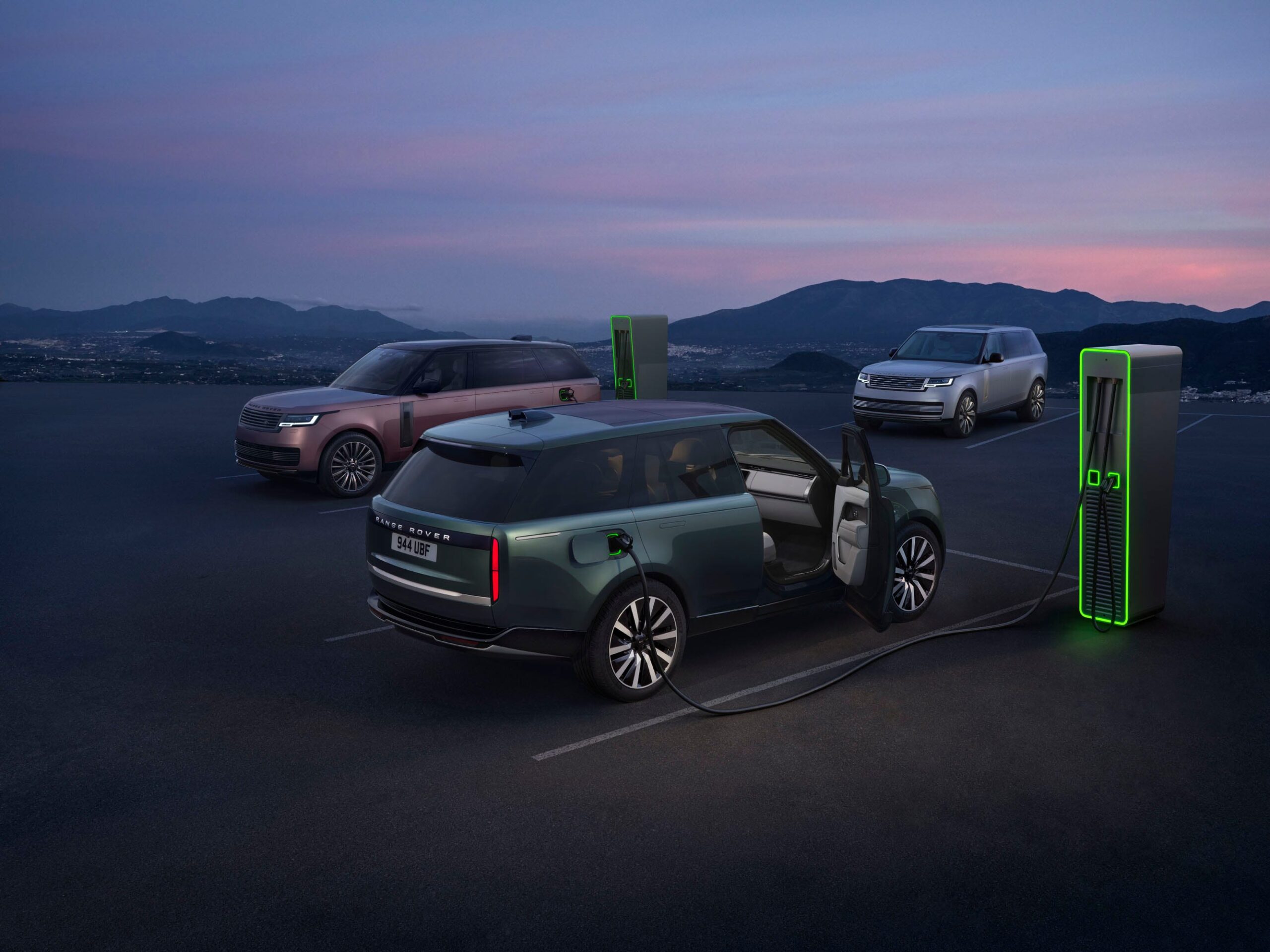


Land Rover finally has an answer to the question it has been dodging for the better part of three years. The 2027 Range Rover Electric is real, it is revealed, and it starts at $140,550.
That price plants it squarely in Rolls-Royce Spectre territory, which is exactly the fight Land Rover seems to want. The pitch is familiar: all the Range Rover luxury and off-road credibility, none of the combustion. Whether buyers at this altitude actually care about ditching gasoline is the question nobody in Solihull wants to answer out loud.
Under the skin sits an 800-volt architecture with a dual-motor powertrain producing 542 horsepower. The EPA pegs range at 333 miles on a full charge. On a 350-kW DC fast charger, 10 to 80 percent takes 22 minutes.
Land Rover claims 125 miles of range can be added in just 10 minutes. Those are competitive numbers, though not class-leading when stacked against newer arrivals from Mercedes and BMW.
Designers clearly received one directive: don’t scare the existing customer base. The Range Rover Electric looks almost identical to the gas and plug-in hybrid models already in showrooms. Unique touches are limited to a revised grille and exclusive wheel designs.
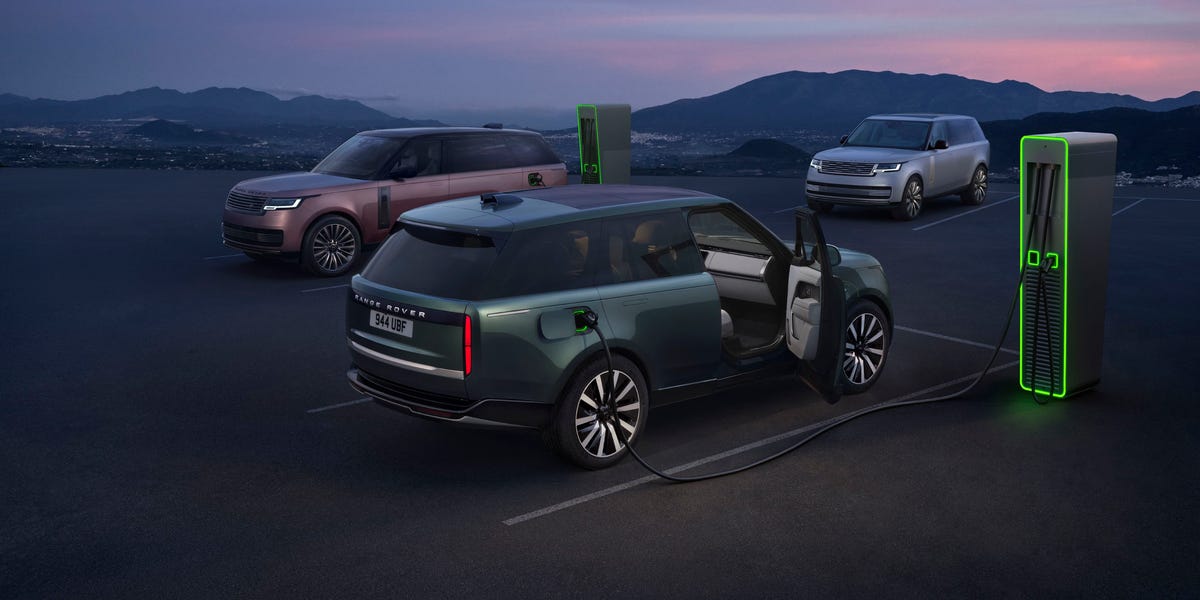
It is an exercise in restraint, the kind of visual conservatism that plays well in Kensington and Greenwich but won’t turn a single head in a parking lot full of Rivians and Model Xs.
Off-road capability, always the card Land Rover plays when the conversation gets uncomfortable, has reportedly been preserved. A new electronic traction-management system replaces the traditional mechanical hardware, distributing torque across both axles. How it performs in deep mud and river crossings compared to the proven systems in the combustion Range Rover will be the real test, not one likely settled by a press release.
A First Edition trim will arrive during the initial production run, a well-worn playbook move designed to skim early adopters willing to pay a premium for exclusivity. Other trims will follow, though Land Rover has not disclosed specifics on pricing tiers below the launch configuration.
The timing here is worth scrutiny. Land Rover’s parent company, JLR, originally hinted at an electric Range Rover arriving much earlier. Delays pushed it deep into 2027, a window where competition has thickened considerably.
The Rolls-Royce Spectre is established. The Mercedes EQS SUV has been on sale for years. Bentley is readying its own electric SUV. Even Porsche’s next Cayenne will offer a full EV variant.
The battery pack sits beneath the floor, a layout now standard across the industry. What Land Rover has not disclosed is the pack’s exact capacity in kilowatt-hours, an omission that makes independent efficiency calculations impossible. The 333-mile range figure and 542 horsepower suggest a pack somewhere north of 100 kWh, but the company is keeping that card face down for now.
At $140,550, the Range Rover Electric is not trying to democratize anything. It is a luxury product aimed at buyers who already own one Range Rover and want another that plugs in. The real question is whether that buyer exists in volumes large enough to justify the years of development, or whether this is an expensive insurance policy against a regulatory future that keeps shifting under everyone’s feet.
Sales begin sometime in 2027. Land Rover has not committed to a specific month.

Share this Story