
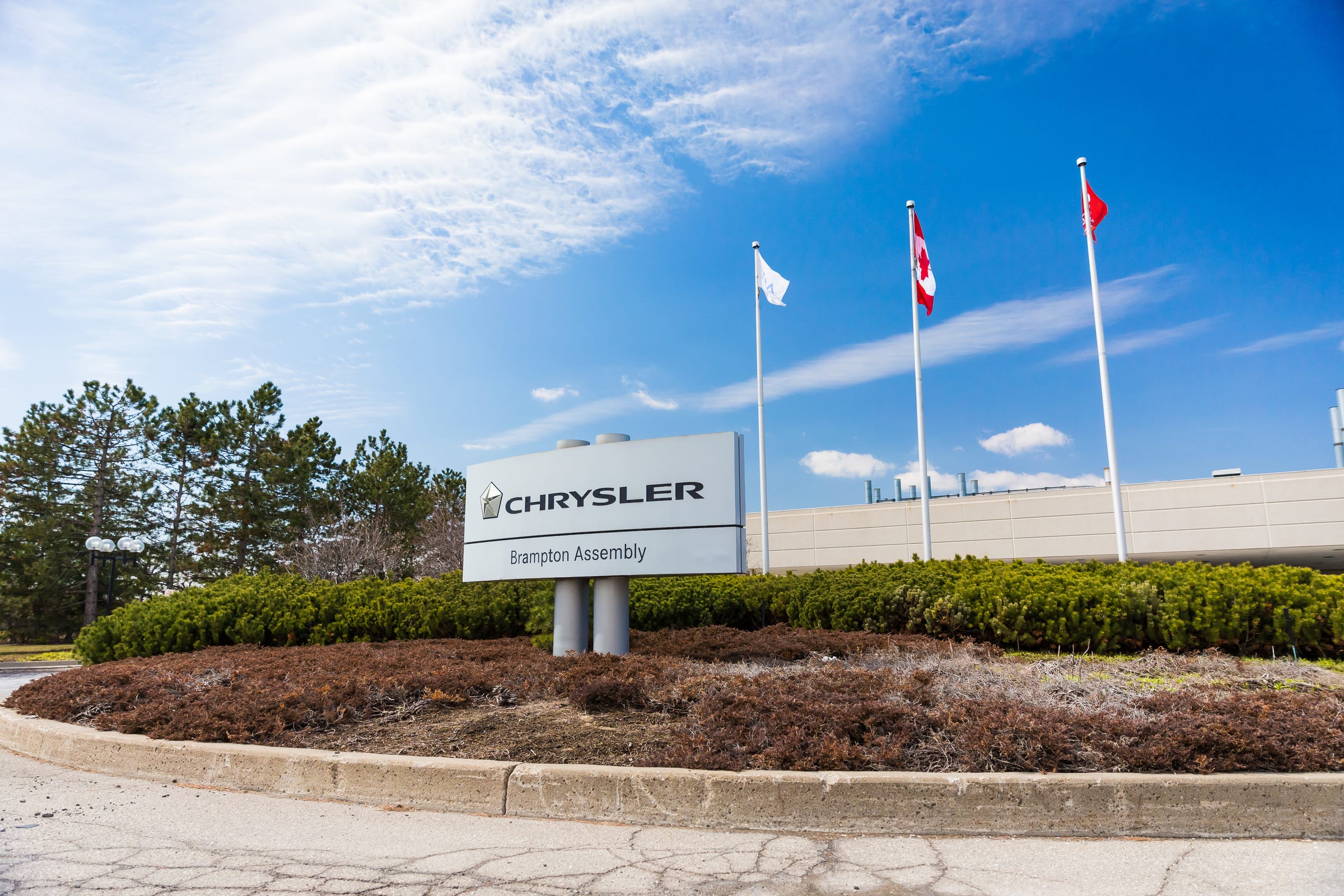


The city of Brampton, Ontario, just told Stellantis exactly where it can shove any ideas about selling off its idled assembly plant for condo development. The city council voted unanimously on February 25 to rezone the land beneath the Brampton Assembly Plant, restricting it exclusively to vehicle production and related manufacturing. It’s a bold, arguably desperate move, but one that carries real teeth.
“If Stellantis thinks they can go and build condos there, they can fly a kite. This is for auto jobs,” Brampton mayor Patrick Brown said during the council session. Not exactly diplomatic language, but then again, roughly 3000 unionized workers have been watching their livelihoods evaporate in slow motion since December 2023.
That’s when the last Dodge Chargers, Challengers, and Chrysler 300s rolled off the Brampton line. The plant had been pumping out muscle cars for nearly two decades, but when Dodge redesigned the Charger around an electric powertrain for 2024, production shifted to Stellantis’ Windsor facility. Brampton was supposed to get a consolation prize — a retooling effort to build the next-generation Jeep Compass.
That plan died in February 2025 when all work at the facility was halted. By October, Stellantis announced the Compass would instead be built at its Belvidere, Illinois, plant, a decision driven by the Trump administration’s tariffs on imported vehicles. The Compass is already being manufactured in Italy for European buyers, but building it stateside for the North American market made more financial sense under the new trade reality.
The problem is that Belvidere won’t even begin Compass production until late 2027 at the earliest. And Brampton? It got nothing. No product allocation, no timeline, no concrete commitment — just vague corporate assurances that the automaker is “actively evaluating future product opportunities.”
The previous zoning classification — general industrial use — would have given Stellantis a clean path to unload the property to developers. Brampton’s rezoning removes that option, or at least makes it significantly harder. The message is clear: build cars here or sit on a property you can’t easily monetize.
Vito Beato, president of Unifor Local 1285, the union representing the plant’s workers, called the rezoning a protective measure that gives employees hope. “The history that that plant has given us, it’s generational,” he said. “This is personal for us. That’s our livelihood.”
Stellantis, for its part, responded with the kind of carefully lawyered statement that says everything and nothing at the same time. A spokesperson told Car and Driver that the company “shares the City of Brampton’s interest in preserving the Brampton Assembly Plant as an automotive manufacturing site” and that “protecting good manufacturing jobs remains a top priority.” The company promised it is evaluating opportunities to ensure “any potential investment is sustainable.”
Translation: don’t hold your breath.
The broader context makes this even more precarious. Stellantis has been bleeding goodwill across North America, juggling plant closures, production shifts, and an executive leadership shakeup that saw CEO Carlos Tavares depart in late 2024. The company’s North American strategy has been in flux, with tariff pressures forcing constant recalculation of where to build what.
Brampton’s rezoning gambit is clever political theater, but its real-world effectiveness depends entirely on whether Stellantis actually needs the plant. A factory restricted to vehicle manufacturing is only valuable if someone wants to manufacture vehicles there. If the automaker decides the economics don’t work, the building simply sits — rezoned or not.
Still, it removes the easiest exit ramp. Stellantis can’t quietly flip the land to a developer and walk away without a fight. For 3000 workers and their families, that’s at least something to hold onto while the waiting continues.



Share this Story