
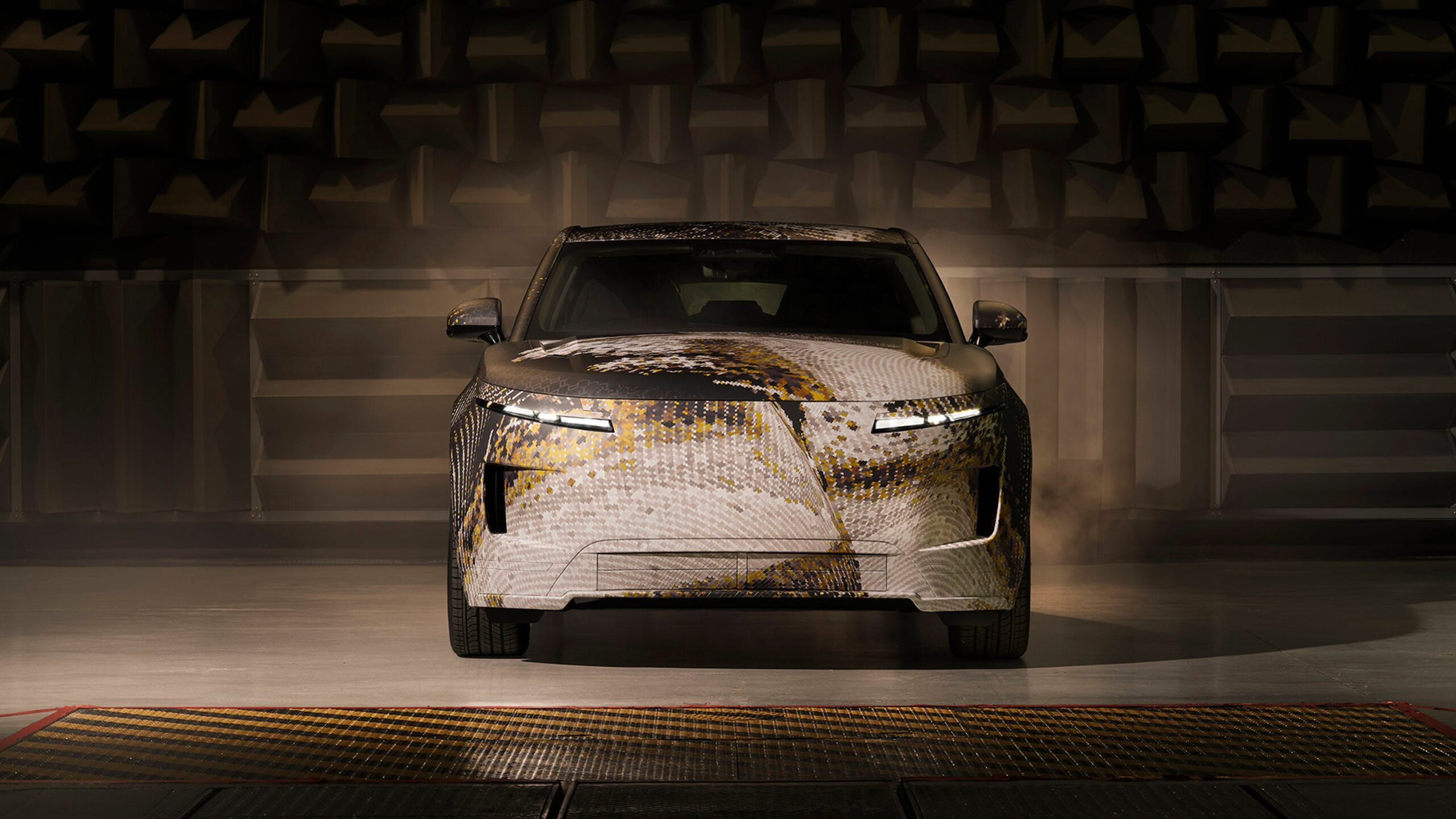


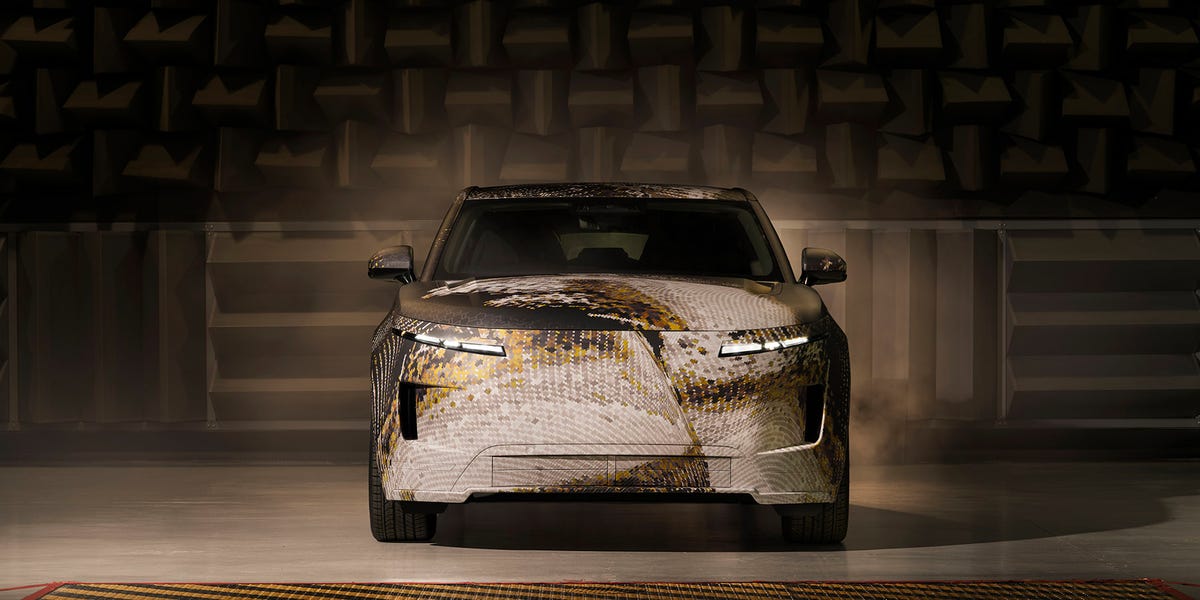
Land Rover just did something nobody had on their bingo card. The Range Rover GT, revealed in prototype form, is an electric crossover that looks and acts more like a sedan than anything the brand has ever built. For a company that defined itself on mud-plugging capability and upright luxury SUVs, this is a sharp left turn.
The GT sits lower, sleeker, and leaner than any Range Rover before it. Forget the commanding driving position and the bluff, aristocratic front end that has defined the nameplate for over five decades. This thing wants to be compared to the Porsche Taycan and BMW i7, not the Defender or Discovery.
Inside, Land Rover has stripped the cabin back to what the company calls a minimalist approach. That’s a loaded word for a brand whose recent interiors have been defined by ceramic controls, endless leather, and enough screens to run a Bloomberg terminal. The GT’s interior appears to trade all of that visual density for clean surfaces and restraint, a gamble that either signals confidence or an identity crisis.
The timing is no accident. JLR has been under enormous pressure to electrify its lineup while justifying the premium prices that keep the lights on at its Coventry headquarters. Jaguar’s own radical reinvention as an ultra-luxury EV brand grabbed headlines last year, but the Range Rover GT may be the more consequential bet. Range Rover actually sells in volume. Jaguar, at this point, is a theory.
What’s striking is how far the GT strays from the brand’s gravitational center. Land Rover has spent years perfecting the art of making very large, very heavy SUVs feel like they belong on Bond Street and the Serengeti in equal measure. The GT doesn’t appear interested in the Serengeti. Its roofline alone tells you this vehicle was designed for autobahns and valet lines, not rock crawling.
That raises the obvious question: does the world need another sleek electric luxury sedan-crossover-thing? The segment is getting crowded fast, and the casualties are already piling up. Mercedes pulled back on its EQ ambitions. The Cadillac Celestiq is a halo car with halo-car sales numbers. Even Tesla’s Model S, the car that arguably created this space, has seen its cultural relevance fade.
Land Rover is betting that the Range Rover badge carries enough weight to cut through that noise. Historically, they’d be right. The Range Rover name commands loyalty and residual values that most luxury brands would kill for. But that loyalty was earned by vehicles that looked and felt like Range Rovers. The GT is asking customers to follow the badge into unfamiliar territory.
JLR hasn’t released full specifications, pricing, or a production timeline, so the usual caveats apply. Prototypes are promises, not products. But the design direction is clear enough to read: Land Rover is no longer content to be the world’s most refined SUV maker.
Whether that’s visionary or reckless depends entirely on execution. The GT’s stripped-back interior and sedan-like proportions could redefine what Range Rover means to a new generation of buyers. Or they could alienate the old one. Land Rover is gambling that the badge is bigger than the body style. That’s a hell of a bet.

Share this Story