
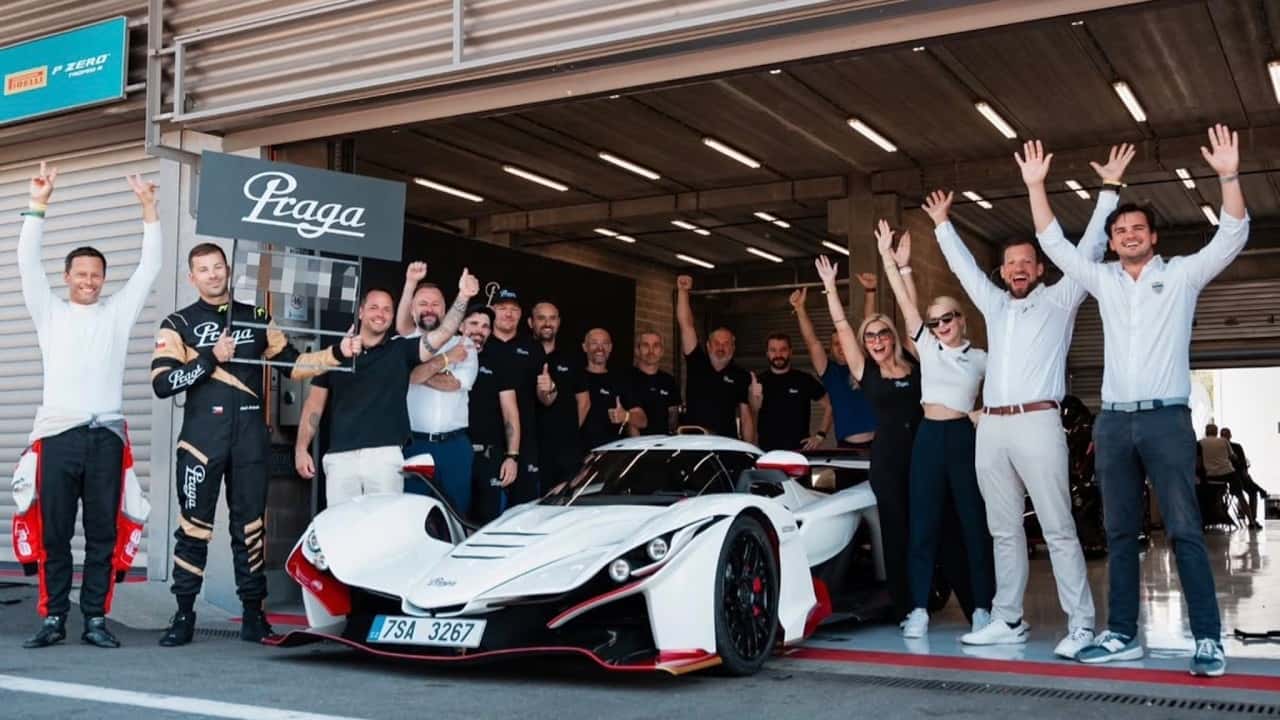


A Czech hypercar just clocked 2:21.42 around Spa-Francorchamps, beating the Pagani Huayra Roadster BC’s long-standing benchmark by more than 1.5 seconds. And Praga says its driver wasn’t even trying.
That’s the part that stings if you’re Pagani.
Development driver Aleš Jirásek reportedly set the time during a Curbstone track day, sharing the circuit with paying customers, running the Bohema on its factory road-legal tires. No slicks. No cleared track. No special prep, according to Praga. The Huayra Roadster BC’s 2:23.081 from September 2020 was, at the time, described by Pagani as a record for globally homologated road cars at Spa.
We were not at Spa to chase a record,” Jirásek said. “We were there with customers to enjoy driving one of the greatest circuits in the world.”
The caveat is real: there is no independent timing sheet, no formal confirmation from Spa-Francorchamps or Curbstone, and no third-party verification locking in the exact date, event, and time. Without that paperwork, the number remains a claim. A very loud claim.
The Bohema’s spec sheet reads like something designed in a wind tunnel by people who weigh their lunch. A 3.8-liter twin-turbo V6 produces 690 horsepower and 535 pound-feet of torque. Curb weight sits under 2,200 pounds. Downforce hits 1,984 pounds at 155 mph. Top speed is capped at just 186 mph, which tells you everything about Praga’s priorities. This car was not built to win a drag race on the autobahn. It was built to devour corners.
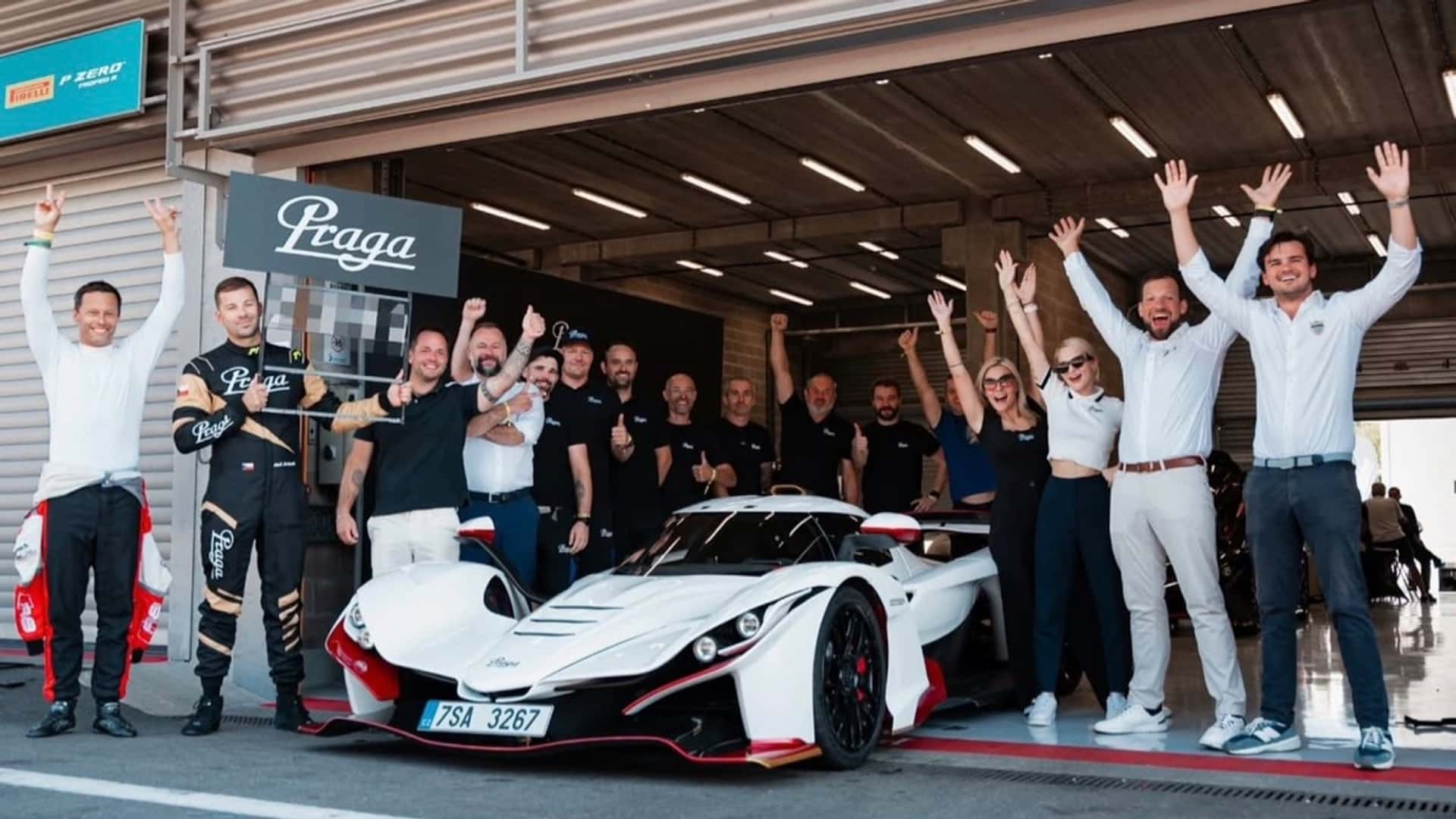
That philosophy pays dividends at Spa. Eau Rouge punishes heavy cars. The long flat-out blast through Blanchimont rewards downforce and driver confidence.
Sector three demands mechanical grip and precise turn-in. The Bohema’s combination of light weight and aerodynamic load is tailor-made for a circuit that exposes frauds.
Pagani’s Huayra Roadster BC is a different animal. Heavier, more powerful in absolute terms, built around a Mercedes-AMG 6.0-liter twin-turbo V12 making 800 horsepower. It is a monument to Italian craftsmanship and brute force.
But brute force loses the argument when a car weighing roughly a thousand pounds less shows up with comparable downforce and a driver who says he was just out for a good time.
Praga plans to build only 89 units of the Bohema, priced at 1.28 million euros before tax, roughly $1.4 million. Customer cars are already being driven on public roads and in rally events. This is not a concept or a prototype or a homologation special built in quantities of one.
The broader trend is hard to ignore. Czinger is chasing the Nürburgring record held by the Mercedes-AMG One. Boutique manufacturers no longer drop a spec sheet and wait for applause. They go to circuits, turn laps, and dare the establishment to respond.
Praga is a brand most people still associate with go-karts and racing prototypes. The Bohema is its first road car in decades. If this Spa time holds up under scrutiny, it will belong to a company with fewer than 100 cars in production going head to head with marques that measure their heritage in generations.
The clock is ticking on whether Pagani answers. Or whether anyone else lines up at Spa with a set of road tires and something to prove.
Share this Story