
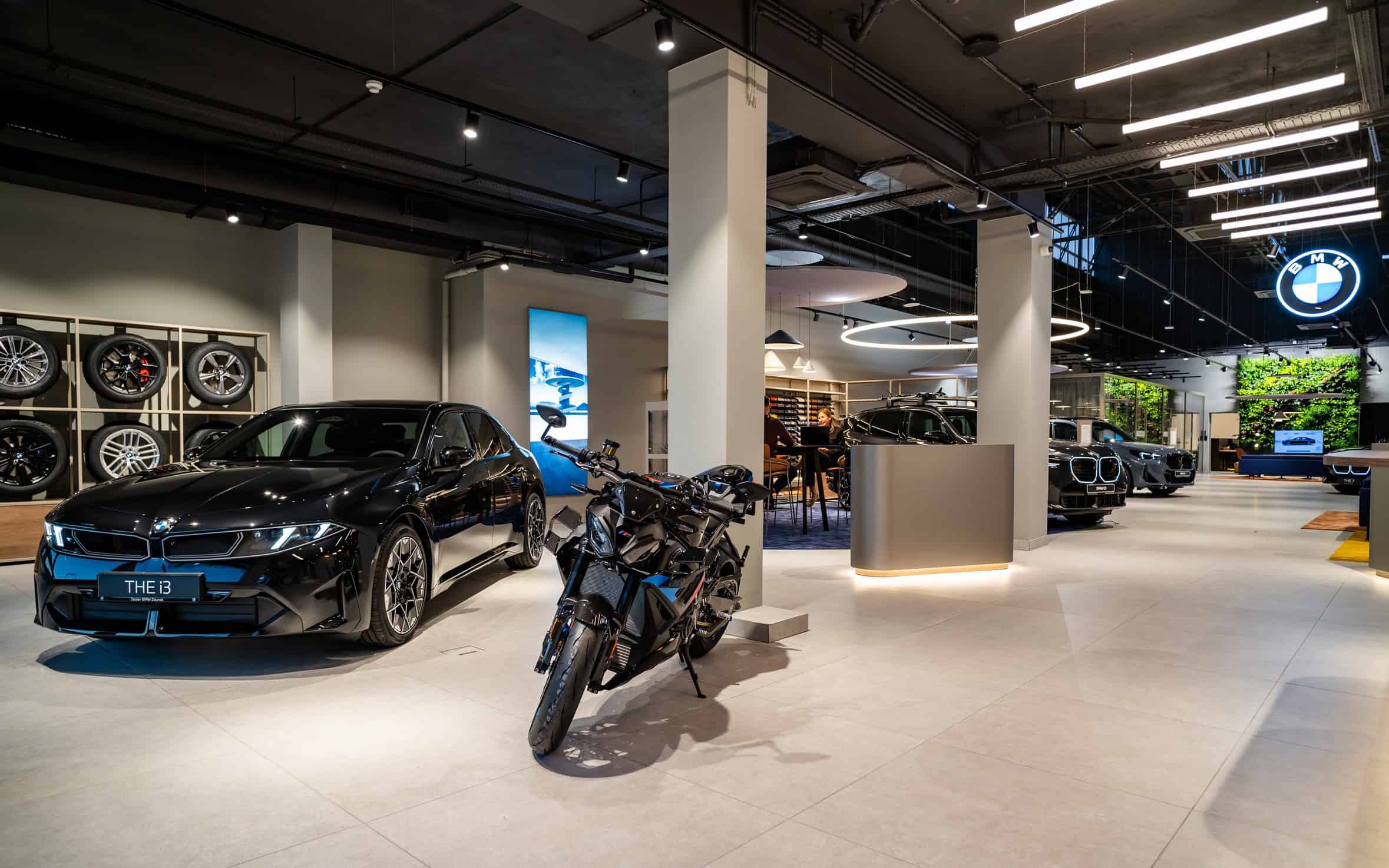


Fifteen years after the last car rolled off the assembly line at Warsaw’s FSO factory, the site is back in the car business. Only now, instead of building affordable Polonez sedans for Polish families, it’s selling BMWs.
The Zdunek Group, one of BMW’s established dealer partners, opened a temporary dealership on August 24 at the former Fabryka Samochodów Osobowych grounds in the Żerań district. The facility at Jagiellońska 92 sells new BMWs, certified pre-owned vehicles, and offers authorized service. A BMW Motorrad showroom is expected to follow.
FSO was a cornerstone of Polish automotive identity for decades. The factory produced the Syrena, the Polski Fiat 125p, and the Polonez — cars woven into daily life for millions. Production sputtered out in 2011, with a Chevrolet Aveo being the last model assembled there, and the site has sat largely dormant since.
Now it has a white expanded-metal mesh facade and plans for illuminated exterior detailing inspired by BMW’s Neue Klasse design language. The renovation took three months. The building follows BMW’s Retail.NEXT concept, which leans on digital tools and flexible showroom layouts the company is deploying across its global network.
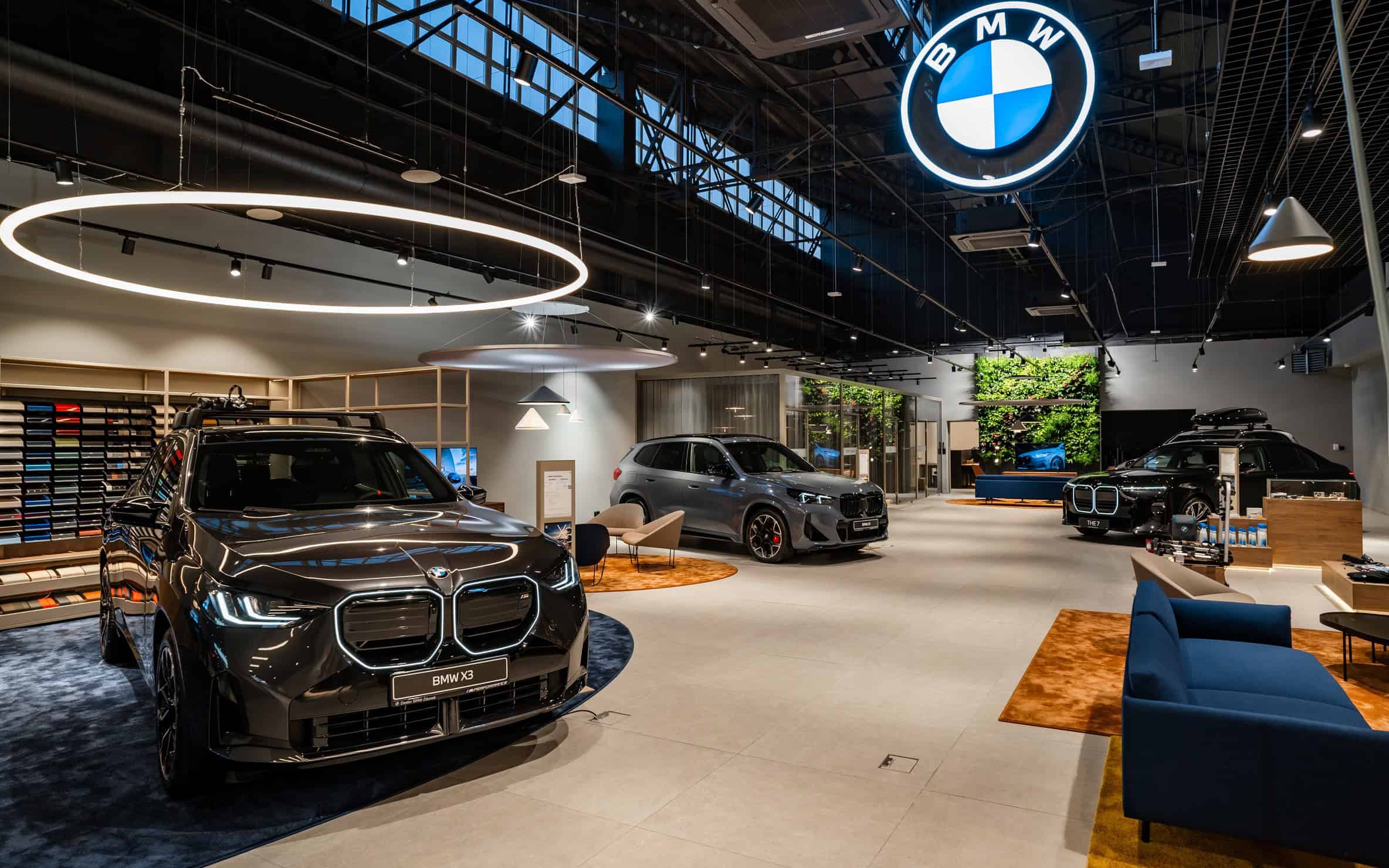
The certified used cars sold through BMW Premium Selection undergo a 360-degree inspection covering vehicle history and service records, and carry a 24-month warranty valid across Europe. It is a polished operation occupying the bones of a factory that once cranked out cars designed to be cheap and functional above all else.
BMW’s Polish footprint now spans 44 sales locations and 58 service points. Thirty-two dealerships already operate under the Retail.NEXT format. The Warsaw addition fills a gap in the eastern part of the city, where BMW lacked a convenient sales and service presence.
The irony is hard to miss. FSO existed because Poland needed to motorize a population that could not afford Western European cars. The factory was state-directed industrial policy made physical, a place where accessibility was the entire point.
The cars it built were simple, durable, and designed for people who had no alternative. BMW occupies the opposite end of that spectrum. Its average transaction price in Europe climbs every year.
The Neue Klasse lineup launching now starts well above what most Polish households earn annually. The brand’s presence at Żerań is not a continuation of the site’s original mission. It is its inversion.
That is not a criticism of BMW or the Zdunek Group. Markets shift, and real estate finds new tenants. A dormant factory site generating tax revenue and jobs again is better than one sitting empty.
But the transformation from Polonez assembly hall to premium German showroom captures something about where the European auto industry has traveled over the past three decades, and who it now serves.
BMW has not announced a timeline for converting the temporary facility into a permanent one. The company seems content to let the operation prove itself first. Whether the historic address becomes a long-term fixture or a stepping stone to a purpose-built location elsewhere in Warsaw remains an open question.
The Polonez is gone. The Syrena is a museum piece. At Żerań, the roundel now hangs where the red FSO badge once did.
Share this Story