


Berlin logged 392 dooring accidents in 2024, accounting for nearly 8 percent of all bicycle crashes in the city. BMW decided to engineer a fix for exactly that problem, and the iX3 is the first car to carry it.
The Neue Klasse’s upgraded exit warning system uses side-mounted radar to scan the area around a parked vehicle. If a cyclist or car is approaching, the electronic door lock physically delays release until the threat clears. BMW has offered a version of this for years, but prior iterations only flashed lights and sounded chimes. The door still opened. Now it doesn’t.
That distinction matters more than BMW’s marketing language suggests. Warning systems that rely on human compliance have a dismal track record. A chime is easy to ignore when you’re late, distracted, or just not looking. A lock that holds for two extra seconds is not.
The iX3 earned five stars under Euro NCAP’s revised 2026 testing protocol, one of the first vehicles evaluated against the new standard. BMW claims it cleared required scores by a wide margin. The i3, X5, and 7 Series are next to receive the same hardware.
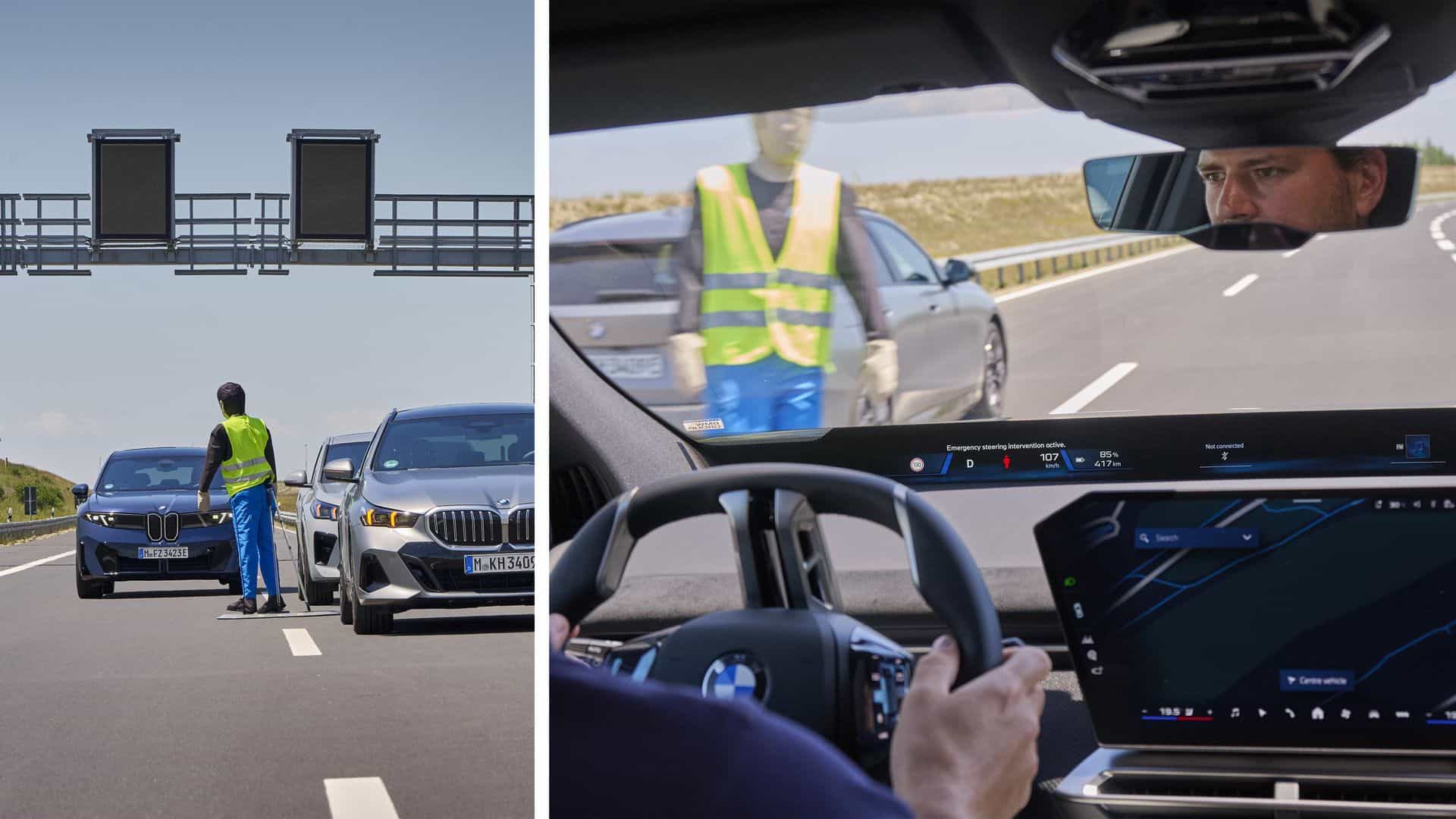
Emergency steering intervention is new to BMW’s lineup and, the company says, still missing from competitors. The system can steer around a pedestrian who steps out from between parked cars or nudge the vehicle away from a closing threat in an adjacent lane, provided there is room to maneuver safely.
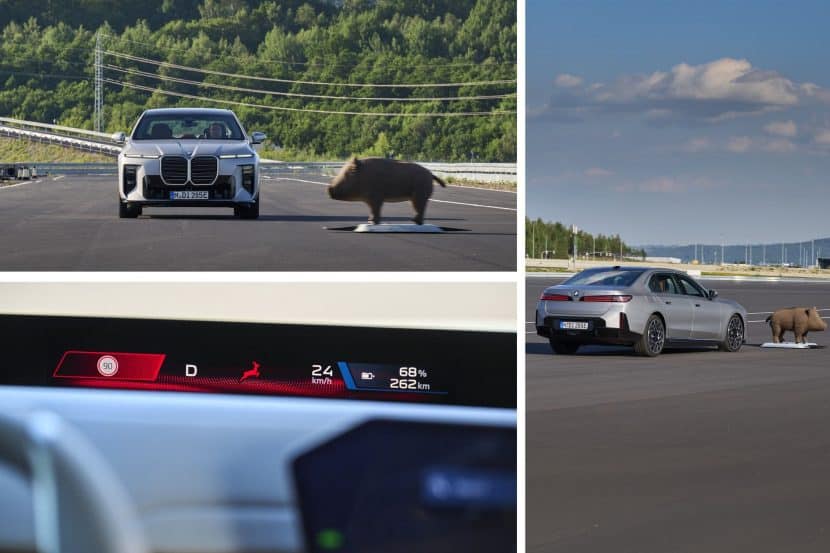
The emergency brake system now accounts for evasive steering paths and extends its detection to animals. A road priority warning pushes stop signs, yield signs, no-entry markers, and crosswalks into the head-up display. And if the attentiveness system determines the driver is incapacitated, it brings the car to a stop, activates hazard lights, and places an emergency call on its own.
Low-speed scenarios get their own treatment. If the car detects an obstacle within a meter at speeds below 2 km/h and registers a sudden, hard stab of the accelerator, it brakes to a stop. Cross-traffic radar now covers cyclists approaching from behind when the driver is reversing out of a tight spot.
BMW backs up the rollout with fleet data. Across 1.6 billion kilometers driven in Europe last month by customers who opted into data sharing, the company recorded roughly 8 million collision warnings and 243,977 active interventions where steering or braking engaged to prevent a crash. That is BMW’s own number, not independently verified, but even discounted it represents a serious volume of real-world engagement.
All of it runs through a new central computer BMW calls the “Superbrain of Automated Driving,” claiming roughly 20 times the processing power of its predecessor. Much of the validation took place at BMW’s Future Mobility Development Center in Sokolov, Czech Republic, a 600-hectare facility with 25 kilometers of test track.
BMW wraps the philosophy in something called Symbiotic Drive. It reads steering input, eye direction, turn signals, and shoulder checks to determine whether a maneuver is intentional. The car stays quiet when the driver meant to do something and only intervenes when the situation is genuinely falling apart.
Whether the i3, X5, and 7 Series post the same Euro NCAP results under the tougher 2026 protocol remains to be seen. The hardware is supposedly identical. The validation is still ahead.

Share this Story