
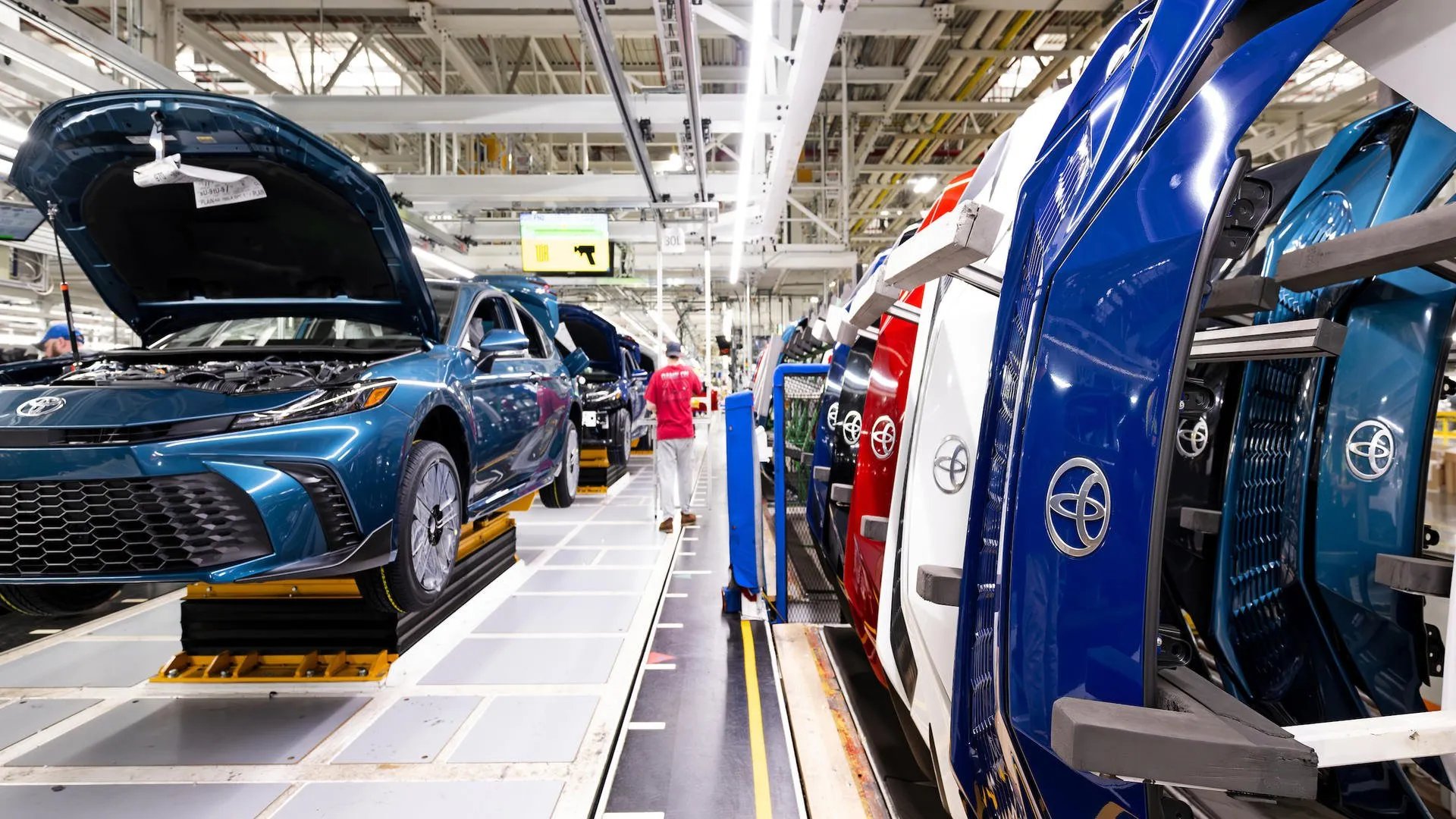


Toyota just posted 11.3 million vehicles sold globally for its fiscal year, a record, even as supplier disruptions from the Middle East conflict and U.S. tariffs battered the industry around it. That number, reported by Bloomberg, is the kind of figure that makes competitors wince.
In the U.S. alone, Toyota and Lexus combined for nearly 2.52 million units, a 7.7% jump over the prior year. In a market where most automakers are scrambling to hold ground, Toyota gained it.
But peel back the annual triumph and the cracks show. March global sales dropped 6% year-over-year, a stark reversal that reflects the real-time damage tariffs and geopolitical instability are inflicting on even the strongest players. The fiscal year total is a rear-view mirror number. March is the windshield.
Toyota’s ability to absorb punishment that would flatten lesser operations isn’t new, but the scale of the headwinds this time is worth examining. Supplier networks disrupted by conflict in the Middle East forced the company to navigate parts shortages that rippled across production lines. U.S. tariffs added cost pressure at the retail end. Neither stopped the machine from turning.
The Japanese giant has long benefited from a manufacturing philosophy built around resilience. Its supply chain diversification, honed after the 2011 tsunami exposed dangerous single points of failure, continues to pay dividends more than a decade later. When competitors stumble over logistics, Toyota bends but rarely breaks.
Still, that March decline is not a footnote. It signals that the current trade environment is beginning to bite in ways even Toyota cannot fully outrun. Tariffs don’t just raise sticker prices — they distort demand, shift buying patterns, and create uncertainty that freezes consumers in place. A 6% monthly drop from a company this disciplined suggests the broader market is heading somewhere uncomfortable.
The U.S. performance deserves its own scrutiny. A 7.7% annual increase happened while Toyota leaned heavily into hybrids, a powertrain strategy that looks increasingly prescient as pure EV demand wobbles across the industry. Toyota took enormous criticism for years over its cautious approach to battery electrics. The sales ledger is now doing the talking.
Meanwhile, competitors are making moves that underscore how different their positions are. Kia is slashing prices across Europe to fend off Chinese brands eating into its market share. Hyundai and Kia extended EV warranties to 15 years after repeated charging unit failures embarrassed both brands. Nissan, still reeling from its own financial struggles, is patenting clever tailgate designs — useful engineering, but not exactly the stuff that moves the sales needle.
Toyota doesn’t need clever tailgates. It needs to keep doing exactly what it’s doing while figuring out whether March was an aberration or a preview.
The company has navigated earthquakes, tsunamis, chip shortages, a pandemic, and now a global trade war that changes shape weekly. Each time, the playbook holds: build conservatively, diversify relentlessly, let the product do the work. Eleven-point-three million vehicles say the playbook still works.
The question nobody at Toyota headquarters in Aichi can answer yet is whether the next fiscal year will tell the same story. Tariffs are escalating, not receding. Consumer confidence is fragile globally. That record number Toyota just printed may end up being a high-water mark — or proof that when the tide goes out, Toyota is the last one still standing.

Share this Story