
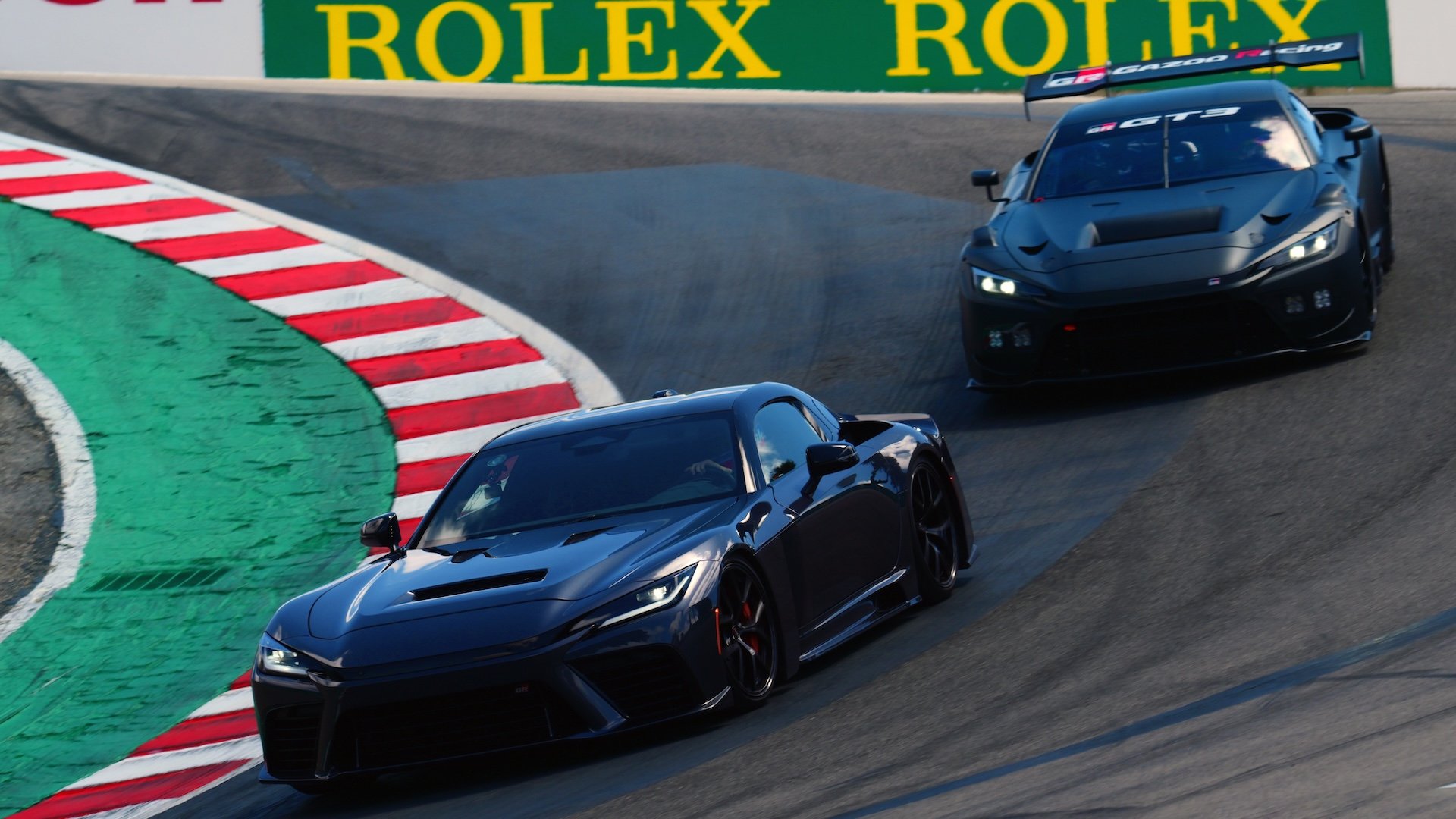


Toyota’s newest supercar, the GR GT, “makes no financial sense.” Those aren’t the words of a critic or a Wall Street analyst. They came from Andrew Gilleland, Toyota’s Senior Vice President of Automotive Operations, during an engineering briefing at Laguna Seca last weekend.
It’s a rare admission from a company that has spent decades building its reputation on ruthless efficiency and profit discipline. But Gilleland wasn’t apologizing. He was explaining a bet that Toyota is placing on something harder to quantify than unit margins: brand credibility.
The U.S. allocation for the GR GT is effectively spoken for, though Toyota was quick to clarify that no deposits have been collected. Demand outstrips supply by design. The company is deliberately keeping volumes tight, treating scarcity as strategy rather than a production shortcoming.
The deeper play revolves around customer racing. Toyota currently has no customer motorsport program, a glaring gap when competitors like Ferrari, Porsche, and McLaren have been printing money selling GT3 cars and track experiences to wealthy amateur drivers for years. The GR GT was engineered from the start to close that gap.
Pro driver Jack Hawksworth, who has developed both the road and GT3 versions, described the race car’s cockpit as “spacious and comfortable” compared to the outgoing Lexus RC-F platform. That language is deliberate. Toyota wants gentleman drivers, not just professionals, to feel confident behind the wheel quickly. A flatter learning curve makes for an easier sale, and an easier path into a racing ecosystem Toyota is still building from scratch.
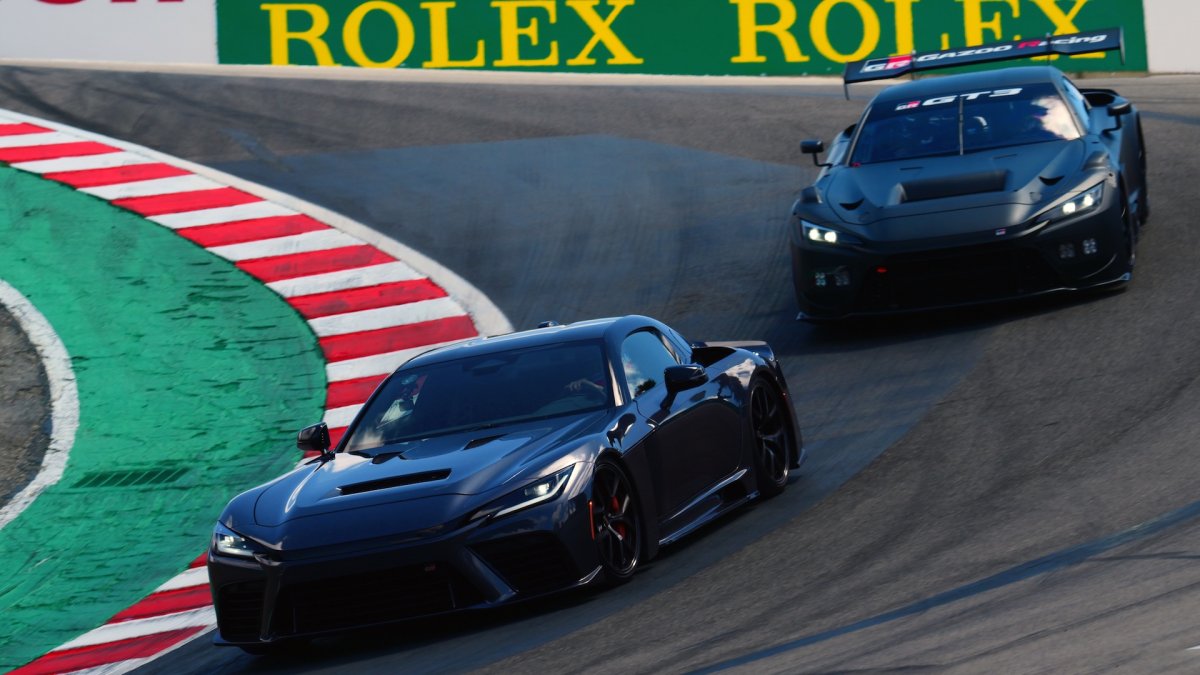
The timeline is measured, almost cautious. In 2027, only Vasser Sullivan Racing will field the GT3 car in IMSA competition. A small customer program arrives for the 2028 season. Gilleland suggested it could take five or six years before individual buyers can purchase a GT3 car outright.
That patience reflects how much Toyota still needs to learn about supporting privateer teams. The company has been using its GR Cup one-make series and GT4 program as laboratories, figuring out logistics as basic as how many parts haulers to send to a race weekend. “These things are spaceships,” Gilleland said. “You’re gonna need some level of support trackside.”
The whole effort traces back to Akio Toyoda’s crusade against boring cars, a mission he launched when he became CEO roughly two decades ago. Gilleland framed the GR GT as the fulfillment of that vision, the apex of a philosophy that has filtered down through Toyota’s entire lineup. He pointed to the current Camry as proof, a sedan that he says is genuinely fun to drive now, informed by the same engineering culture that produced the supercar.
That’s a bold claim, connecting a family sedan to a carbon-fiber halo car through shared DNA. But it reveals how Toyota justifies spending this kind of money on a project that will never turn a direct profit. The supercar is a teaching tool. The racing program is a talent pipeline. The brand lift is the return on investment.
Porsche figured this out forty years ago. Ferrari built an empire on it. Toyota is arriving late to the realization that selling emotion can subsidize selling everything else.
Whether the math eventually works depends on execution, on Toyota’s ability to scale a customer racing operation without the institutional knowledge its European rivals take for granted. Gilleland sounded confident but careful, a man describing a plan that still has more questions than answers. The first GT3 cars haven’t turned a competitive lap yet, and the customer program is still two racing seasons away.

Share this Story