
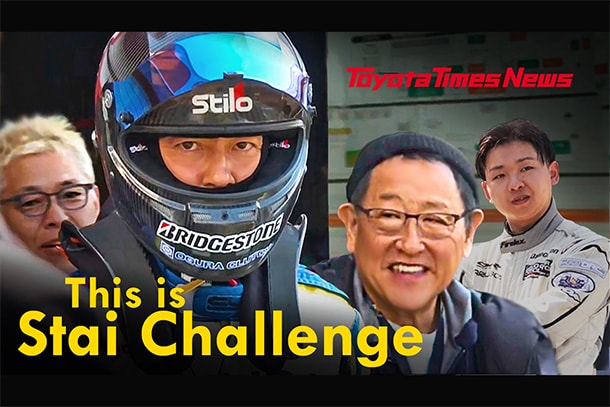


Toyota is betting that the future of motorsport starts with amateurs spinning off track in Mazda Roadsters.
The S-Tai Challenge, a stripped-down endurance racing category spun out of Japan’s Super Taikyu series, officially launched its first full season this year after a debut event at Fuji Speedway last November. The concept is straightforward: lower the cost, reduce the technical barriers, and let regular people experience real circuit endurance racing. Not track days. Not autocross. Actual door-to-door racing with pit stops, driver swaps, and a checkered flag.
The series sits under the Super Taikyu umbrella, Japan’s premier endurance racing platform, which gives it credibility that most grassroots programs never achieve. And it has a powerful champion in Toyota Chairman Akio Toyoda, who races under the pseudonym Morizo and has logged serious seat time at the Nürburgring and across Super Taikyu events. Toyoda recently took on the chairmanship of Super Taikyu’s new organizing body, signaling that this isn’t a side project. It’s a strategic priority.
To showcase the series, Toyota Times sent reporter Yuta Tomikawa — a journalist, not a racer — to compete at Mobility Resort Motegi. His teammate was Takehiro Ogura, whose father Yasuhiro Ogura has raced alongside Toyoda in Super Taikyu. Toyota is weaving its corporate relationships directly into the fabric of grassroots competition.
Tomikawa’s race debut went about as smoothly as you’d expect. During practice, he ran off course in a Mazda Roadster, earning the nickname “Spin Tomikawa” from Toyoda himself. The team encountered repeated setbacks throughout the event.
None of this was airbrushed out. Toyota documented the entire experience in a 41-minute video, stumbles included, because the stumbles are the point.
Toyoda’s message to Tomikawa was telling. He didn’t emphasize lap times or podium finishes. He stressed driving safely, following rules, and learning to share a circuit with other cars. That philosophy — racing as education, not just entertainment — separates the S-Tai Challenge from the countless arrive-and-drive programs that have come and gone over the decades.
The choice of a Mazda Roadster as the competition vehicle is worth a second look. Toyota, the world’s largest automaker, is platforming a competitor’s car in its own grassroots series. That’s either remarkable confidence or a deliberate statement that the S-Tai Challenge is about the sport, not the brand. Probably both.
Endurance racing has always been the most democratic form of motorsport. It rewards consistency over raw speed, teamwork over individual heroics. But even entry-level endurance series like the Chump Car World Series or the 24 Hours of Lemons in the United States require significant mechanical knowledge, a prepared car, and a crew.
The S-Tai Challenge appears designed to compress that learning curve dramatically, borrowing legitimacy from its parent series while removing the barriers that keep most enthusiasts on the spectator side of the fence.
Whether this grows beyond Japan remains an open question. Toyota has the infrastructure, the dealer network, and the global motorsport presence to export the concept. Toyoda’s personal involvement suggests this isn’t a regional experiment destined to quietly fade.
Tomikawa made it to the finish. He didn’t win. He didn’t need to. The checkered flag was the victory — and that’s exactly the emotion Toyota is trying to bottle and sell to every amateur driver who ever watched a race and thought, maybe someday.
Someday just got closer.
Share this Story