
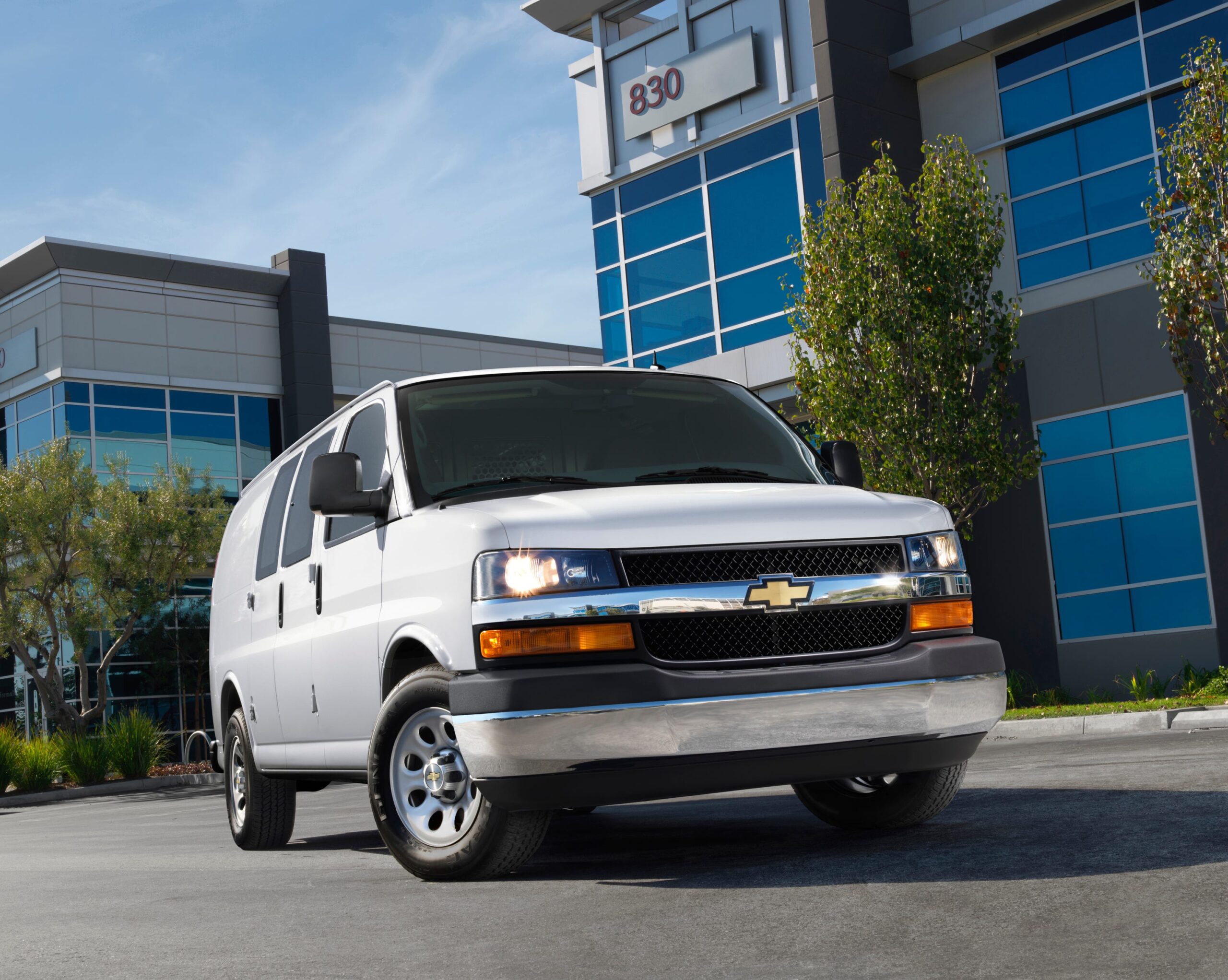


General Motors is giving its Chevrolet Express and GMC Savana commercial vans a 7.0-inch touchscreen for the 2027 model year. The system runs GM’s Infotainment System 3, software the company rolled out across its other vehicles in 2020. That’s seven years ago.
Until now, these vans have been rolling with a two-speaker audio system, an AM/FM radio, and an aux cord. Bluetooth wasn’t even standard. It was an option you had to check a box and pay extra for.
The Express and Savana actually had a touchscreen once before, briefly, for the 2019 model year. GM offered it as an option, then yanked it after a single year. Nobody outside GM has explained why. The vans have been running screenless ever since, a throwback experience in a market where even $20,000 economy cars come with standard displays.
So what does this new-old system actually do? Bluetooth phone connectivity and audio streaming are confirmed. Apple CarPlay, Android Auto, and USB connectivity have not been confirmed yet. Passenger models and vans with the Crew Van package get their speaker count doubled, from two to four. Cargo and chassis-cab variants stay at two speakers.
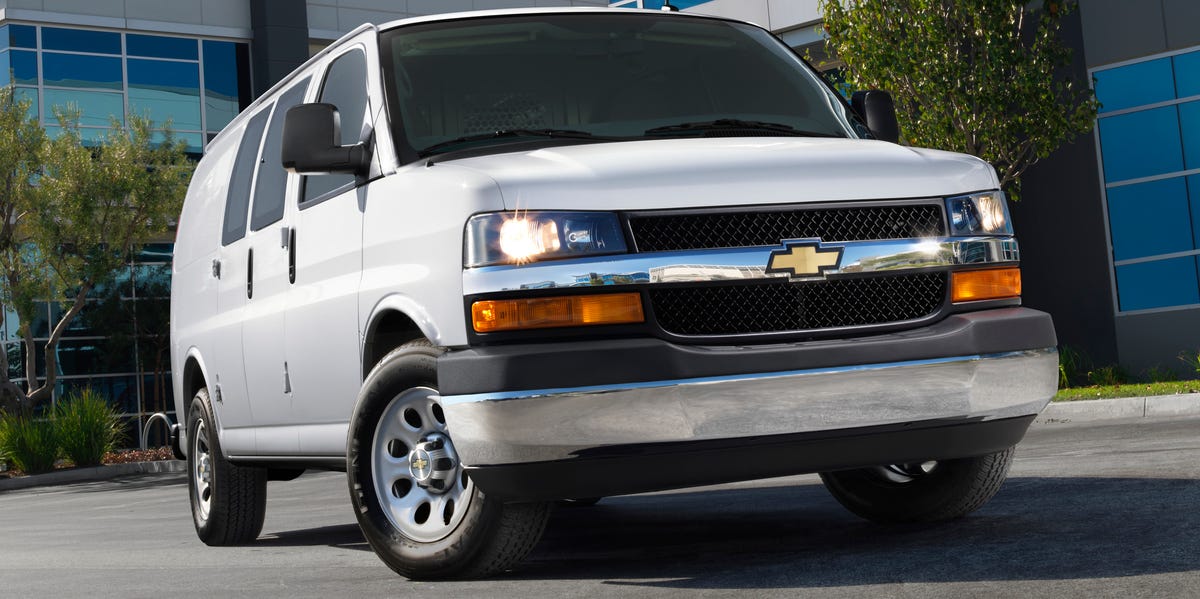
These vans are relics in every measurable way. The Express platform dates back to 1996. GM has refreshed the sheet metal and tweaked the powertrain over the decades, but the bones are nearly 30 years old.
Ford killed the Econoline in 2014 and replaced it with the Transit. Ram went with the ProMaster. Both competitors offer modern infotainment, modern safety tech, and modern driving dynamics. GM kept selling the Express and Savana because they’re cheap, simple, and fleet buyers keep ordering them.
That formula has worked well enough to keep the production line running, which is itself moving for 2027 from one GM facility to the Wentzville Assembly plant in Missouri. Pricing starts just over $45,000, and nothing else about the vans changes for the new model year.
The commercial van segment doesn’t demand luxury, but it does demand functionality. Fleet managers want vehicles that can integrate with dispatch systems, run navigation apps, and pair with hands-free calling without aftermarket workarounds. A screenless dashboard in 2026 was a liability, not a selling point for simplicity.
GM has talked for years about eventually replacing these vans. The BrightDrop Zevo electric van was supposed to represent the future. But BrightDrop has been scaled back, reabsorbed into GM’s commercial vehicle operations, and the Zevo hasn’t come close to replacing Express and Savana volume.
So these ancient twins soldier on. They get a touchscreen that would have looked current during the first year of the pandemic. Four speakers in the passenger model. Bluetooth without an upcharge.
It is the bare minimum to keep fleet customers from walking across the street to a Ford dealer. Whether it’s enough depends entirely on how much longer GM plans to keep building a van whose architecture predates the iPhone by more than a decade.

Share this Story