
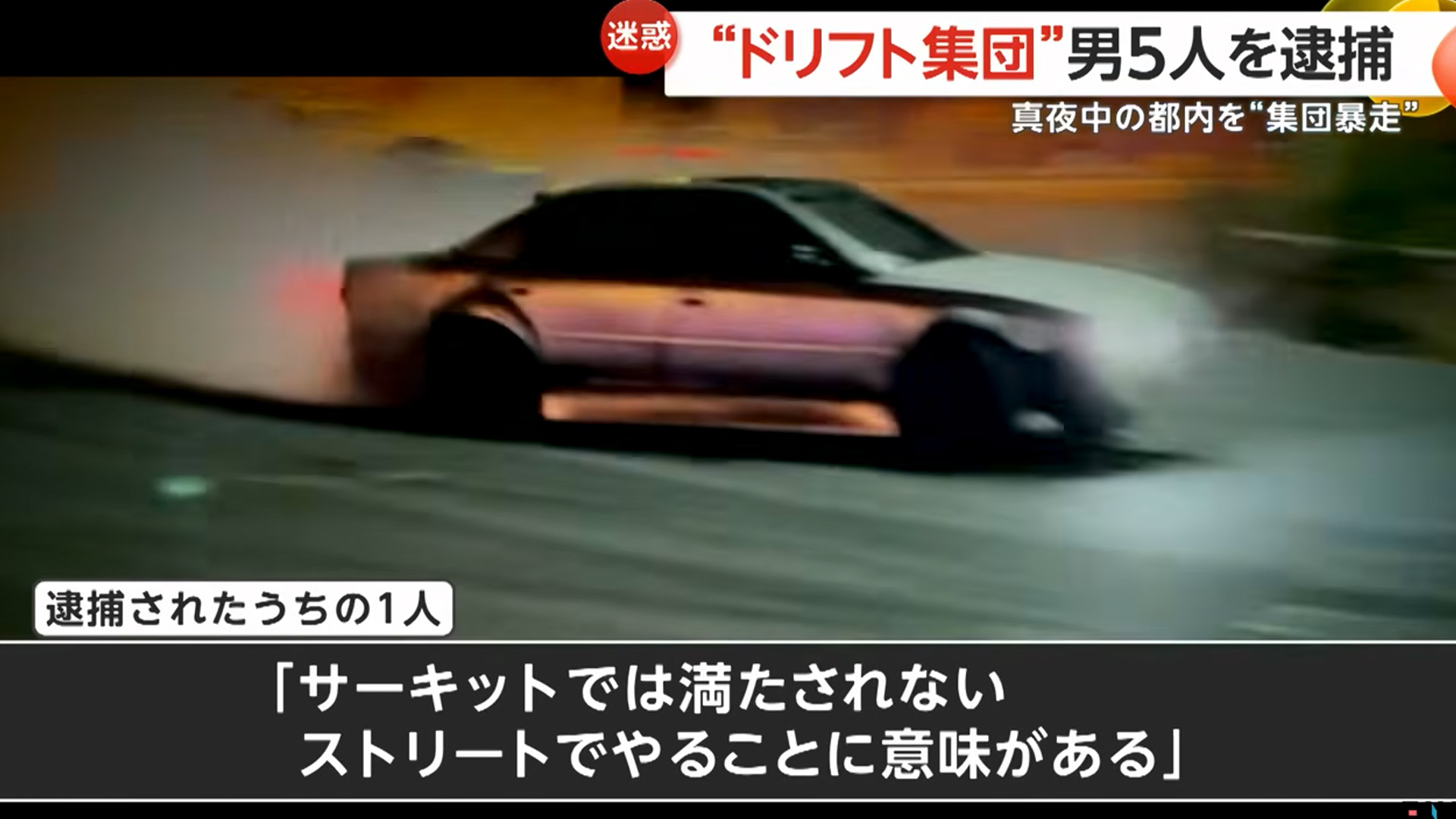


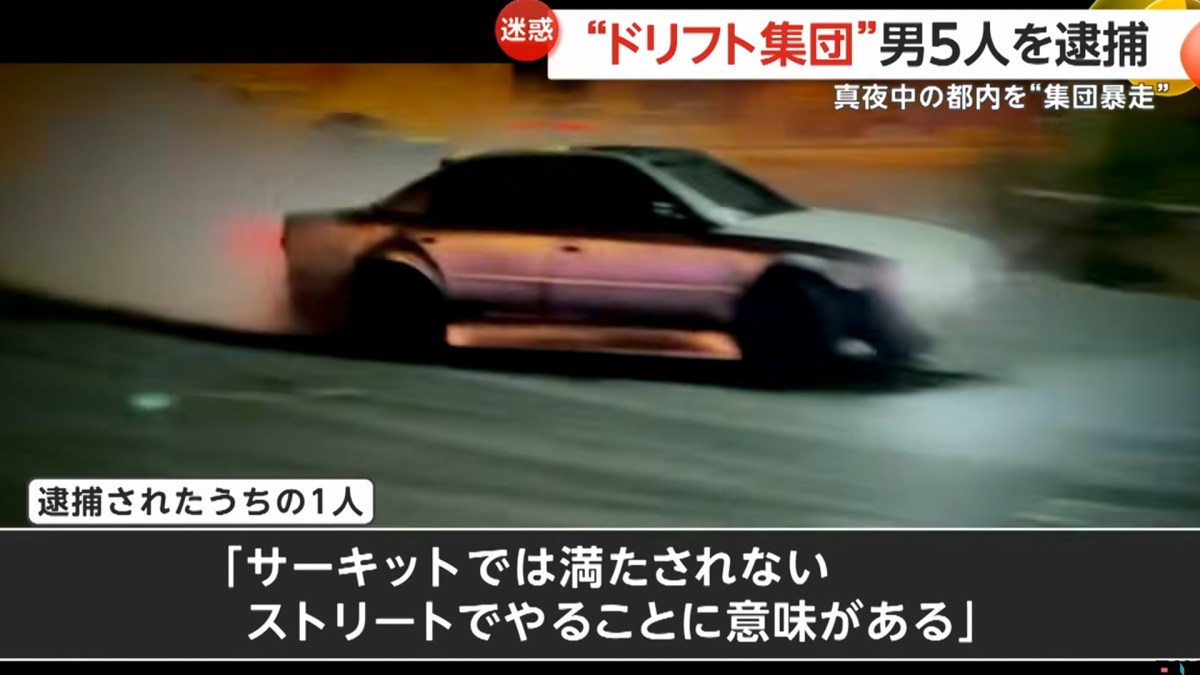
Five men are in custody after Tokyo Metropolitan Police arrested them on suspicion of dangerous driving at Tokyo Port, where they allegedly turned a public wharf into their personal drift playground with a fleet of rear-wheel-drive Toyotas and Nissan S-chassis cars. Video released by police shows at least two cars sliding through smoky, tire-shredding runs on public roads at night. The incident dates back to December.
Among the arrested is Yoshikawa Marcelo Yuji, a figure with more than 100,000 Instagram followers and a reputation that Tokyo Metro PD itself characterized as “charismatic” in the drifting world. His social media is a highlight reel of aggressive entries and tandem runs, much of it filmed at Fuji Speedway but plenty captured on city streets. He acknowledged the arrest in a post on Tuesday.
The police aren’t treating this as a minor nuisance. All five vehicles were seized, and the arrests were covered by major Japanese outlets including NHK World, TBS News Dig, and FNN. The crew reportedly called themselves a name that loosely translates to a boastful declaration about Japan’s drift culture.
One quote attributed to the group cuts right to the bone: “There’s meaning in doing it on the street.” That attitude is precisely the problem Tokyo is now confronting at scale.
Emergency calls related to street drifting in Tokyo have more than doubled over the past year. NHK World reports that 347 such calls were logged in 2025 alone. That’s not a blip. That’s a trend line steepening fast enough to force a police response with cameras rolling and press conferences attached.
From the outside, particularly in the West, Japanese street drifting carries a cinematic glow. Two decades of Fast and Furious mythology and a steady diet of YouTube clips have turned the Tokyo drift scene into something aspirational, a cultural export as potent as JDM engine swaps and midnight Wangan runs.
The reality on the ground is more familiar than romantic. Cars sliding sideways at speed on public roads next to port infrastructure, with no barriers, no runoff, and no marshals, is functionally identical to the sideshow takeovers that plague American cities.
The difference is packaging. When it happens in Oakland or Atlanta, it’s called a menace. When it happens on a Tokyo wharf with an S14 and a well-followed Instagram account, it gets reposted with fire emojis.
Yoshikawa’s track footage suggests genuine skill. His reverse entries are clean, his car control precise. None of that matters when the venue is an unsanctioned public road at midnight. Skill doesn’t eliminate risk; it just delays the consequences until it doesn’t.
Tokyo police clearly decided the consequences needed to arrive sooner. The public nature of the arrests, the released footage, the language about “charismatic figures,” all of it is calibrated to send a message to the broader scene, not just these five drivers. When your emergency call volume doubles in a year, you don’t quietly issue citations.
Japan has some of the best racing facilities in the world. Fuji Speedway, Ebisu Circuit, Tsukuba, Meihan Sportsland. The infrastructure exists for exactly this kind of driving. Yoshikawa himself clearly knows the way to Fuji.
The question that hangs over this arrest is the one the crew answered for themselves: whether the street is the point or the track is. For Tokyo Metro PD, with 347 calls and counting, the answer is already settled.
Share this Story