
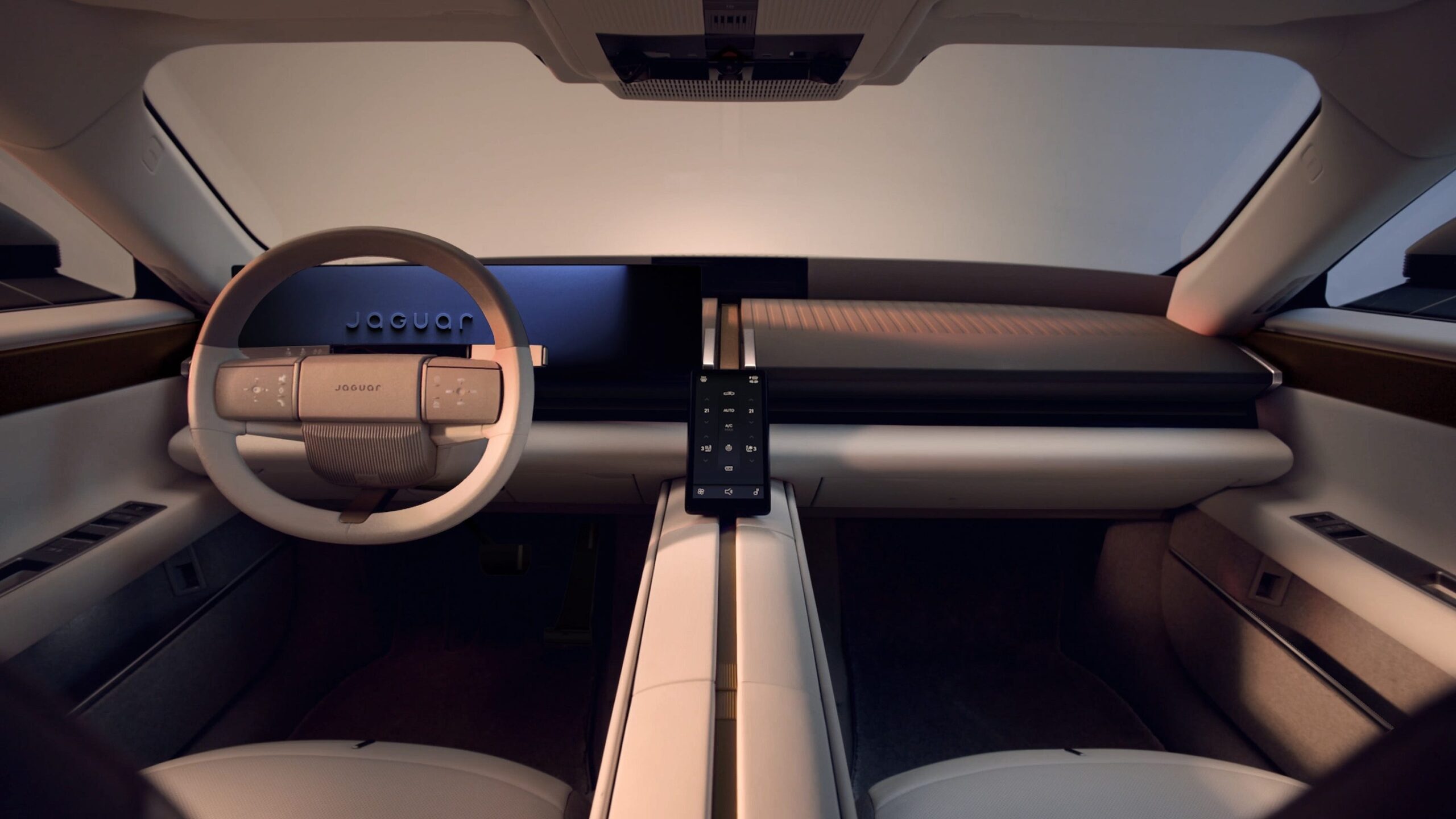


The burl walnut is gone. The leather-wrapped heritage, the chrome toggle switches, the gentleman’s club ambiance that defined decades of Jaguar cabins. All of it, scrapped.
Jaguar revealed the production interior of its Type 01 EV this week ahead of Monterey Car Week, and the cabin looks like it was designed by someone who has never sat in a Jaguar before. That might be exactly the point.
The dominant motif is horizontal lines running longitudinally, front to back. A long, ruler-straight center console bisects the entire cabin with a groove carved down its center. Door panels echo the theme. Straked elements on the dashboard connect visually with exterior pieces just ahead of the windshield, and even the two-spoke steering wheel plays along.
Four sculpted seats sit inside the cabin with almost no pleats, no piping, no fuss. Jaguar calls it a “GT driving position,” which tells you they still want to sell this as a grand tourer, even if nothing else inside says that in any traditional sense. The trim on the doors and console is metallic brass, replacing the chrome and wood that once signaled Coventry craftsmanship.
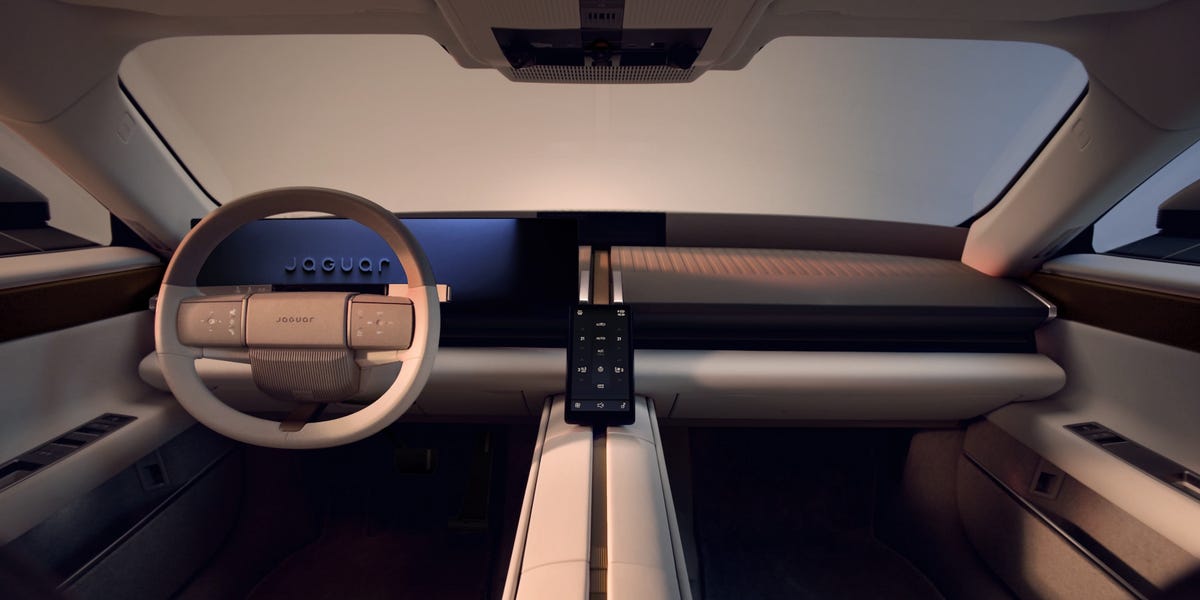
A camera-fed digital rearview mirror mounts its display at the base of the windshield. A large driver’s display sits behind the steering wheel, but the central touchscreen is notably small. That’s a curious choice when most EV competitors are going bigger.
The steering wheel spokes carry haptic-touch buttons, and two column stalks remain. It’s a small concession to physical controls in a cabin that otherwise strips them away.
The glass roof is a single pane, narrow but extending deep toward the rear of the car. Jaguar is clearly chasing an airy, modern feel, the kind Tesla pioneered and Volvo refined.
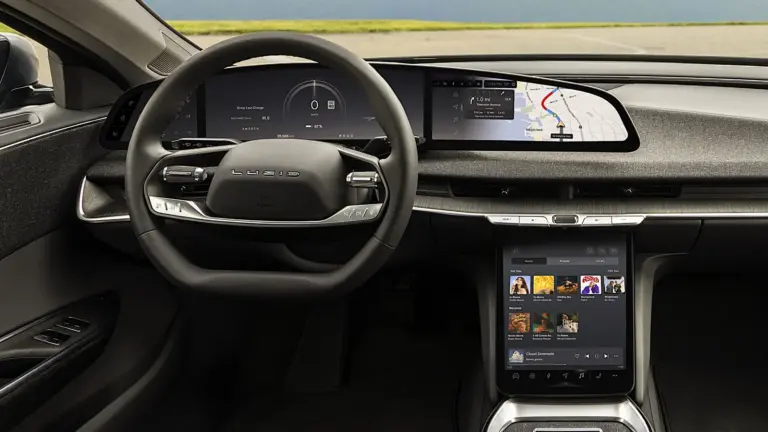
And that comparison is the uncomfortable truth sitting at the center of this reveal. The minimalism Jaguar is showcasing here is not new and it is not daring. Teslas have looked like this for years, and Volvo’s EX90 lives in this neighborhood. Lucid, Polestar, and others have all explored variations of the sparse-cabin EV formula, which means Jaguar is arriving late to an aesthetic that has already become a default.
The full exterior remains camouflaged. Jaguar plans to unwrap the complete car on October 6. Until then, the company is drip-feeding details, a strategy that keeps attention but also delays the moment when the whole package faces real scrutiny.
What Jaguar is really betting on is that the Type 01 can redefine the brand entirely. This is not an evolution. It is an erasure.
The F-Type is dead. The sedans are dead. The SUVs built on aging platforms are gone. Everything Jaguar was for the last two decades has been swept off the table, and this interior is proof that the company has no interest in a graceful transition.
The risk is obvious. Jaguar’s existing customer base loved those interiors. They loved the leather, the wood, the weight of a proper rotary gear selector.
Those buyers now have to look at a brass-trimmed horizontal slab and decide if this is still their brand. Jaguar is betting they don’t need those buyers anymore. Whether the new ones show up is the question that October will begin to answer.


Share this Story