
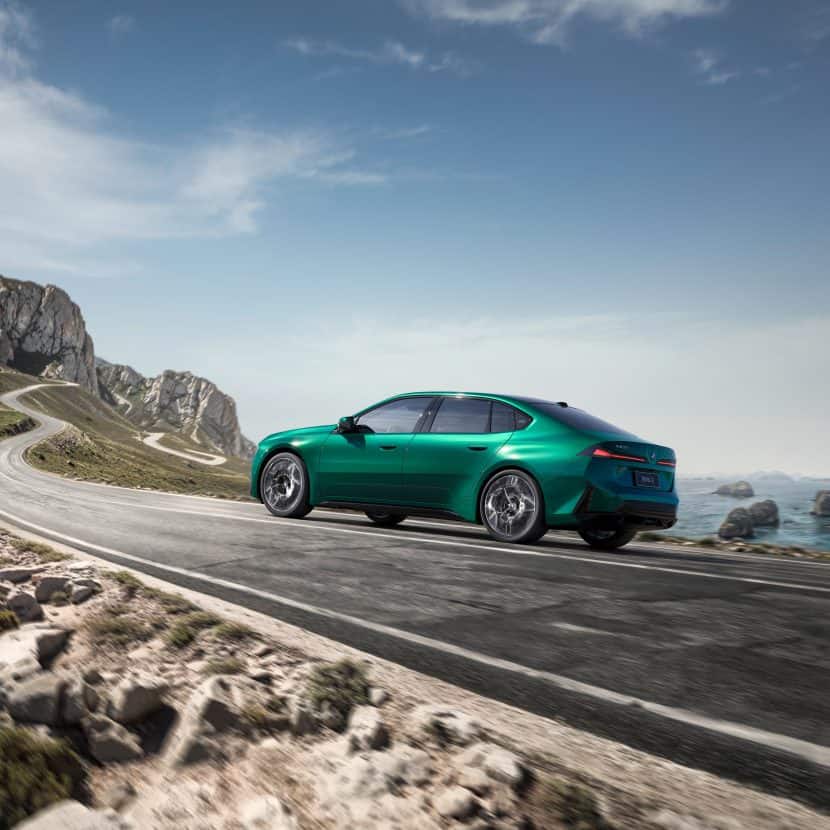


The 2026 Chengdu Auto Show is supposed to land in the industry’s quiet season. BMW showed up anyway with a car the rest of the world won’t get, at least not yet.
The long-wheelbase i3, internally coded NA8, sits on display in Le Castellet Blue with an M Sport Package and black wheels. It looks like the global NA0 sedan at a glance, but the differences are real. BMW added 108 millimeters between the axles, pushing the wheelbase to 3,005 millimeters, or just over 118 inches.
That growth shows up in longer rear doors and a stretched greenhouse designed to make one thing clear: this car is built for people who prefer to be driven.
China has long demanded long-wheelbase versions of BMW’s sedans. The 3 Series Li, the 5 Series Li, the 7 Series Li. Neue Klasse doesn’t break the pattern — it doubles down.
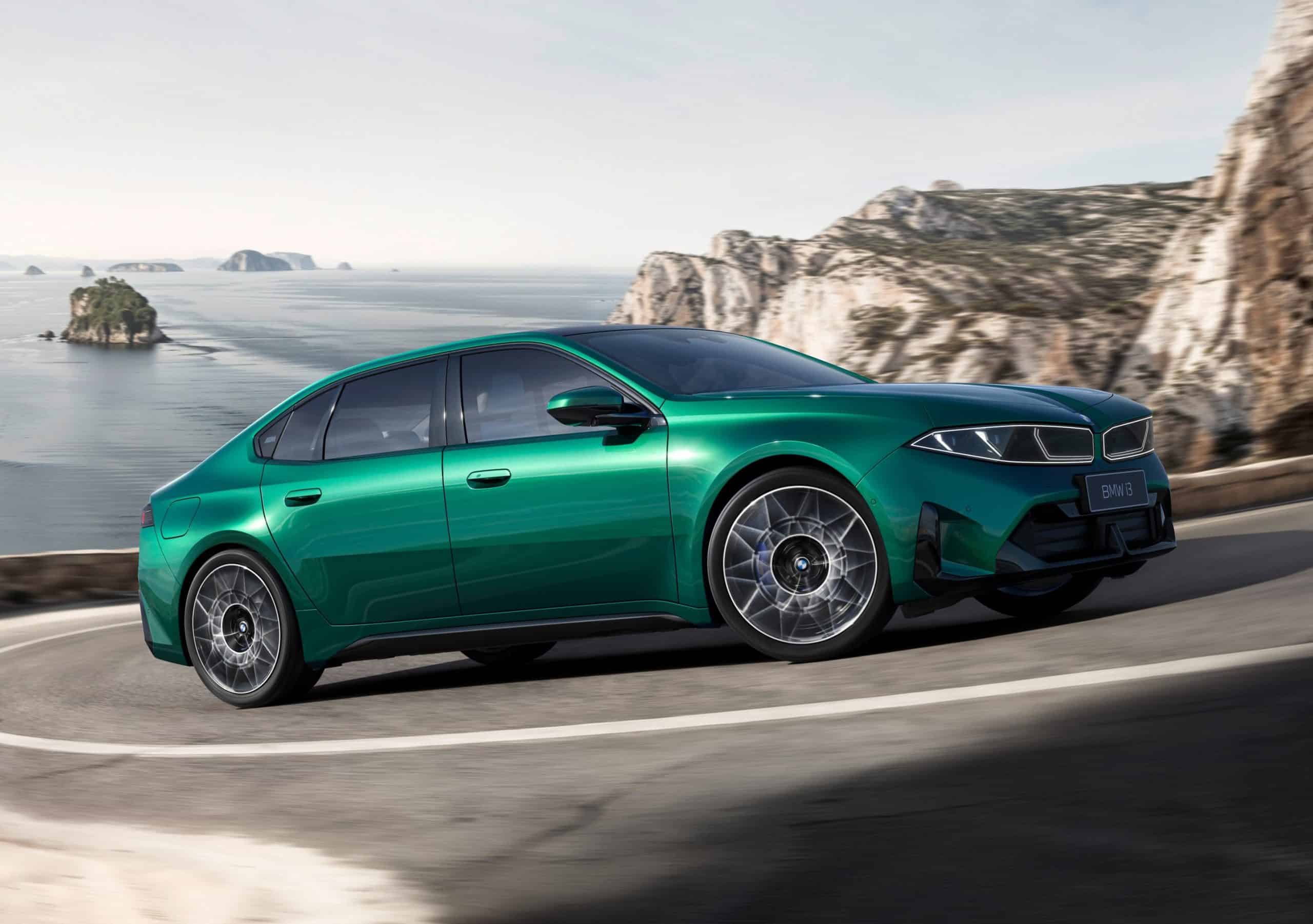
Look closer and you’ll notice the door handles are different from the standard i3. The global car uses completely flush units. China’s version gets pull-up handles, a last-minute engineering change forced by new Chinese safety regulations that ban flush designs.
It’s a small detail that reveals how much regulatory power Beijing holds over even the most global automakers. BMW redesigned a body panel to stay in compliance.
There’s also a backlit M logo tucked into the Hofmeister kink on the rear pillar. Before anyone gets excited, this is the i3 40L xDrive, not an M car. M Performance and full M variants are expected later.
Inside, BMW fitted Castanea artificial leather and the new 3D head-up display for the show car. Trunk space on the standard-wheelbase i3 sits at 420 liters, with a small 31-liter frunk up front. Whether those numbers change on the stretched Chinese model hasn’t been confirmed.
Pricing hasn’t been announced either, but the math isn’t hard. The iX3 40L xDrive, the crossover twin also built on Neue Klasse, starts at 299,900 RMB, roughly $44,600. Sedans historically undercut their SUV siblings in China, so a rear-wheel-drive i3 30L could slot in below the iX3 30L’s 269,900 RMB starting price, putting it under $40,000.
BMW has been selling an i3 sedan in China since 2022, when it retired the original i3 hatchback and repurposed the name for a CLAR-based electric 3 Series. That car starts at 278,000 RMB. Expect the Neue Klasse replacement to land in roughly the same territory, because walking away from an established price bracket in the most competitive EV market on Earth would be reckless.
And that competition is the real context here. BYD, NIO, Xpeng, and a dozen other domestic brands are selling long, luxurious, tech-heavy electric sedans at aggressive prices. BMW can’t show up in Chengdu with just the global car and hope that badge loyalty carries the day.
The stretched wheelbase, the compliant door handles, the pricing strategy mapped against its own crossover — all of it signals a company fighting to hold ground in a market where German heritage buys less goodwill every year.
Series production of the standard i3 recently began. The long-wheelbase version is expected to follow quickly, likely built locally through BMW’s Shenyang joint venture. Whether the NA8 ever leaves China remains an open question, one BMW doesn’t seem in any hurry to answer.
Share this Story