
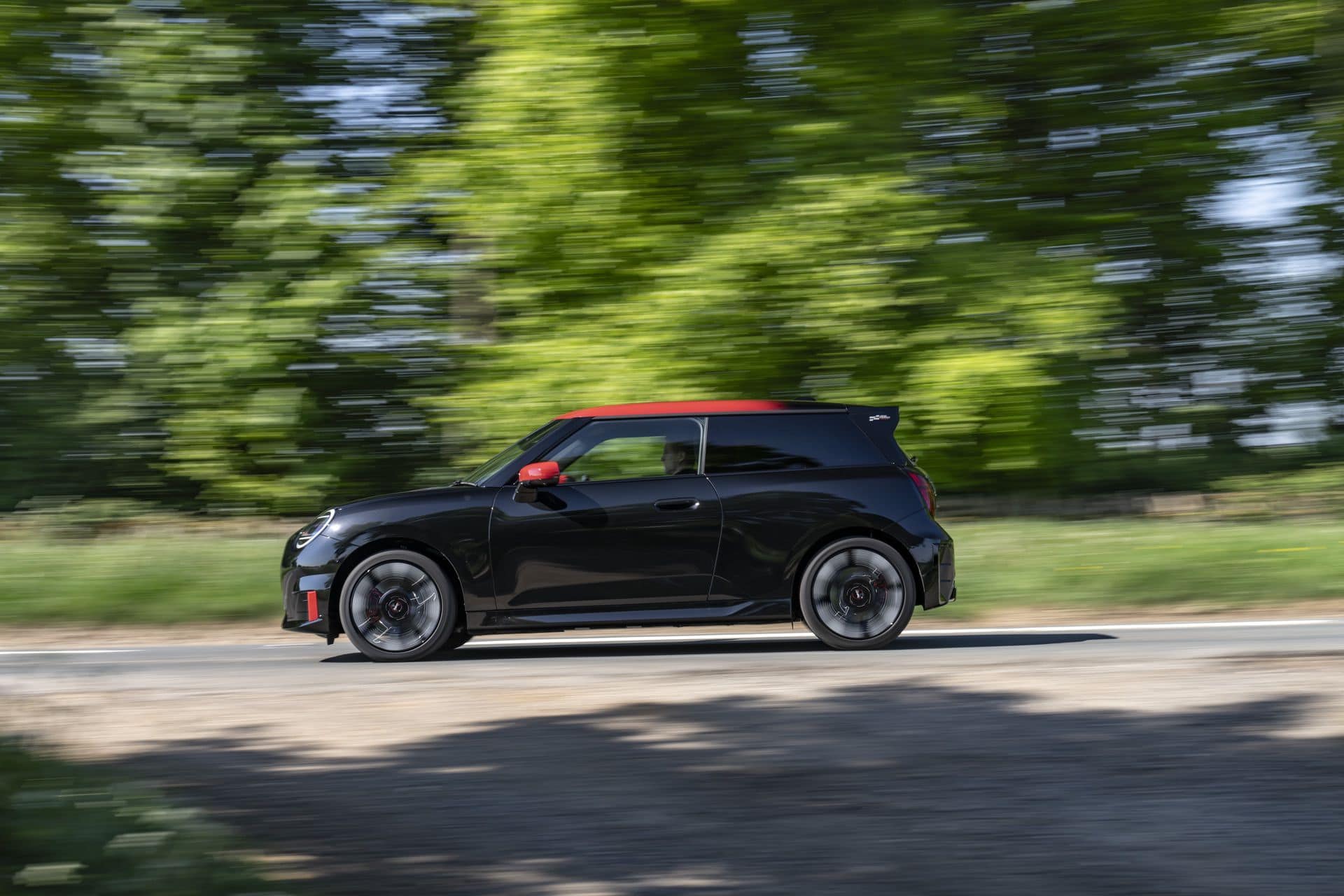


Every MINI Cooper built under BMW’s ownership has driven the front wheels. The next one might not.
MINI has begun work on the next-generation Cooper, and design chief Holger Hampf has confirmed that a shift to rear-wheel drive is actively being considered. The reason is mechanical, not philosophical. BMW’s Gen6 platform, the architecture underpinning the entire Neue Klasse lineup, simply does not accommodate front-wheel drive.
There are no plans to develop a front-drive unit for it. MINI can either get on the platform or stay off it. That’s a binary choice with massive implications for a brand that has used transverse engines and front axle power delivery since BMW revived it in 2001.
The current Cooper, on sale since 2024 in both petrol and electric form, is built in China with joint-venture partner Great Wall Motor on a front-drive platform shared with the Aceman. When it launched, the electric Cooper faced a thin competitive set. The Fiat 500e was about it.
That window has closed. The Renault 5 and Fiat Grande Panda already beat it on range per dollar. The Volkswagen ID Polo, Cupra Raval, Kia EV2, and a wave of Chinese competitors from BYD and Geely are lining up behind them.
MINI has responded with price cuts, and a facelift is expected within a couple of years. But no amount of revised bumpers fixes a platform problem.
BMW Group engineers told Autocar at the Gen6 unveiling that the rear motors in the iX3 and i3 sedan use gearboxes, while the smaller front-axle units in all-wheel-drive versions do not. A viable front-drive configuration for the architecture simply isn’t in the development pipeline. BMW development boss Joachim Post has said the company will pick whatever drivetrain layout works best for each car, invoking “sheer driving pleasure” as the guiding principle.
Hampf has drawn one firm line. The Cooper’s proportions and its three-door body style are non-negotiable regardless of what changes underneath. The car has to look and feel like a MINI, even if the driven axle flips to the back.
The petrol Cooper adds another wrinkle. It currently runs on a reworked version of the previous-generation car’s underpinnings, separate from the Chinese JV platform used by the electric model. The two already look like siblings without sharing much mechanically.
If the next EV lands on Gen6 with rear-wheel drive, that divergence grows wider. Reports suggest the petrol Cooper will continue on front-wheel drive through the 2030s, likely picking up hybrid assistance rather than migrating to the new architecture.
So MINI could soon be selling two cars with the same name, the same silhouette, and completely different mechanical philosophies. One driving the front wheels with a combustion engine, the other driving the rears with an electric motor.
The last time a small car from this group went rear-drive, it was the original BMW 1 Series, a car that earned a cult following precisely because it felt different from everything else in its segment. The next 1 Series is heading the same direction as it picks up an electric option on the Neue Klasse platform.
Whether MINI’s customer base, which skews heavily toward urban buyers who never think about which axle is driven, will care about the switch is an open question. Whether they’ll notice in the way the car handles is less open. Rear-drive small cars behave differently, full stop.
MINI hasn’t committed yet. But when your parent company builds a platform with no front-drive option and tells you to get on it, the decision has a way of making itself.

Share this Story