
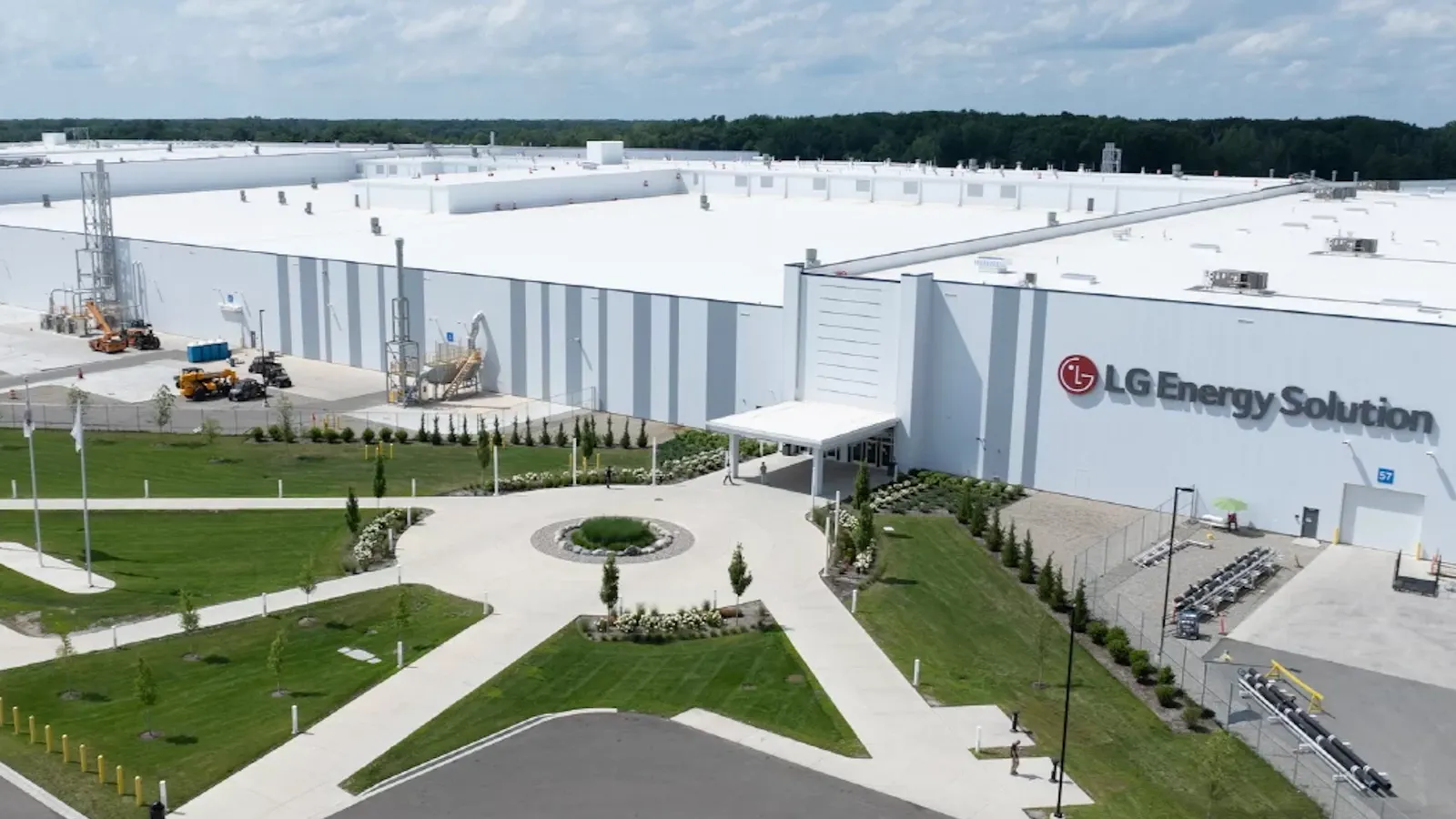


LG Energy Solution fired up its new Lansing, Michigan battery plant on August 18, a factory that was never supposed to be theirs alone. The 35-GWh facility was originally planned as part of the Ultium Cells joint venture with General Motors. GM walked away from its stake in December 2024, adjusting capacity to match softening EV demand.
Now LG runs the show solo, and the plant’s product mix tells you everything about where the battery business actually stands.
Yes, the Lansing facility will produce nickel-manganese-cobalt cells for Toyota’s 2027 Highlander EV, which will be assembled in Kentucky. That is a real win, a real contract, a real vehicle headed for driveways. But the plant will also churn out lithium iron phosphate cells for large-scale stationary energy storage, the kind of product that keeps the lights on at data centers and stabilizes power grids.
LG’s U.S. energy storage division, Vertech, will integrate those cells into complete systems for utility and commercial customers. This dual-purpose strategy is not coincidence. It is survival math.
The automakers who were supposed to anchor LG’s American manufacturing ambitions have been peeling away one by one. Ford killed a $6.5 billion supply deal for 75 GWh of battery cells last December after rethinking its electrification roadmap. Ford then launched its own subsidiary, Ford Energy, to build battery storage systems for data centers and industrial customers, becoming a competitor in the stationary storage space.
Honda bought out LG’s stake in their Ohio joint venture plant for $2.85 billion. Stellantis dumped its 49% equity in the NextStar Energy battery venture in Canada for one hundred dollars. LG took full ownership of that Windsor, Ontario facility and promptly redirected it toward LFP energy storage production.
The pattern is unmistakable. Automakers are retreating from battery manufacturing partnerships while LG consolidates ownership and pivots hard toward grid storage.
CEO David Kim framed the Lansing opening as supporting “the future of mobility” and “America’s growing energy infrastructure and digital economy.” The order of those phrases matters less than their coexistence. LG cannot build a business case on EV batteries alone right now, and the company knows it.
Interior Secretary Doug Burgum showed up with praise for Michigan’s “skilled workforce” and “industrial capabilities,” which is the kind of talk that accompanies generous federal incentives. LG has poured more than $5 billion into Michigan since 2010, operating R&D facilities in Troy and a second manufacturing plant in Holland.
The Lansing region is becoming a battery corridor almost by accident. In March, Tesla and LG struck a deal to build a separate $4.3 billion facility nearby to produce LFP prismatic cells for Tesla’s Megapack 3 energy storage systems assembled in Houston. Two massive LG-linked battery plants in the same Michigan metro, neither one built purely on EV demand.
The 1,700 jobs LG promises when Lansing reaches full capacity are welcome. The Toyota contract gives the plant an automotive anchor tenant. But the facility’s long-term viability depends on whether energy storage demand can fill the gap left by automakers who keep pulling back their electrification timelines.
LG Energy Solution has spent the last 18 months absorbing abandoned joint ventures, losing billion-dollar supply contracts, and buying out partners at fire-sale prices. Each time, the company has redirected capacity toward stationary storage. The Lansing plant is the clearest expression yet of a battery maker rebuilding its business model in real time, with the concrete still curing on factories designed for a different future.
Whether grid storage demand grows fast enough to justify all this capacity remains an open question. LG is betting the answer is yes before the invoices come due.


Share this Story