


Tesla built the template. Now the students are beating the teacher.
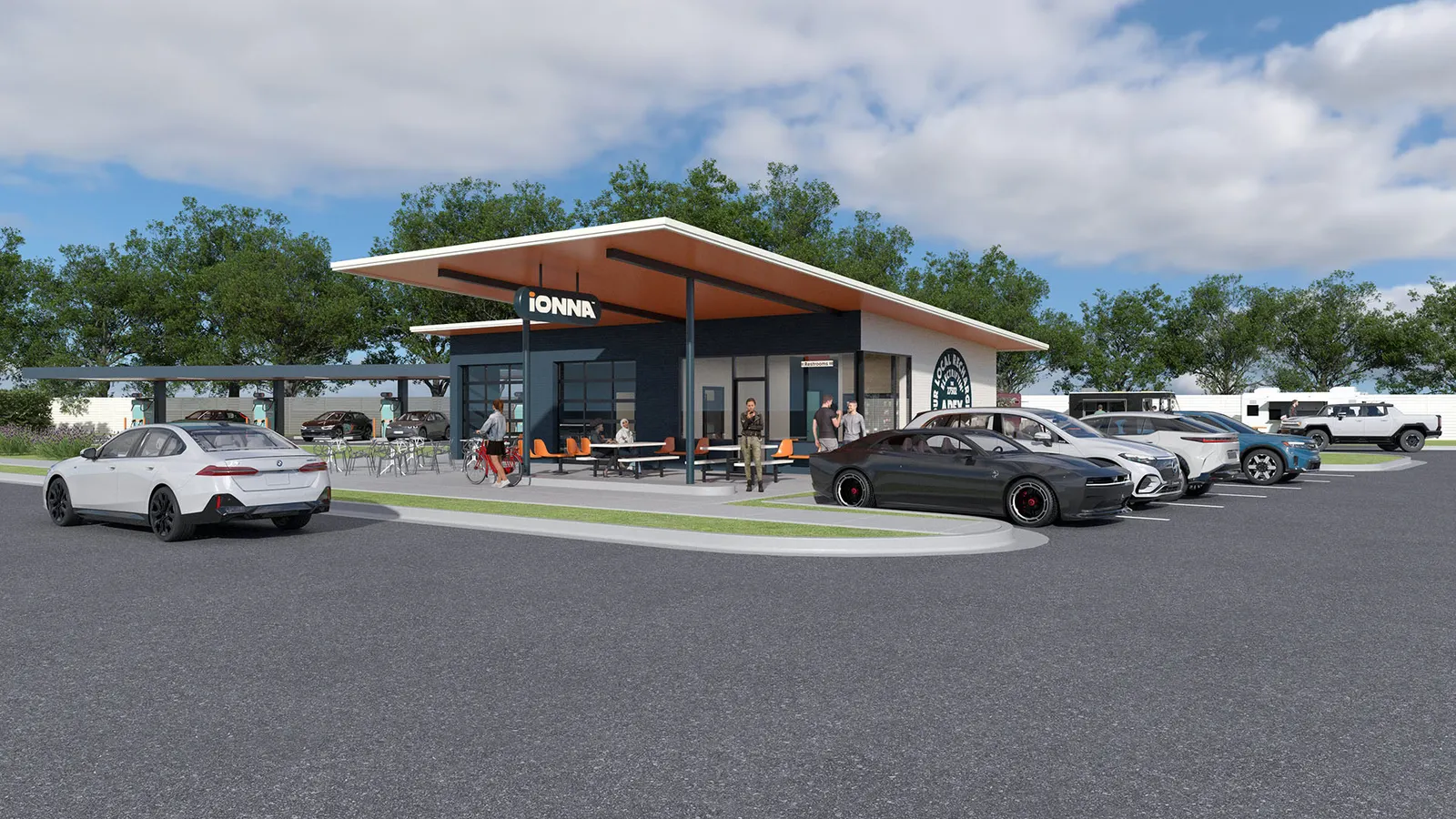
Ionna, the charging network bankrolled by eight legacy automakers, scored 807 on JD Power’s 1,000-point scale in the firm’s 2026 U.S. Electric Vehicle Experience Public Charging Study. That put it ahead of Mercedes-Benz’s charging network, the Rivian Adventure Network, and, for the first time in the study’s history, Tesla’s Supercharger network, which landed in fourth place.
Tesla still scored a respectable 701, well above the segment average of 666. But the gap between first and fourth is 106 points, and that is not a rounding error.
Ionna was founded in 2024 by BMW, General Motors, Honda, Hyundai, Kia, Mercedes-Benz, Stellantis, and Toyota. It opened its first station, branded a “Rechargery,” in Apex, North Carolina, in October of that year. Since then it has locked down partnerships with Sheetz, Wawa, Casey’s, and Circle K, and announced a $250 million expansion across California.
The network is barely two years old. That newness, according to JD Power, is a built-in advantage.
“Because those networks are more recent, their chargers are new and their locations are optimized for the user experience,” said Brent Gruber, JD Power’s executive director of EV solutions. Fresh hardware, modern layouts, more ports per location, and proximity to restrooms and snacks all factored into the scoring.
All four top-ranked fast-charging networks are automaker-affiliated. Tesla pioneered that model a decade ago. Now the automakers it once embarrassed have adopted the same playbook with newer equipment and better site design.
The study drew from 6,594 EV and plug-in hybrid owners and measured satisfaction across 10 factors, including reliability, safety, cost, and amenities. Charger failure rates hit their lowest point since JD Power began the study in 2021. Even older third-party networks are getting more reliable.
Fast charging is improving. Destination charging is not.
JD Power reported a 12-point decline in satisfaction with public Level 2 chargers, the slower units typically found at hotels, shopping centers, and parking garages. The firm did not break out network-by-network Level 2 results, but the trend line is clear enough.
Part of the problem is payment friction. Very few Level 2 chargers in the U.S. support Plug and Charge, the protocol that identifies the vehicle automatically and bills the owner’s account without swiping a card or downloading an app. At Level 2 stations, drivers are still fumbling with credit cards and unfamiliar apps.
The other part is that Level 2 charging is no longer free. In 2023, 60% of Level 2 users reported receiving a free charge. In 2026, that figure dropped to 34%. Hotels and retailers are doing the math and putting up paywalls.
“This rapid decline in free Level 2 charging is contributing to continued lower satisfaction,” Gruber told WardsAuto.
The irony is thick. Fast charging on road trips, once the most stressful part of EV ownership, is now the experience drivers rate highest. Plugging in overnight at a hotel, supposedly the effortless scenario, is where frustration is growing.
Ionna’s rise also carries a question the study cannot answer yet: how well does a network hold up at scale? Tesla’s Supercharger system spans thousands of locations and has weathered years of wear, vandalism, and surging demand. Ionna is still in its honeymoon phase, with pristine stations and relatively light traffic.
The 2027 study will tell us whether Ionna’s lead is structural or just the glow of being new.
Share this Story