
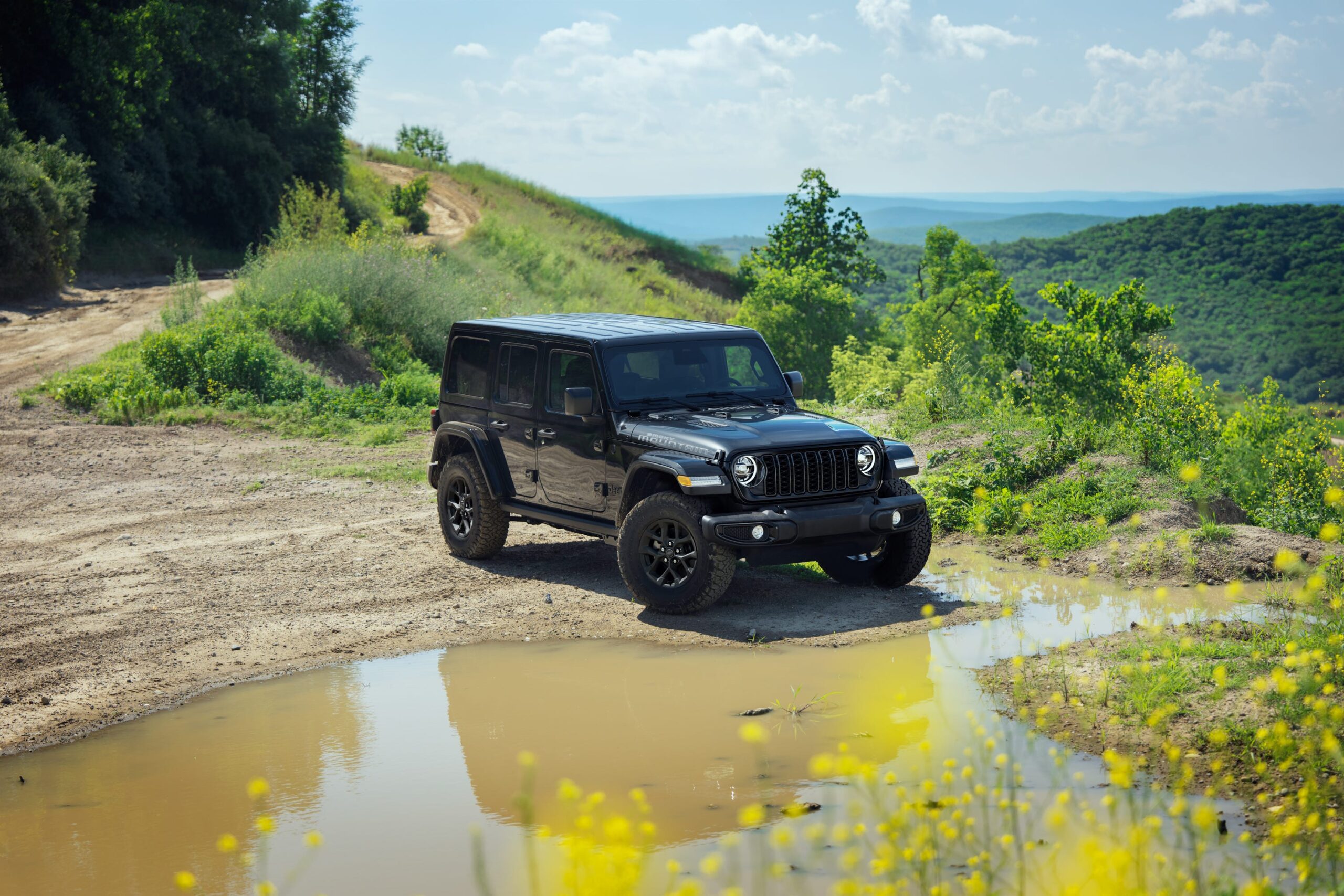


Ten months into its “Twelve 4 Twelve” program, Jeep has unveiled the 2027 Wrangler Smoky Mountain edition. The price of admission beyond a standard Wrangler Willys? Eighty dollars.
That’s not a typo. For the cost of a decent dinner, buyers get unique hood decals, a bear-and-cub shifter medallion, Terracotta stitching, and the right to tell people their Wrangler is named after a mountain range. The Willys it’s based on starts at $48,230 for the four-door, making this a $48,310 proposition.
The Smoky Mountain was revealed at the Smoky Mountain Invasion, a Jeep enthusiast gathering in Pigeon Forge, Tennessee. It’s the 10th installment in a 12-month blitz of special editions that has produced everything from an ’80s-themed Rewind to a cowboy hat-wearing variant. The cadence tells you everything about where Jeep’s product strategy lives right now: not in new platforms or fresh powertrains, but in decals, stitching, and medallions.
Under the skin, this is a Willys. Dana 44 axles front and rear, 4.10 ratio, locking rear diff, steel rock rails, standard trailer hitch. The 17-inch black wheels come wrapped in 33-inch tires, with optional 35-inch BFGoodrich KO2s for anyone who actually plans to leave pavement.
Two engines are available, the 2.0-liter turbo four or the 3.6-liter V-6, but the six-speed manual is not. Automatic only. That last detail stings.
The manual has been a core part of the Wrangler’s identity for decades, and its exclusion from yet another special edition suggests Jeep knows exactly where take rates sit. Or doesn’t care.
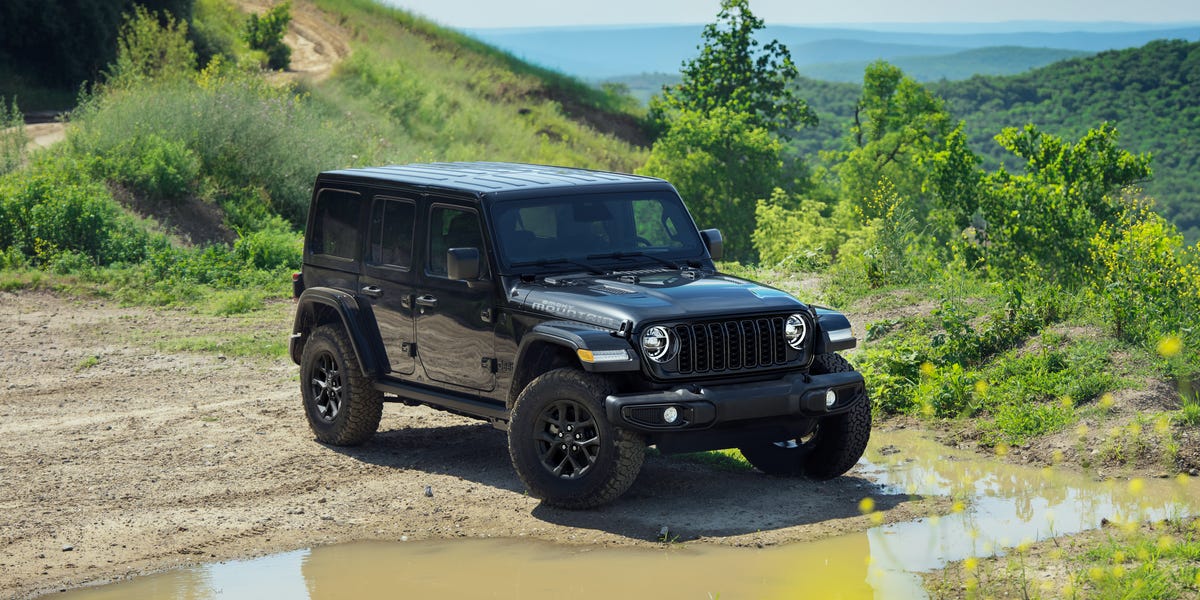
The black-on-black exterior pairs a gloss black grille with body-color hardtop and fender flares. Jeep showed the truck in black paint but says the full color palette is available, from Joose orange to Hydro Blue. A Sky One-Touch power soft top is optional for those who want the open-air experience without the wrestling match.
Inside, Premium Black Ferndale cloth covers seats with prominent side bolsters embossed with a 1941 Willys parachute graphic. That same graphic reappears on the rear swing gate, set against a mountain-and-starry-sky backdrop alongside the bear and cub motif. Heated seats, heated steering wheel, and dual-zone automatic climate control come standard.
Jeep’s special edition playbook is old at this point. Take an existing trim, add cosmetic touches that cost almost nothing at scale, give it a name that evokes adventure or heritage or regional pride, and watch the order banks fill. It works because Wrangler buyers are deeply tribal, and a unique shifter medallion delivers differentiation at zero financial risk for Stellantis.
The math is instructive. Twelve special editions in twelve months means Jeep’s design and marketing teams are producing one variant per month with minimal engineering investment. No new suspension tuning, no powertrain changes, no structural modifications. Hood decals and seat embossing are not R&D. They’re merchandising.
Two more installments remain in the Twelve 4 Twelve series, and there’s no indication Jeep plans to slow down once the program wraps. The Wrangler moved 138,728 units in the U.S. last year, and every limited badge gives fence-sitters a reason to sign today rather than wait. With the next-generation replacement still years away, special editions are the only new product news Jeep can squeeze from the current platform.
Whether the final two installments cost $80 or $800, the formula isn’t changing.
Share this Story