
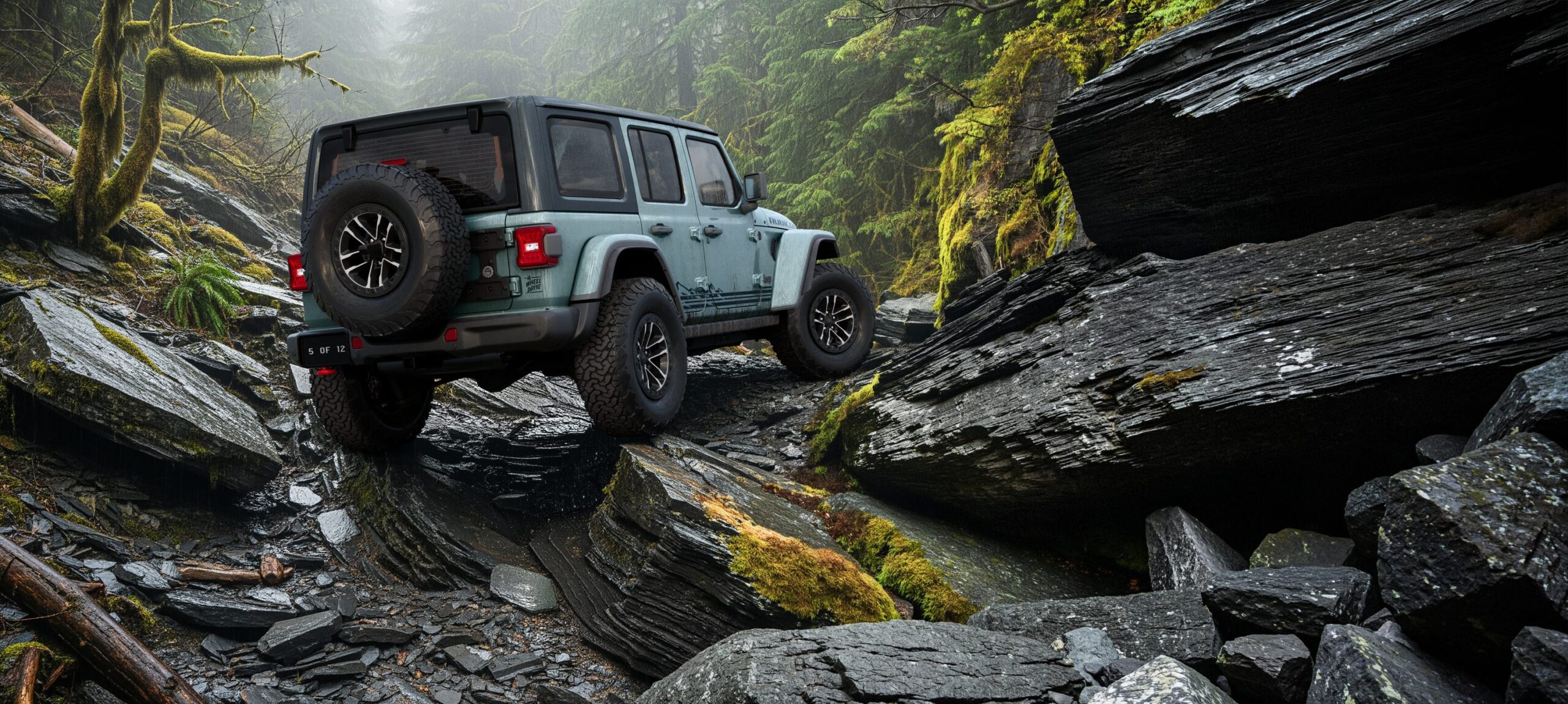


Seven hundred bucks. That’s what Jeep is charging for some blue accents, cloth seats in a shade called “Jean Blue,” and a mountain graphic on the side of a Wrangler. Welcome to the fifth installment of the Twelve 4 Twelve program, where the word “special” is doing more heavy lifting than the transfer case.
The 2026 Jeep Wrangler Rockslide debuted this week as the latest limited-run model in Jeep’s year-long drip campaign of monthly special editions. The formula: take a Wrangler Sahara or Rubicon, add Blue Agave stripes, an Anvil-colored roof and grille surround, Indigo Blue dashboard trim, and a swing gate plaque. Slap a $695 premium on top and open the order books in April.
Jeep is also extending the treatment to the Gladiator pickup in Rubicon and Mojave trims, though that truck exists outside the official Twelve 4 Twelve umbrella.
The Twelve 4 Twelve concept launched as a way to give Jeep’s design team room to experiment with colors and materials while offering buyers factory-built exclusivity. In practice, it’s become a masterclass in repackaging what’s already on the shelf. The Rockslide doesn’t add a single mechanical component — no upgraded axles, no new suspension tuning, no powertrain tweaks.
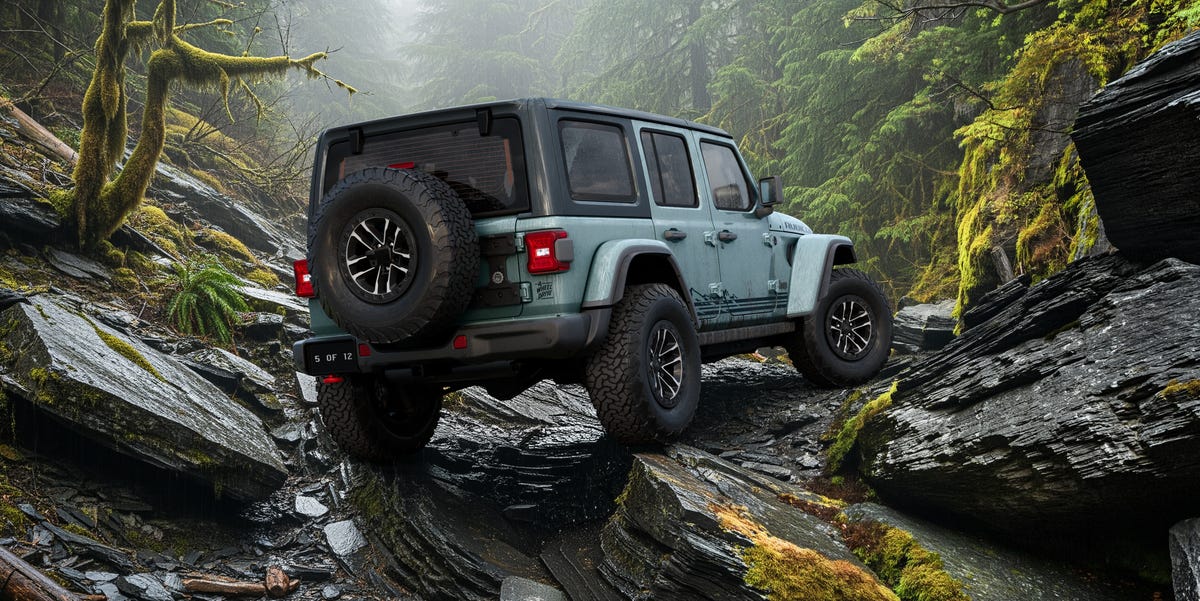
The one genuinely interesting detail buried in the press materials: steel rock rails return to the Wrangler Sahara for the first time since 2017. That’s a functional piece of trail protection that Sahara buyers have had to source from the aftermarket for nearly a decade. It’s the kind of thing that actually justifies a special edition, and everything else is cosmetic.
Inside, the Jean Blue cloth seats and Indigo accents across the instrument panel, center console, and door armrests represent what Jeep calls the first interior color expansion of the Twelve 4 Twelve series. Silver contrast stitching rounds out the cabin. It looks fine and photographs well, but it is not, by any reasonable definition, an event.
Standard equipment includes a Gorilla Glass windshield, heated mirrors, LED headlights, and adaptive cruise control — features that come on comparably equipped Sahara and Rubicon models anyway. Buyers can pair the Rockslide package with any available exterior color, which is another way of saying Jeep didn’t even commit to a signature paint.
The broader game here is obvious. Jeep is sitting on a Wrangler platform that hasn’t seen a fundamental redesign since the JL launched for 2018. Sales remain strong — the Wrangler is one of a shrinking number of vehicles that moves off lots without incentives — but the product cadence needs fresh oxygen.
Monthly limited editions create social media moments and dealer urgency without requiring engineering investment. A $695 appearance package with limited production quantities is pure profit for Stellantis. No new tooling, no crash testing, no EPA certification — just decals, cloth, and a collectible rubber duck sporting a backwards white cap and blue body.
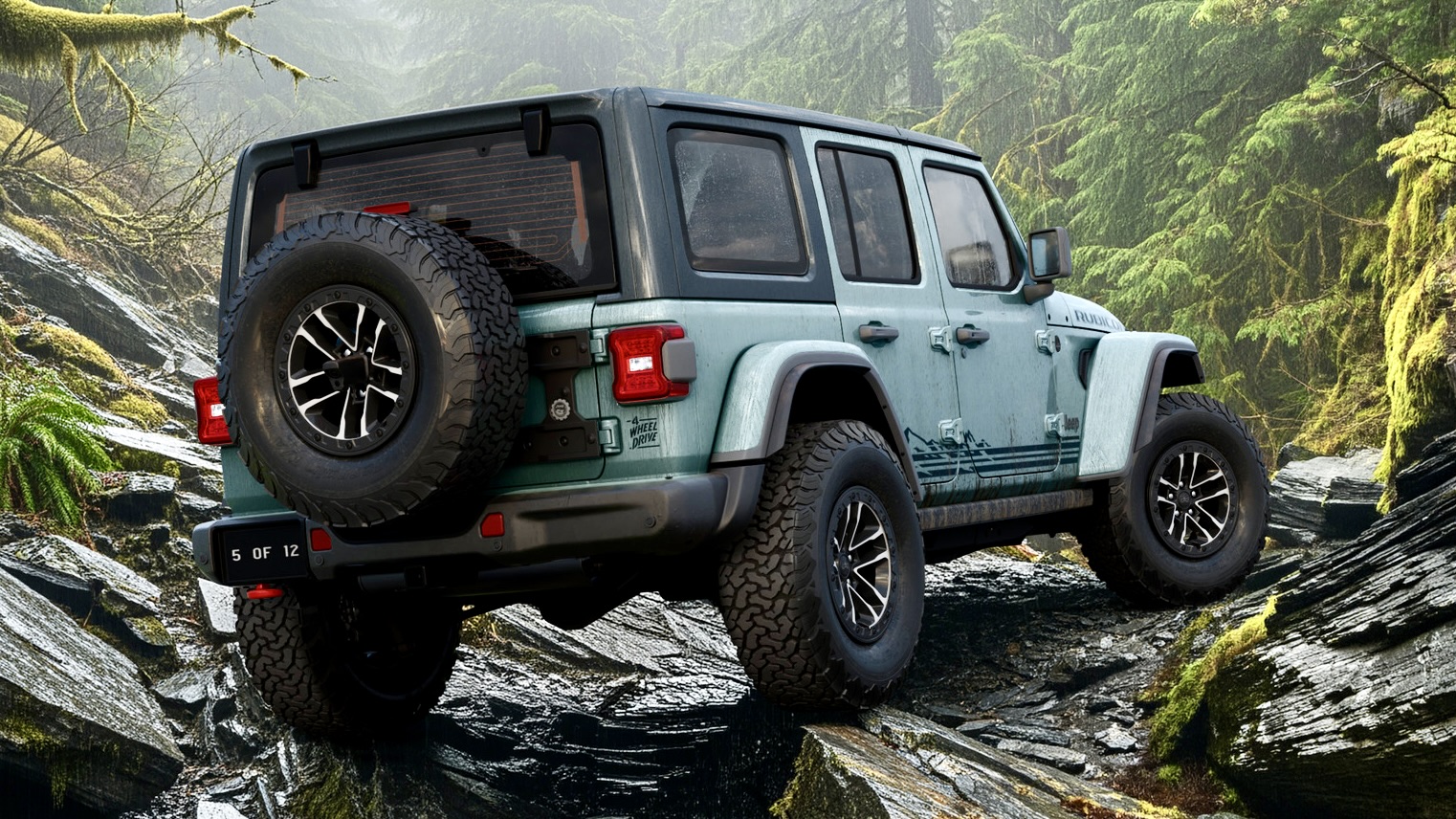
The Wrangler Rockslide will find buyers. It always does. There is a devoted subset of Jeep owners who collect these editions the way sneakerheads collect Jordans, and Jeep knows it.
The truck underneath remains genuinely capable, Trail Rated, and beloved for good reason. But five months into the Twelve 4 Twelve program, a pattern has emerged. These aren’t special editions in the way a Rubicon 392 with a V-8 was special.
They’re color-and-trim exercises dressed up as drops. Jeep has figured out it can charge a premium for blue stitching and a heritage font. And it’s going to ride that formula eleven more times before anyone stops buying.

Share this Story