
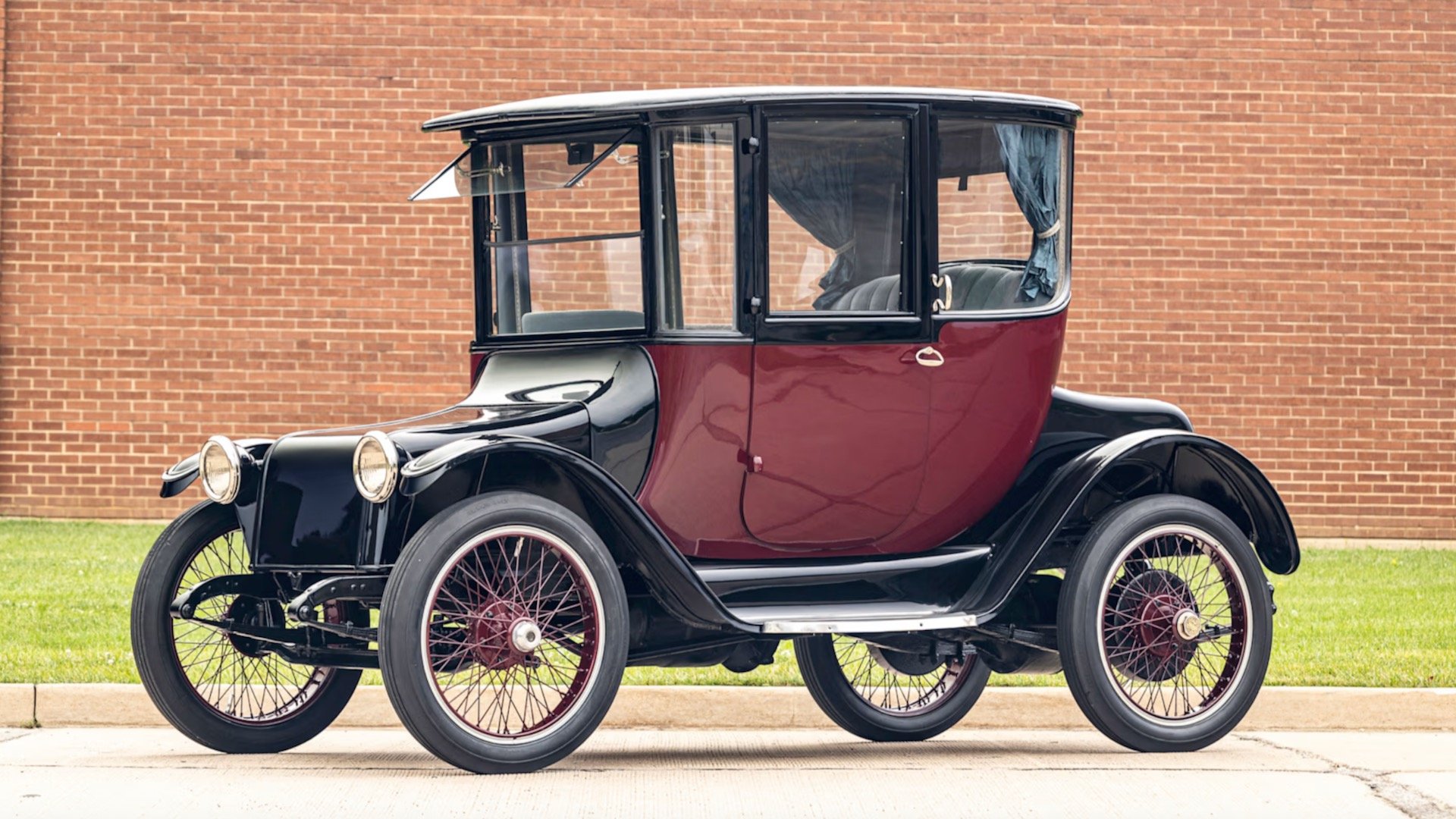


A 107-year-old electric car is heading to auction at Mecum’s Monterey Car Week event in 2026, and unlike most museum pieces from that era, this one actually drives. The 1918 Detroit Electric Model 75B Brougham coupe has been fully restored with modern batteries replacing the long-dead originals, making it one of the rarest functional EVs on the planet.
The listing claims the restoration meets “concours standards,” which is a bold assertion for a car whose powertrain has been fundamentally altered. Concours judging lives and dies on originality. Swapping in 21st-century battery cells, no matter how tastefully done, would likely raise eyebrows from any serious judge with a clipboard.
Mecum’s listing is frustratingly vague on the details that matter most. What batteries were used? What range does it achieve now? The auction house only references the original specs: roughly 80 miles of range and a top speed of about 20 mph. For context, Jay Leno’s similar 1914 Detroit Electric is being re-powered with Nissan Leaf modules, and scrapped EV packs from modern cars have become the go-to donor source for projects like this.
The Detroit Electric brand itself is a fascinating footnote in automotive history. The Anderson Carriage Company, founded in Detroit in 1884, pivoted to electric vehicles in 1907 and sold them for more than three decades. In the early 1900s, EVs actually made a compelling case for themselves.
Gas stations were scarce. Hand cranks were dangerous. Internal combustion engines required manual lubrication and reeked of fuel. Electric cars were quiet, clean, and simple to operate.
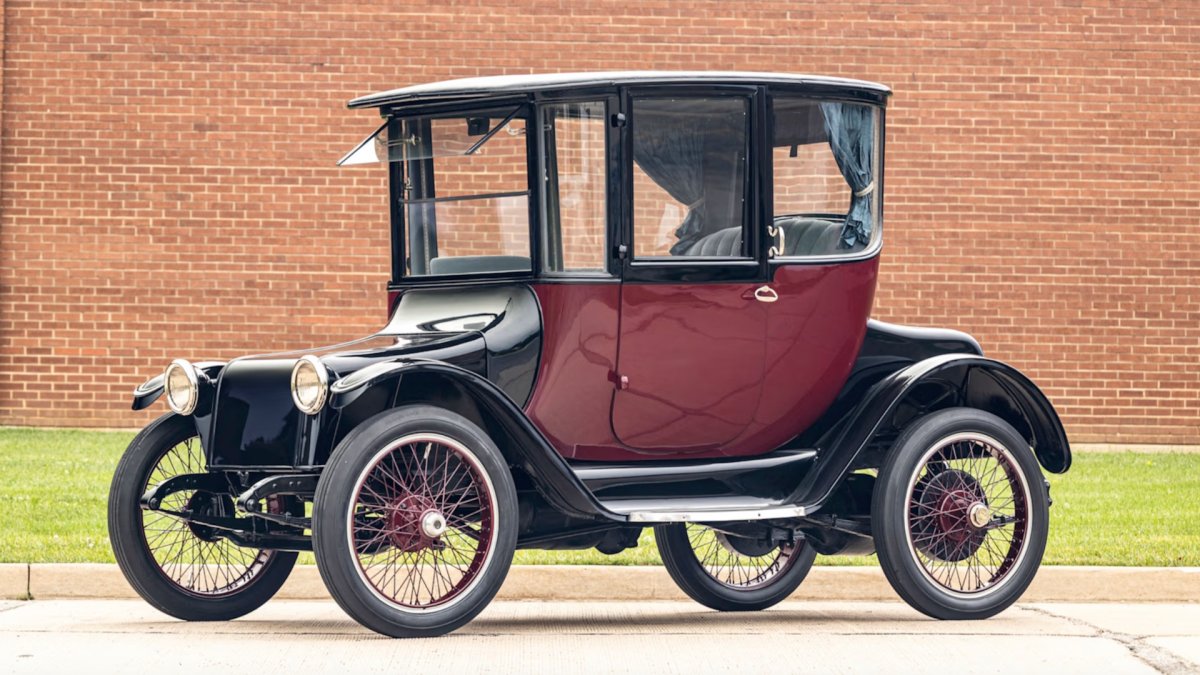
That simplicity became a marketing hook aimed squarely at women, reflecting the biases of the era. The Model 75B’s interior was designed to feel like a parlor. The driver faces the passengers and steers with a tiller rather than a wheel.
Built-in flower vases decorated the cabin, a touch Volkswagen wouldn’t rediscover until the New Beetle arrived 90 years later. Henry Ford bought a Detroit Electric for his wife Clara. So did Packard president Henry Joy, for his. Both men had staked their careers on gasoline.
Detroit Electric held on until 1939, outlasting most of its EV contemporaries like Milburn and Baker. A 2013 revival attempt, built around a modified Lotus Elise in obvious imitation of early Tesla, went nowhere.
What makes this particular car compelling as an auction lot is the tension between preservation and usability. A Detroit Electric with dead batteries is a sculpture. One with modern cells is a machine. The restorer chose function over purity, and that decision will either attract bidders who want to actually drive the thing or repel collectors who believe every component should match the build sheet.
Mecum hasn’t published an estimate, and comps for working pre-World War I electrics are almost nonexistent. The market for brass-era cars has always been niche, but a drivable EV from 1918 occupies a category of one.
The auction world will have to decide what this car is worth when it isn’t quite original and isn’t quite modern. That question hasn’t been answered yet.

Share this Story