
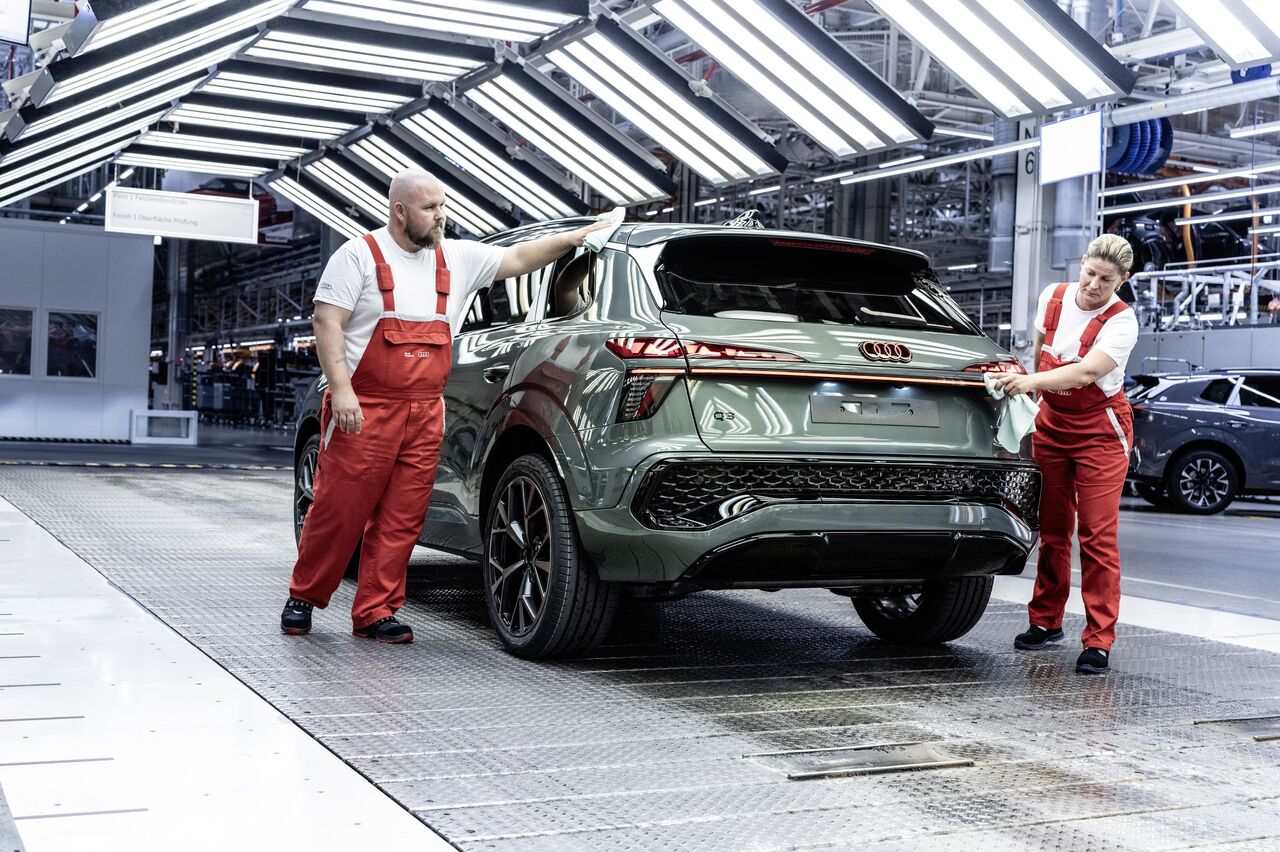


Audi Hungaria produced 264,871 electric drives last year, a 74 percent jump from 2024. That number, buried inside an otherwise steady annual report from the Győr plant, tells you more about where the Volkswagen Group’s powertrain strategy is actually heading than any boardroom presentation.
The headline figures from the Hungarian operation look calm. Total drive production barely moved — 1,585,290 units versus 1,580,991 the year before. Revenue climbed modestly to 9.2 billion euros from 8.6 billion.
Vehicle production rose to 200,756 from 179,710. Stability, the company called it. Fine. But dig one layer deeper and the math shifts.
Electric drive output nearly doubled while the overall number stayed flat. That means combustion and hybrid powertrains gave up ground to make room. Nobody at Audi Hungaria said that out loud, but the arithmetic is unambiguous. And with the MEBeco electric motor line now prepped for launch in 2026, the shift accelerates from here.
The vehicle side of the operation tells its own story. Cupra Terramar production exploded from 16,663 units in 2024 to 71,810 in 2025. That’s a fourfold increase for a nameplate that barely existed in Győr’s output a year earlier.
Meanwhile, Q3 and Q3 Sportback volumes dropped from 163,047 to 128,946. Audi Hungaria is increasingly a multi-brand facility, building Seats and Cupras alongside the four rings. The Volkswagen Group needs flexible plants that can swing between brands and powertrains, and Győr is becoming exactly that.
The workforce shrank by 500 people, down to 11,430. Management framed it as streamlining non-production areas. The 375-million-euro investment tab — up from 340 million — went toward new technologies, specifically integrating the next-generation Q3 into the line and tooling up for MEBeco motors.
Spending more while employing fewer people is the definition of an efficiency play. It signals where Győr’s value lies going forward: high-tech manufacturing, not headcount.
Since 1993, the Volkswagen Group has poured 13.2 billion euros into this single Hungarian site. That’s not charity. It’s leverage.
Győr is the largest toolmaking operation in Central Europe and a critical node in the group’s powertrain supply chain. When VW CEO Oliver Blume talks about cutting costs across the empire, plants like this one are how you do it — lower labor costs than Germany, deep institutional expertise, and infrastructure already in place for the electric transition.
Chairman Michael Breme talked about “good capacity utilization in the years ahead.” Finance board member Achim Grewe was blunter: “We must continue to reduce our costs.” Between those two statements sits the reality of a plant that knows its survival depends on staying cheaper and more flexible than internal rivals in Germany, where labor politics make restructuring far more painful.
The 46 millionth powertrain rolled off the line in 2025. The millionth Q3 followed. Those are legacy milestones.
The number that actually matters is the MEBeco ramp. Volkswagen’s affordable electric platform needs motors built at scale and at cost. Győr just spent a year proving it can do both.
Nobody threw a party. That’s the point. The real transitions don’t come with fanfare. They come with 500 fewer workers, 113,000 more electric drives, and a factory floor quietly retooled for what’s next.
Share this Story