
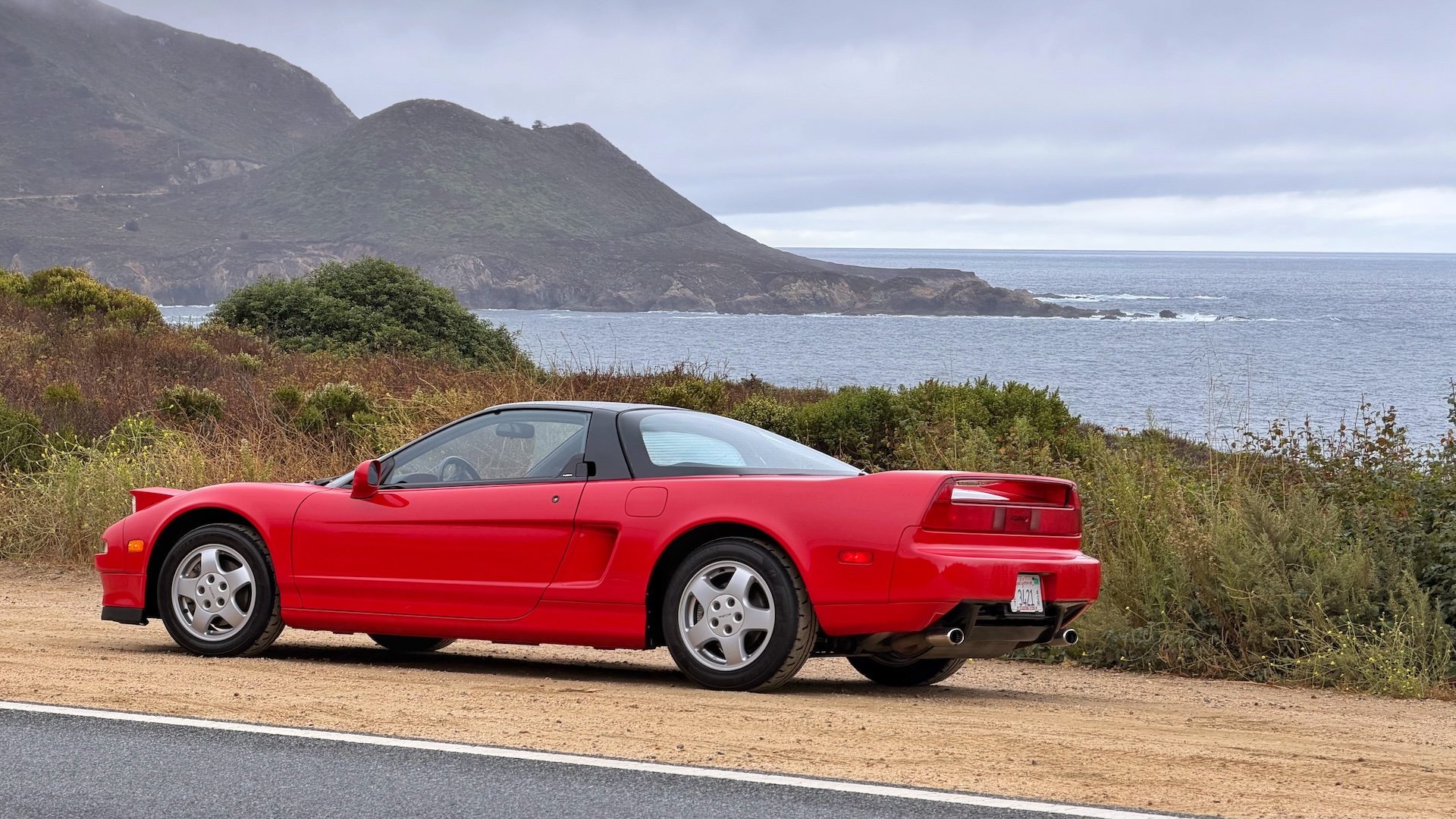


A veteran automotive journalist drove dozens of Ferraris, Paganis, and Rolls-Royces without shedding a tear. A 34-year-old Acura with 85,000 miles on the clock broke him.
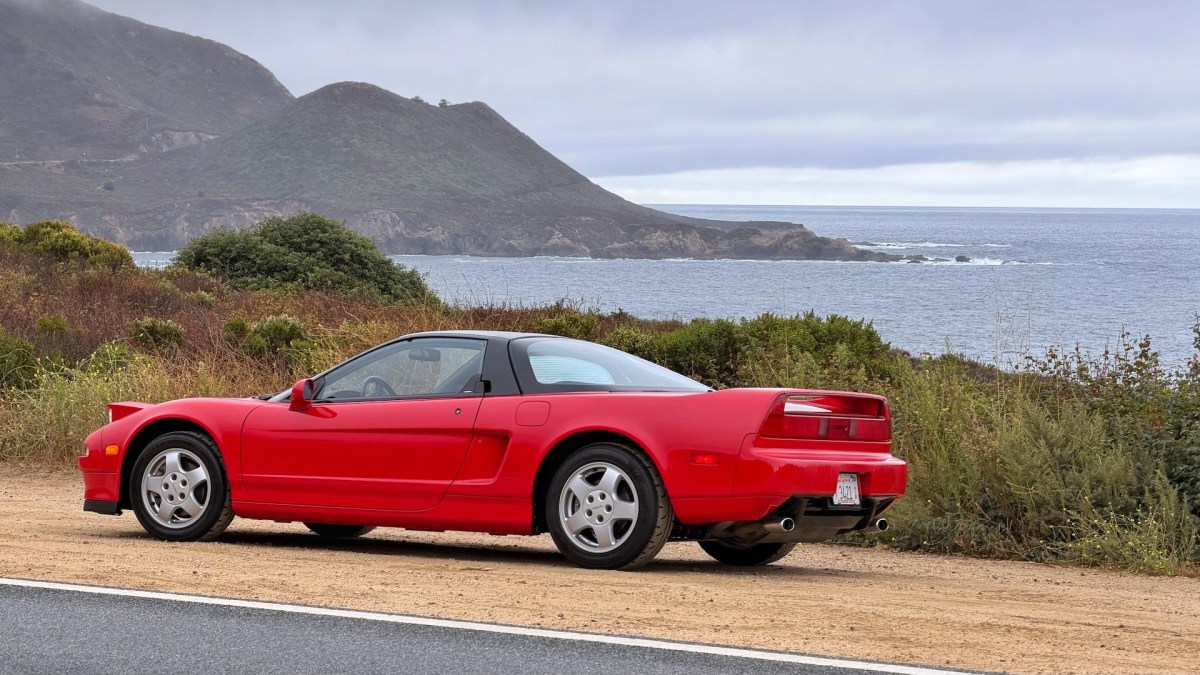
Jerry Perez, deputy editor at The Drive, recently took a Formula Red 1991 NSX down Highway 1 during Monterey Car Week. The car was on loan from Honda’s Collection Hall, maintained in the kind of condition only a factory museum can deliver. Within a minute of pulling out of a hotel parking lot, Perez says he was already in love with the transmission.
That’s the thing about the original NSX. It was never supposed to age this well. Honda built it in an era when Japanese automakers were expected to make appliances, not supercars.
Its 270-horsepower, 3.0-liter V6 VTEC engine used titanium connecting rods borrowed from Formula 1 technology. The aluminum chassis was a first for a production car at that price point. It revved to 8,000 RPM and asked for nothing in return but regular oil changes.
Perez has no shortage of seat time in exotic machinery. He chased IndyCar winner Simon Pagenaud around the Daytona road course at night in a second-gen NSX. He drove the NSX Type S at the same circuit, in the very car Max Verstappen had been loaned months earlier. But the original had somehow eluded him until now.
A rain squall cleared the Monterey Peninsula of every supercar owner who had flooded in for Car Week, leaving Perez alone on 60 miles of oceanside curves from Carmel to Big Sur. The clouds broke five miles south. Blue sky, empty road, no power steering, and a five-speed manual that clicked into each gate like a rifle bolt.
What made the car hit differently than the exotics? Perez points to the unassisted steering, which transmitted every grain of sand and every camber change through his palms. The pedal spacing was exact, the shifter throw was short and mechanical, and the seating position put everything within reach without compromise.
In typical Honda fashion, every electronic system still worked perfectly at 85,000 miles, a claim Perez openly doubts any European contemporary could match.
The NSX debuted in 1990 and immediately embarrassed Ferrari. Enzo’s engineers reportedly used it as a benchmark, and the 348 was widely considered inferior in nearly every dynamic measure. Honda’s trick was not brute force but precision engineering. The car weighed roughly 3,000 pounds, used variable valve timing before most buyers knew what that meant, and could be serviced at any Acura dealer.
Perez, who grew up in Mexico City with Lamborghini Diablo and Ferrari F40 posters on his walls, admits the NSX was never his hero car. That distinction belonged to the European exotics and the racing drivers who piloted them. He has a tattoo of his lifelong hero on his left forearm, and while pushing through second and third gear at full throttle on Highway 1, he says he felt transported to Suzuka, imagining that hero behind the same wheel.
The suspension is soft by track standards. Perez concedes the point but argues it misses the purpose entirely. This was a car meant to be driven every day, not just flogged on a circuit.
Honda built the NSX to be lived with, and 34 years later, it still delivers on that promise with a kind of honesty that modern performance cars, drowning in drive modes and electronic nannies, have largely abandoned.
When Perez handed the keys back to Acura, he called it the best car in the world. He had tears on his face. Not from nostalgia, not from hype, but from a machine that still communicates with the kind of mechanical clarity the industry has spent three decades engineering out of existence.


Share this Story