
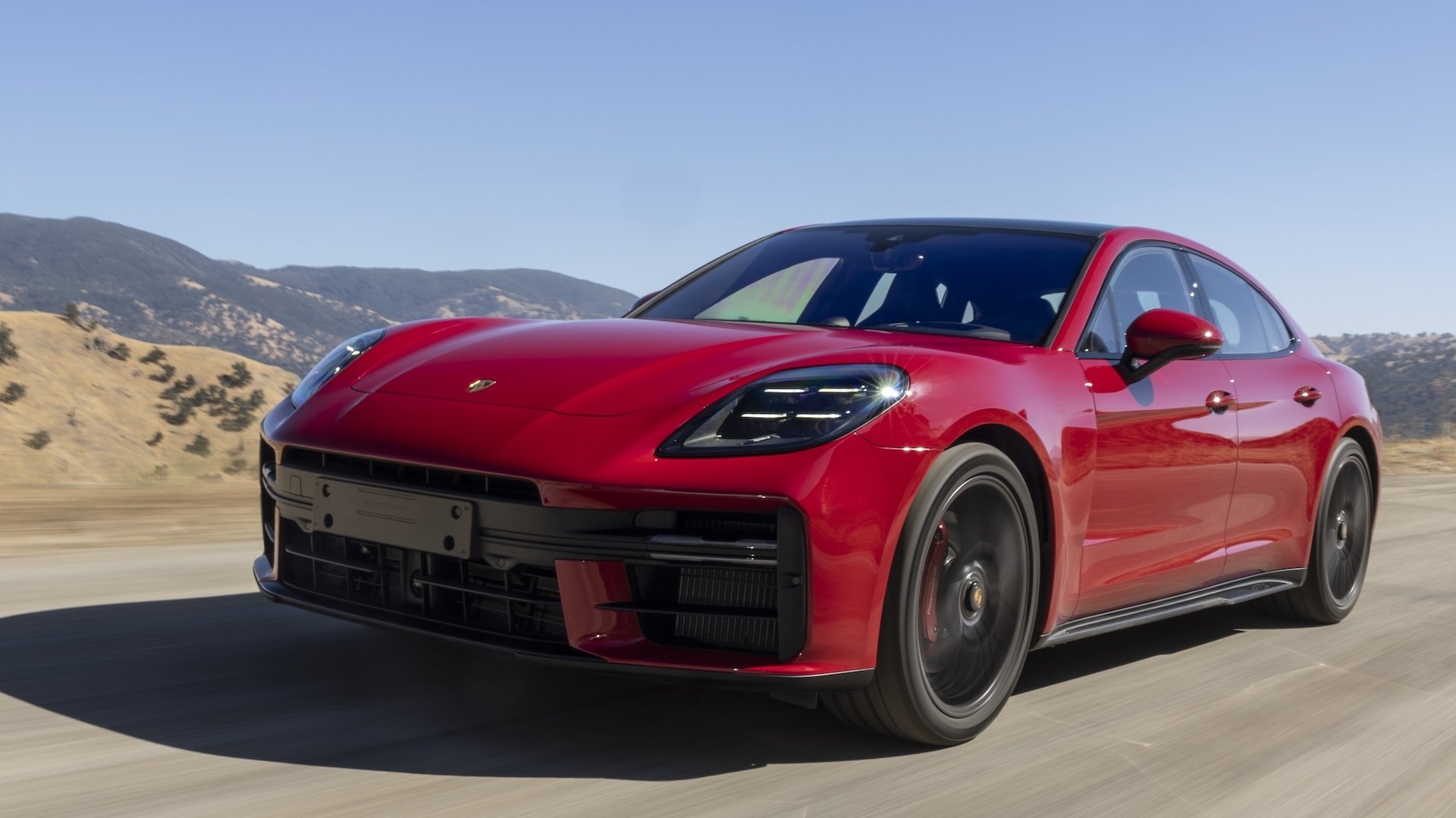


A stick-shift Porsche Panamera doesn’t exist in any showroom on Earth. But Alexander Fabig, the man who runs Porsche’s Sonderwunsch bespoke program, just confirmed it could exist in someone’s garage. The only requirement is a budget large enough to match the ambition.
The revelation came during Monterey Car Week, where The Drive’s Kyle Cheromcha sat down with Fabig after Porsche unveiled its latest one-off creation, the Flachbau RS. That car, a reimagined 911 Slantnose, was commissioned by an anonymous European client who spent “many millions” and waited three years for a single vehicle.
But the Slantnose wasn’t the most interesting thing Fabig discussed. When asked whether transmission swaps were on the table for Sonderwunsch clients, his answer was immediate: “Yes. Especially when talking about celebrating the manual side of life.”
Then came the direct question. Could someone commission a manual Panamera? “Yes, yes, yes,” Fabig said. “That’s very good; I will use this as an example from now on.”
Three “yes” responses from a senior Porsche executive about bolting a manual gearbox into a sedan that has never offered one. That’s not corporate hedging. That’s an open door with a price tag attached.
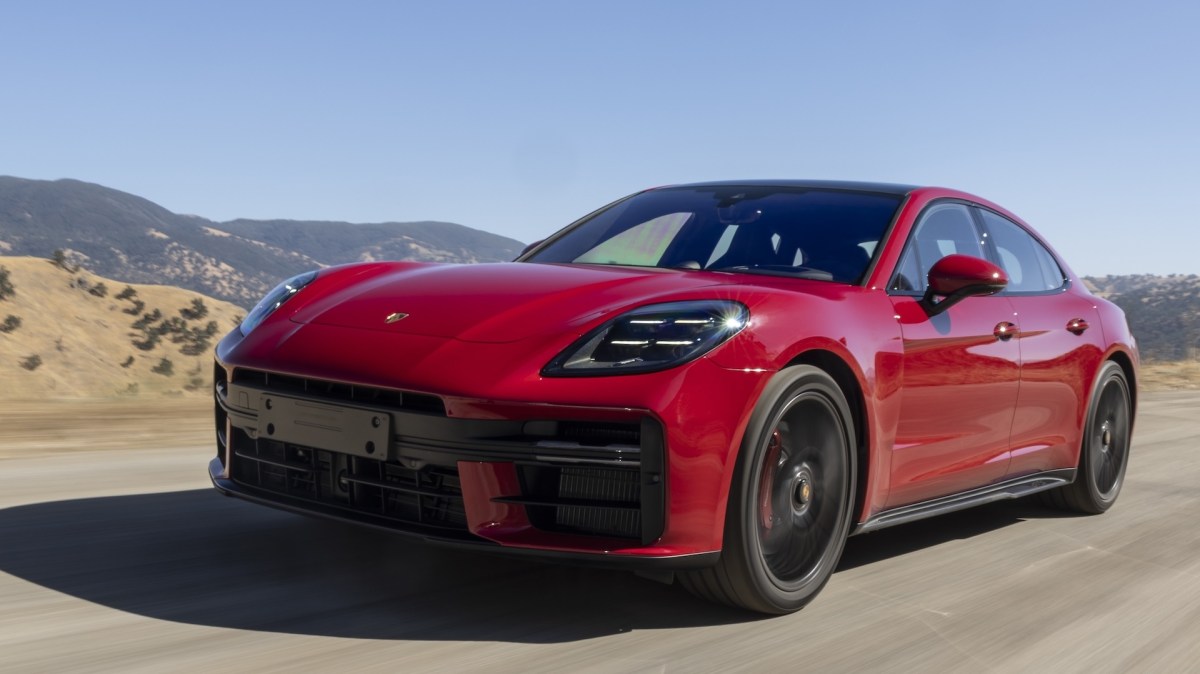
Porsche killed the manual option across most of its lineup years ago, chasing lap times and shift speeds that human legs and left feet simply cannot match. The 911 remains the holdout, and even there, the take rate on three pedals has always been a niche play. The idea of reverse-engineering a stick into the Panamera, a car built from the ground up around dual-clutch and torque-converter automatics, speaks to just how far Sonderwunsch is willing to stretch.
Fabig made clear that the program’s only hard boundary is regulation. Safety and emissions compliance can kill a project. Everything else is negotiable. He even acknowledged that some builds won’t be street legal, and that certain clients are perfectly fine with that arrangement. If you’re happy enough to have your own country, then maybe you don’t need a license plate,” he said, with the kind of dry humor that only surfaces when you’re describing real customers.
The program’s philosophy leans more toward design and personal expression than raw performance. Fabig noted that most Sonderwunsch clients aren’t chasing extra horsepower. They want to shape the car’s body, its interior, its identity. Adding 110 horsepower is engineering. Choosing the materials, the stance, the character of the vehicle — that’s where the client becomes a creator.
A previously floated Panamera Cabriolet concept, for example, is not an active project. Fabig used to cite it as a hypothetical to illustrate the program’s scope, but no client has stepped up to fund it. The manual Panamera, on the other hand, apparently sits closer to reality, with Fabig confirming that transmission-swap projects “are in the making at the moment.”
Porsche’s mainstream product planning marches steadily toward electrification and automated efficiency. Its bespoke division is walking the other direction, toward analog indulgence and mechanical intimacy, one extraordinarily wealthy client at a time. The waiting list, the cost, and the sheer engineering complexity would scare off almost anyone. Almost.
Share this Story