
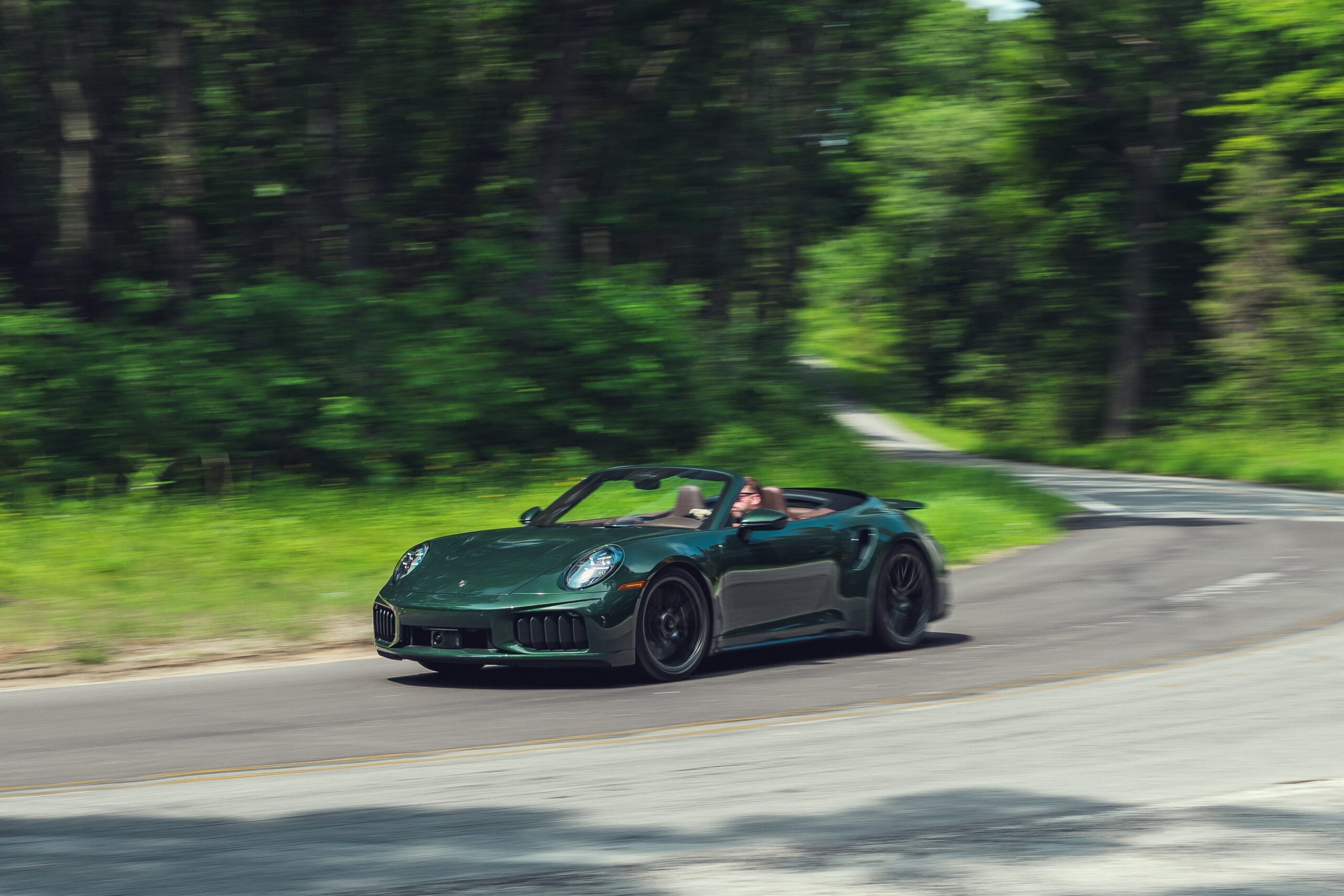


The 2026 Porsche 911 Turbo S Cabriolet hits 60 mph in 2.2 seconds with launch control. It claims a 200-mph top speed. And it does all of this with the roof folded neatly behind the rear seats, the wind turning your hair into modern art.
That 2.2-second sprint puts it in hypercar territory, except this is a convertible with four seats and a trunk big enough for a weekend bag. Porsche has been playing this trick for decades, wrapping absurd performance in a package that looks civilized enough for a Saturday morning coffee run. The 992.2 generation takes it further than ever.
Under the engine cover sits a 3.6-liter twin-turbocharged flat-six, but the “twin-turbo” label barely covers it anymore. Electric turbochargers eliminate lag, and an electric motor supplements the gas engine’s output, bringing the combined number to 701 horsepower. That is a staggering figure for a car that still carries the 911 silhouette, still has its engine hanging behind the rear axle, still pretends to be a sports car rather than a missile.
Quarter-mile times land in the 10-second range. Ten seconds. In a convertible. A decade ago, that would have required a purpose-built drag car with a roll cage and slicks.
Now it comes with leather seats, climate control, and a titanium sport exhaust system as standard equipment.
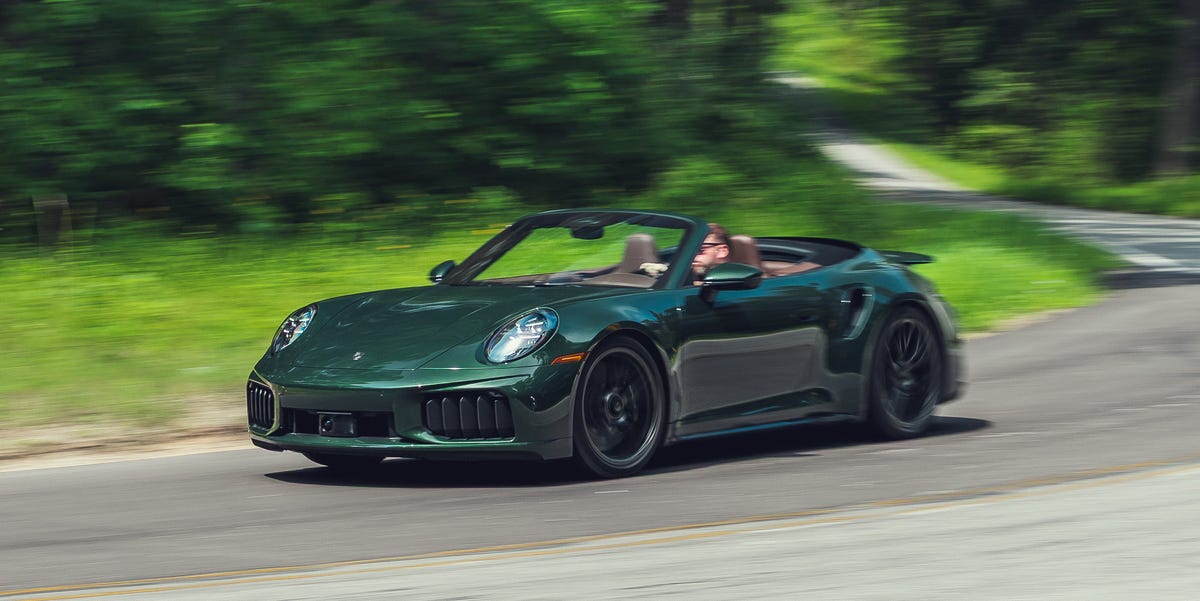
The chassis hardware matches the powertrain’s ambitions. Active roll stabilization keeps the body flat through corners, compensating for the structural rigidity a fixed roof would otherwise provide. Center-lock wheels and carbon-ceramic brakes are standard, not options you have to beg your dealer to spec.
Porsche clearly intends for this car to be driven hard, not parked at valet stands, though it will inevitably do plenty of both.
What makes the Turbo S Cabriolet such a strange object is the contradiction baked into its DNA. It is a car designed for maximum attack that also wants you to feel the sun on your face. Car and Driver’s test suggests it constantly goads you into ignoring the speed limit, which is a polite way of saying the car is faster than almost anyone’s judgment.
The 911 Turbo S coupe has always been the sleeper pick among supercars, the one that embarrasses Lamborghinis at stoplights without the theatrical bodywork. The Cabriolet version adds another layer of absurdity. You lose a fraction of structural stiffness, gain some weight from the folding roof mechanism, and somehow Porsche still extracts numbers that would have topped the spec sheet of a Carrera GT two decades ago.
Porsche has not announced pricing for the 2026 Turbo S Cabriolet, but the outgoing model started north of $230,000. The electric motor integration, the e-turbos, the titanium exhaust, the ceramic brakes — all standard, all pushing the sticker into territory where buyers will cross-shop McLaren and Ferrari convertibles.
Those competitors offer more visual drama. The 911 still looks like a 911, which is either its greatest asset or its most maddening limitation, depending on your taste. But none of them match this particular combination: four usable seats, a folding roof, a flat-six soundtrack, and a powertrain that treats 200 mph as a reasonable target.
The waiting lists are already forming.
Share this Story